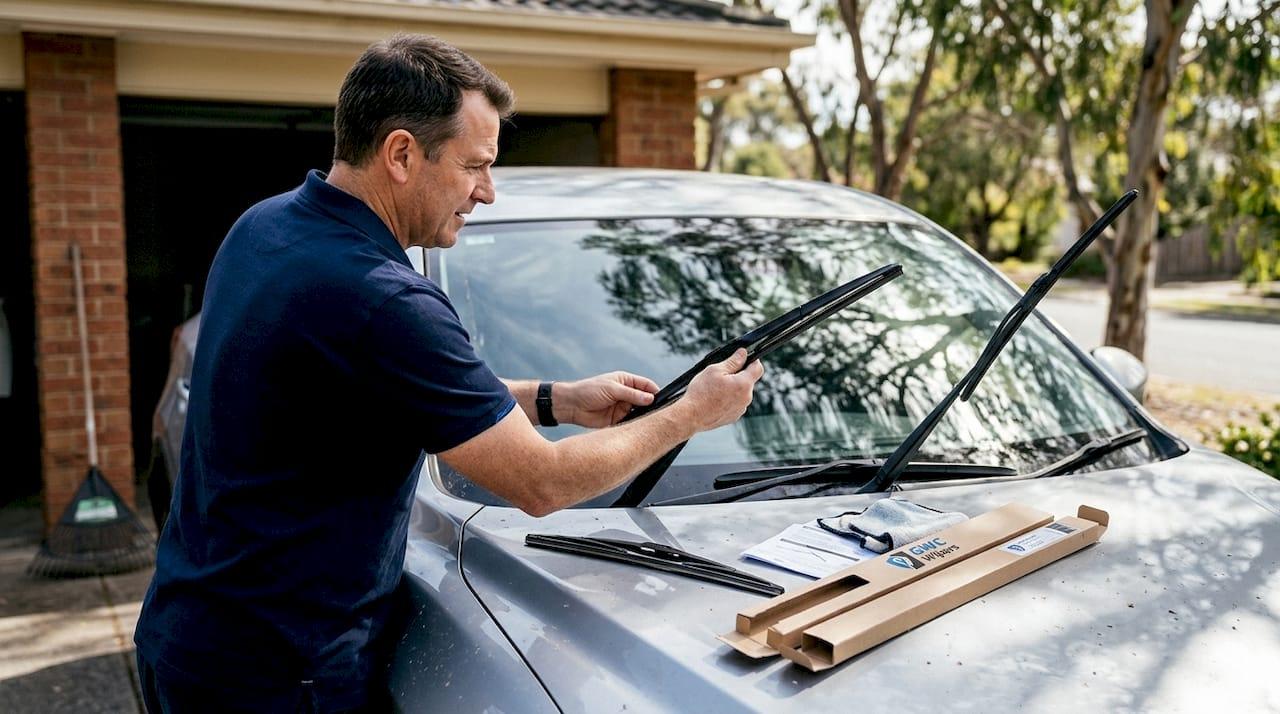
Wiper blades and the cabin air filter are easy to overlook because neither usually causes the car to stop running. But worn wipers can compromise visibility in rain, while a clogged cabin filter can reduce airflow and contribute to unpleasant smells inside the car.
These are relatively small maintenance items, yet they affect how comfortable and confident you feel behind the wheel. The key is to inspect them regularly and replace them when condition—not just a calendar reminder—says they are due.
Wiper blades: signs they need replacing
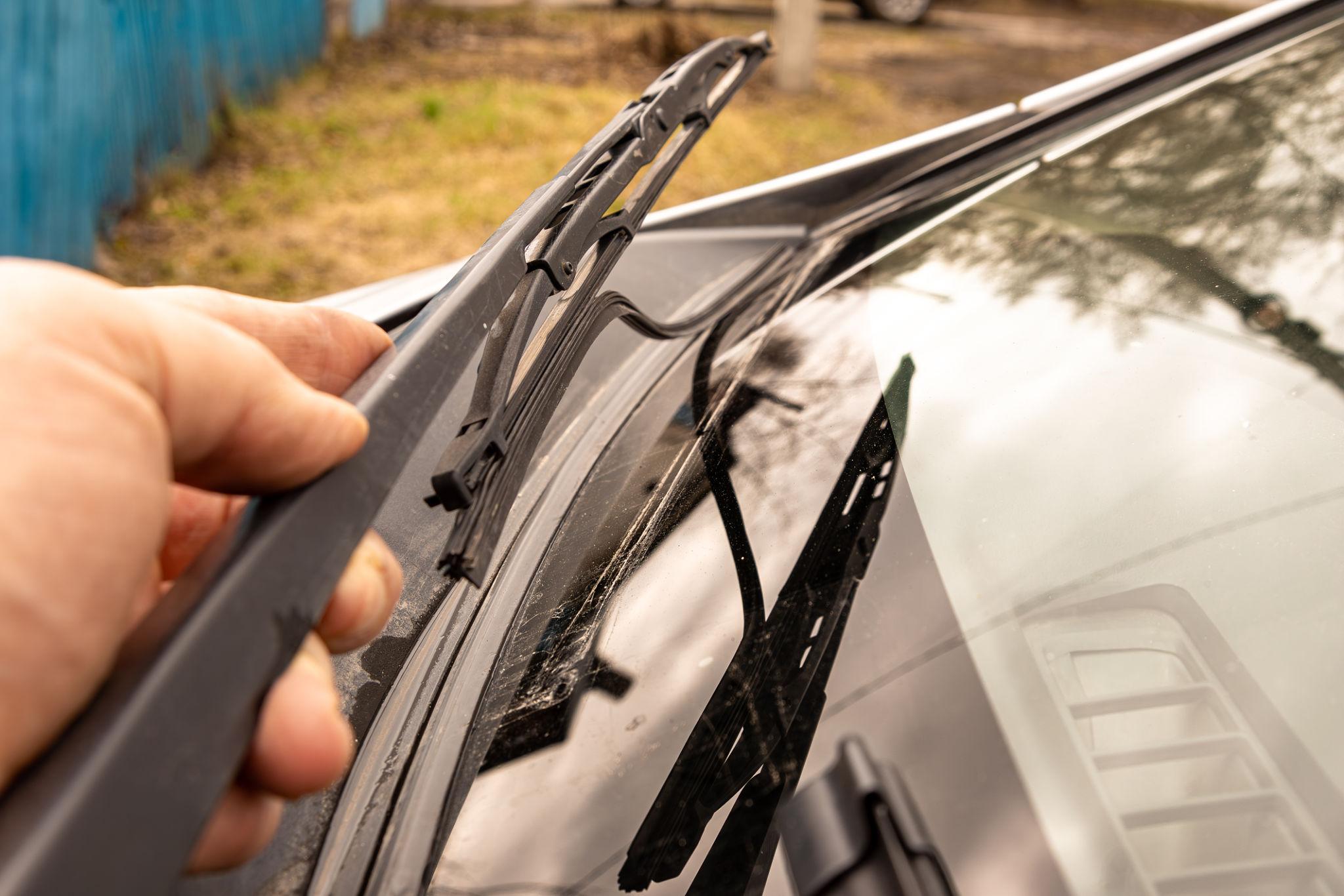
Wiper blades work by keeping a clean edge against the windscreen. Sun, heat, dust, tree sap, road grime and normal use can make the rubber harden, split or lose contact with the glass.
- Streaks or unwiped patches: the blade is no longer clearing the glass evenly.
- Chattering or juddering: the blade skips across the windscreen instead of moving smoothly.
- Squeaking: this can indicate dirty glass, a dry windscreen, poor blade contact or worn rubber.
- Visible cracks or torn rubber: damage is a clear reason to inspect and usually replace the blade.
- Reduced visibility in rain: do not wait for a heavy downpour to find out that the blades are ineffective.
Before buying replacements, clean the windscreen and the rubber edge with an appropriate method recommended by the blade manufacturer. Dirt can cause symptoms that resemble worn blades. If streaking continues, inspect the blades and check that the correct size and connector type are fitted.
| Symptom | Possible explanation | Practical next step |
|---|---|---|
| Streaks or missed patches | Dirty glass, contaminated rubber or a worn blade edge | Clean the glass and blade; replace if clearing remains poor. |
| Chattering or juddering | Poor blade contact, contamination, incorrect fitment or worn rubber | Check blade fit and condition; inspect the wiper arm if it persists. |
| Torn or split rubber | Ageing, heat exposure or physical damage | Replace the damaged blade with the correct size and connector. |
| Wipers do not move | Possible motor, linkage, fuse or electrical fault | Stop relying on the system in poor weather and arrange diagnosis. |
How often should wiper blades be changed?
There is no single interval that suits every vehicle or climate. Follow the vehicle handbook and blade-maker guidance, then inspect the rubber regularly. Cars parked outdoors in strong sun or exposed to dust and tree debris may need attention sooner than vehicles kept under cover. Replace blades when they no longer clear the screen properly, even if they are younger than the suggested interval.
Cabin air filter: what it does
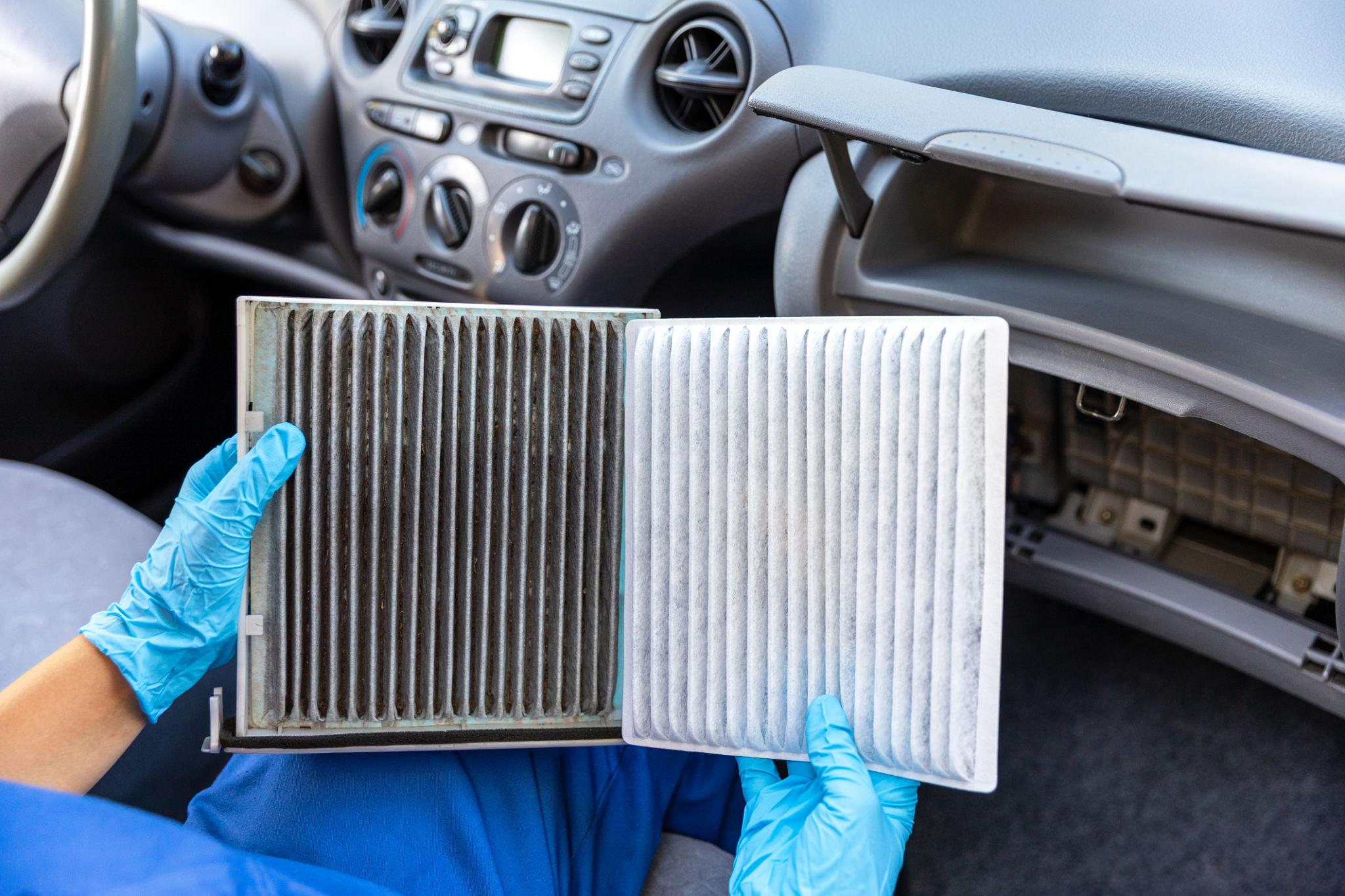
The cabin filter helps trap dust, pollen and other airborne particles entering the passenger compartment through the ventilation system. Depending on the vehicle, the filter may be behind the glovebox, under the dashboard or in another location specified by the manufacturer. Some vehicles use a particulate filter; others may use a carbon layer designed to help reduce certain odours.
Signs your cabin filter may be blocked
- Weak airflow: the fan is running but less air comes through the vents than expected.
- Musty or stale odour: a filter can collect debris and smells, although damp carpets, evaporator moisture or other issues can also be responsible.
- Dust around vents: this may indicate a dirty cabin, filter or ventilation system; it is not proof of one specific fault.
- More frequent fogging: airflow problems can make demisting less effective, but persistent fogging can have several causes and should not automatically be blamed on the filter.
A cabin filter is not the same as the engine air filter. The engine air filter protects the engine's intake system; the cabin filter serves the passenger ventilation system. Their locations, specifications and replacement schedules are different.
When should the cabin filter be replaced?
Use the service schedule for your exact make, model, year and driving conditions. Frequent driving on dusty roads, construction routes or in heavy pollen can shorten the useful life of a filter. During servicing, ask whether the filter was inspected, what condition it was in and whether replacement is due. A photo of the old filter can make the recommendation easier to understand.
What affects replacement cost?
There is no reliable one-price answer for every car. The total depends on the vehicle, the correct part specification, blade length and connector style, filter type, access difficulty and whether one or several items are being replaced. Some cabin filters are quick to access; others require more trim removal. Premium or unusual parts may cost more.
Ask for a quote that separates parts and labour where practical. Confirm whether the quote includes both front wiper blades, a rear blade if required, the cabin filter, fitting and any applicable call-out or inspection fee. Do not assume that a quote for “wipers” includes every blade on the vehicle.
| Item | What can change the price | What to confirm |
|---|---|---|
| Front wiper blades | Blade length, connector design and material | Whether the quote includes both front blades. |
| Rear wiper blade | Vehicle-specific size and less common fittings | Whether a rear blade is included or priced separately. |
| Cabin air filter | Standard particulate or carbon filter and part availability | Correct part for the exact make, model and year. |
| Access and diagnosis | Trim removal or a fault beyond the consumable part | Labour, call-out fee and any diagnostic charge. |
Can a mobile mechanic replace these items?
Wipers and filters are part of the bigger picture of routine vehicle care. If you are preparing for a longer drive, you can also review our general service options and arrange a suitable booking.
Many wiper blades and cabin filters can be replaced at a suitable home or workplace location, depending on the vehicle and the service provider's scope. The technician needs safe access to the vehicle and enough space to work. If the concern is actually a faulty wiper motor, damaged linkage, washer pump, blocked washer jets or an electrical problem, further diagnosis may be needed beyond fitting new blades.
For a cabin ventilation concern, a filter change may solve restricted airflow caused by a blocked filter, but it will not fix every blower, control, evaporator or water-ingress fault. Explain the symptoms before booking so the right job can be planned.
Quick checks you can do yourself
- Operate the washers and wipers when the windscreen is wet, never dry-run them unnecessarily.
- Check for streaks, missed sections, torn rubber or noisy movement.
- Check washer-fluid level and look for obvious blocked jets.
- Compare cabin airflow at different fan speeds and note any unusual smell.
- Check the handbook for the filter interval and correct part specification.
- Ask for the old part to be shown or photographed if replacement is recommended.
Do not keep driving in rain if the windscreen cannot be cleared adequately. Pull over somewhere safe if visibility becomes unsafe. If a wiper stops moving or a washer system fails, arrange an inspection rather than relying on a quick fix that may not last.
| Check | What good looks like | When to get help |
|---|---|---|
| Windscreen clearing | Wipers clear the driver's view without persistent streaks | If visibility remains poor after cleaning or blades fail to operate. |
| Washer system | Fluid sprays onto the windscreen and clears grime | If the pump is silent, a leak appears or jets remain blocked. |
| Cabin airflow | Airflow changes with fan speed and vents respond normally | If airflow stays weak or unusual odours persist after filter inspection. |
| Service schedule | Filter interval and part match the vehicle handbook | If access is difficult or trim/electrical parts may be disturbed. |
Book the right maintenance, not unnecessary extras
A useful inspection should connect a recommendation to an observable condition or the manufacturer's maintenance schedule. You should be able to understand which part is needed, why it is due and what the quote covers. If you need help arranging routine maintenance, visit our air and cabin filter replacement service, review our service options, or send a booking request.
Vehicle specifications and service intervals vary. Confirm the correct parts and schedule for your vehicle before ordering or fitting components.