
A punctured tyre does not always need to be replaced, but not every puncture can be repaired safely. The right decision depends on where the damage is located, how large it is, whether the tyre has been driven while underinflated and whether its internal structure remains sound. A professional tyre puncture repair assessment can help determine the appropriate next step.
For drivers around Wyndham Vale, Tarneit, Point Cook and Melbourne's western suburbs, understanding these factors can help avoid unsafe repairs and unnecessary replacement. A repair should restore safe tyre performance, not hide structural damage.
Can a punctured car tyre be repaired?
Yes, some punctures can be repaired when the damage is limited to a suitable area of the tread and the tyre's internal structure remains sound. A repair is not automatically safe just because the tyre is holding air or the hole looks small from the outside. The tyre must be assessed against applicable Australian requirements, tyre-manufacturer instructions and the repair-system specifications.
In many cases, the tyre needs to be removed from the wheel so the inside can be inspected. This helps reveal damage that may not be visible externally. If the tyre has suffered structural damage, a safe repair may not be possible even when the puncture appears minor.
Which tyre punctures are usually suitable for repair?
A puncture in the central tread area may be repairable when it falls within the permitted repair zone and size limits for that tyre and repair system. The tyre must also pass an internal inspection, with no evidence of damage caused by running flat, excessive heat, separation or other structural deterioration.
For example, a small nail in the main tread area may be suitable for professional repair. That does not guarantee approval: the precise location, puncture angle, damage dimensions and tyre condition must still be checked. A technician should make the final decision after inspecting the tyre rather than relying only on the object that caused the puncture.
When should a tyre puncture not be repaired?
Damage to the sidewall or shoulder
Sidewall and shoulder damage is generally unsuitable for conventional puncture repair because these areas flex significantly during driving and contribute to the tyre's structural integrity. The tyre may need replacement even if the hole appears small.
A puncture that is too large or irregular
A hole that exceeds the applicable repair limits, has torn the surrounding rubber or has caused extensive internal damage may not be repairable. Permitted dimensions depend on the relevant requirements and approved repair method, so one universal size should not be assumed for every tyre.
Damage caused by driving on a flat tyre
Driving on an underinflated or flat tyre can create internal heat and structural damage. The sidewall may be weakened even when the outside looks relatively normal. A tyre with evidence of structural deterioration should not be returned to service simply because the original puncture can be sealed.
Multiple repairs or damage near an existing repair
Several punctures, overlapping damage or a new puncture close to an earlier repair can affect whether a tyre remains suitable for further work. Repair limits and spacing requirements must be checked against the relevant tyre and repair-system guidance. If the combined damage cannot be repaired safely, replacement is the appropriate option.
Why internal inspection matters
The outside of a tyre does not tell the whole story. A nail can leave a neat-looking hole while low pressure, heat or continued driving damages the internal structure. Removing the tyre allows a technician to check for internal abrasion, rubber debris, damaged cords, separation and other warning signs.
A proper inspection also helps establish whether the puncture is in an approved repair area and whether the selected method is suitable. Be cautious about a repair recommendation made without an adequate assessment of the tyre's condition.
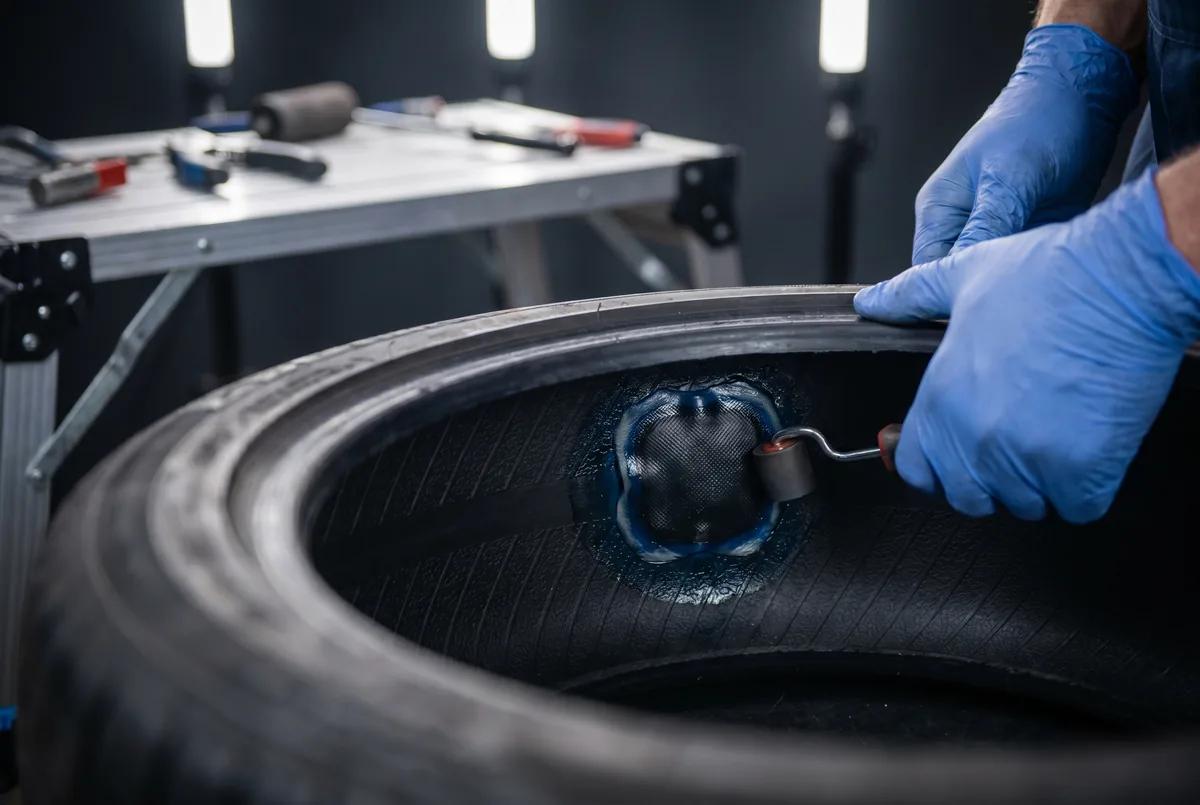
Plug, patch or combination repair: what is the difference?
Different repair products and methods have different approved uses. A plug inserted from outside may not provide the inspection and sealing approach required for a particular tyre. An internal patch or combination repair unit may be appropriate in some circumstances, but the choice must follow the applicable requirements and product instructions.
No single repair method suits every puncture. The damage location, tyre construction, internal condition and repair system all matter. Ask the technician which method is being used and whether the tyre has been inspected internally where required.
Australian tyre repair safety requirements
Tyre repairs should follow applicable Australian requirements, relevant state roadworthiness rules, tyre-manufacturer guidance and the instructions for the repair system. Exact requirements can depend on the vehicle, tyre type and circumstances. A repair should never be approved solely because it is inexpensive or appears to hold air.
Distinguish between a temporary emergency measure and a permanent repair. A temporary product or roadside solution does not automatically establish that a tyre is safe for continued use. If you are unsure, avoid driving on the damaged tyre and arrange professional assistance.
Repair versus replacement: how to decide
A repair may be sensible when the puncture is in an approved area, within the applicable limits and the tyre remains structurally sound. Replacement is usually safer when damage is outside the permitted repair zone, internal damage is present, the tread is excessively worn or the tyre's condition makes a safe repair uncertain.
The decision should be based on safety and suitability rather than price alone. A technician can explain the findings, whether a repair is permitted and why replacement may be necessary. For broader maintenance, visit our automotive services page or arrange an assessment through our booking page.
What should you do after discovering a puncture?
If a tyre is losing pressure, avoid continuing to drive on it. Stop somewhere safe, keep clear of moving traffic and follow your vehicle manufacturer's roadside guidance. Do not remove an embedded object if doing so could cause rapid air loss. If the tyre is flat or visibly damaged, arrange roadside assistance or professional help rather than driving on it.
After a repair, follow the technician's advice about inflation pressure, inspection and ongoing monitoring. If pressure drops again, vibration develops or handling changes, stop driving when safe and have the tyre checked.
Frequently Asked Questions
Can a nail in a car tyre always be repaired?
No. A nail in the suitable tread area may be repairable, but the location, size, angle and internal condition of the tyre must be assessed first.
Can a tyre sidewall puncture be repaired?
Sidewall punctures are generally unsuitable for conventional repairs because the sidewall flexes during use and damage can compromise structural safety. Replacement is commonly required.
Does a punctured tyre need to be removed from the wheel?
Internal inspection is important for identifying hidden damage. The tyre should be assessed using the inspection and repair procedure required for its circumstances and the applicable repair system.
Is a tyre plug a permanent repair?
Not every plug is an appropriate permanent repair. The approved method depends on the tyre, puncture location and applicable requirements. Ask the technician to explain the repair method and inspection performed.
Should I drive with a slow tyre leak?
Driving on an underinflated tyre can cause further damage and affect vehicle control. Stop somewhere safe and arrange an inspection or assistance rather than continuing to drive on a tyre that may be losing pressure.
Where can I arrange a tyre puncture assessment in Melbourne's west?
Visit the tyre puncture repair service page for service information or use the booking page to arrange an assessment.