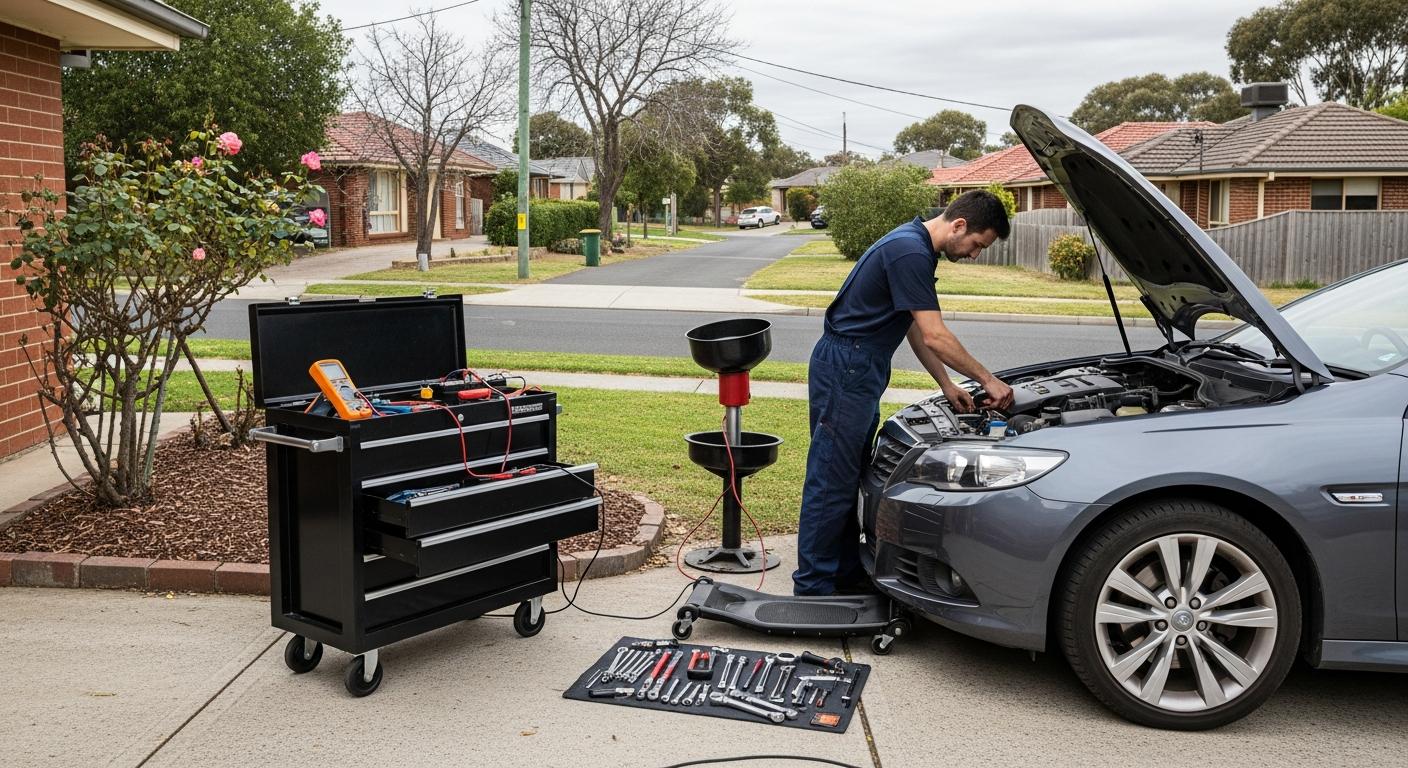
A mobile mechanic can save you the trip to a workshop by bringing selected servicing and repair work to a suitable home, driveway or workplace location. But mobile does not mean every repair can be completed anywhere. The right job depends on the vehicle, the fault, the tools required, safe working conditions and whether the car can be accessed properly.
This guide explains what a mobile mechanic can often do at home, which jobs may need workshop equipment or specialist facilities, and what information to share before booking. The exact services available vary by provider, so confirm the job rather than assuming every repair is offered on-site.
Start by checking the provider's automotive services and describing your vehicle and symptoms when you enquire.
Quick answer: What can a mobile mechanic fix at home?
Depending on the provider and the vehicle, suitable mobile work may include routine servicing, selected battery jobs, basic fault diagnosis, certain brake or component repairs, fluid and filter maintenance, and checks that do not require specialist workshop equipment. A mobile mechanic can also advise when the vehicle should be taken to a workshop.
The most reliable way to confirm suitability is to describe the exact vehicle and requested work before booking. A mobile mechanic may be able to complete the first-stage inspection and then recommend a workshop if the fault or access requires it.
This is a general guide, not a promise that every provider offers every service.
| Job type | May suit a mobile visit? | Important conditions |
|---|---|---|
| Routine servicing and filters | Often, for suitable vehicles | Correct oil/parts, safe access, fluid containment and the manufacturer’s service procedure. |
| 12-volt battery test/replacement | Often, depending on vehicle | Battery access, correct specification and any required registration/coding; high-voltage work is different. |
| Basic fault-code scan | Often, as an initial check | Codes are clues, not a diagnosis; further testing may be needed. |
| Selected brake or component repairs | Sometimes | Safe, level setup, suitable lifting equipment, parts availability and exact repair scope. |
| Pre-purchase visual inspection | Often, with limits | Confirm road test, scan, underbody access, written report and seller permission. |
| Major engine/transmission work | Usually workshop assessment is more appropriate | May require a hoist, specialist tooling, extensive dismantling or controlled conditions. |
| Wheel alignment or specialist calibration | Often requires dedicated facilities | Confirm equipment availability and calibration requirements for the vehicle. |
| Hybrid/EV high-voltage repairs | Only by appropriately equipped specialists | Requires specific training, isolation procedures and suitable equipment. |
Jobs involving major component removal, heavy lifting, specialised calibration, extensive fabrication, certain transmission or engine repairs, or high-voltage systems may require a workshop or appropriately equipped specialist. The important question is not simply whether a mechanic can travel to you; it is whether the specific work can be done safely and correctly at that location.
Jobs that may be suitable for a home visit
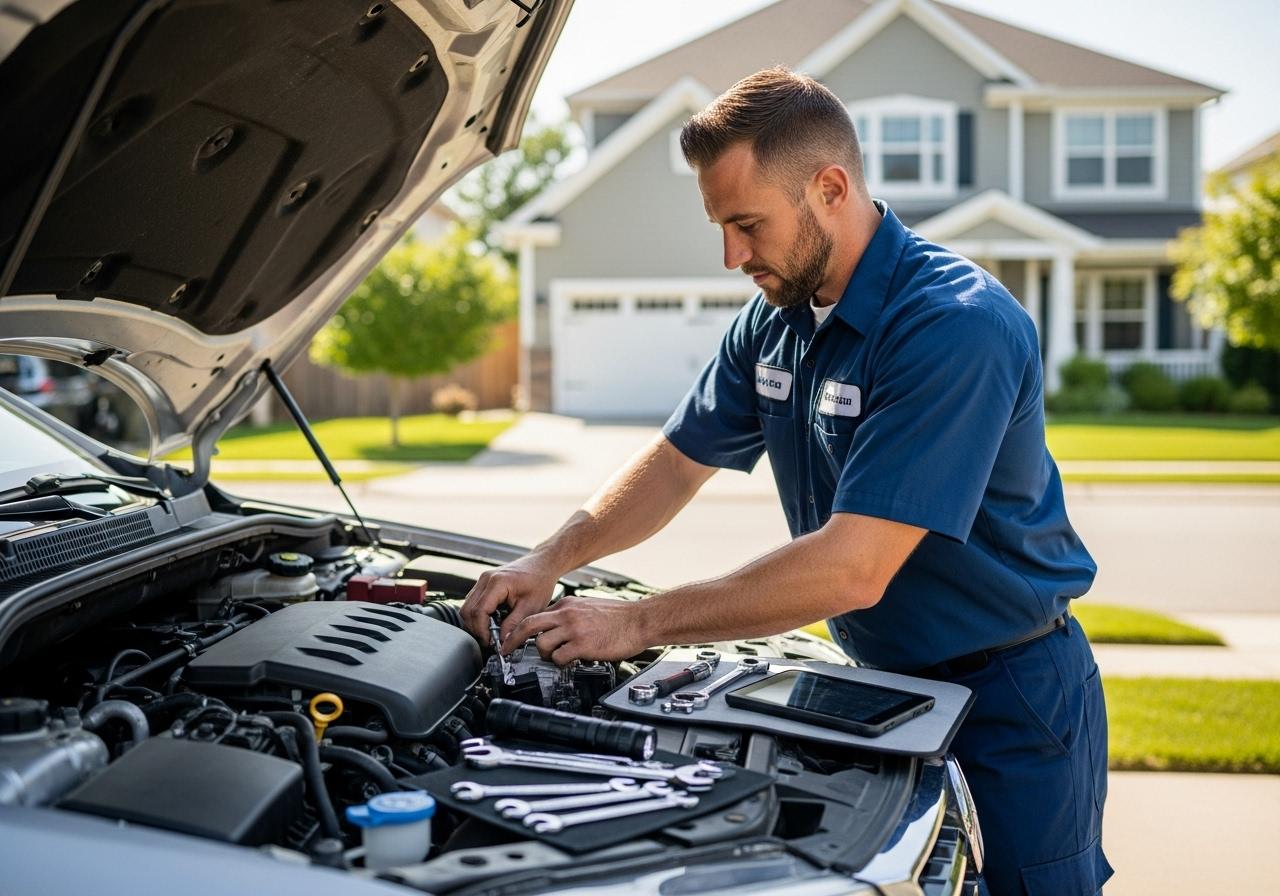
1. Routine servicing and scheduled maintenance
Depending on the vehicle and service package, a mobile mechanic may be able to complete an oil and filter change, selected fluid checks, visual inspections, scheduled maintenance items and a service-record update. Confirm the correct parts and fluids for your exact vehicle and ask how used fluids and parts will be handled.
Some service tasks need underbody access, special tools or a controlled workshop environment. Share the make, model, year, engine and service requirements so the provider can confirm what is practical.
2. Battery checks and selected battery replacements
Battery testing or replacement can be suitable for many vehicles when the battery is accessible and the correct replacement and procedures are known. Some modern vehicles require battery registration, coding, memory support or particular safety procedures. Stop-start, hybrid and electric vehicles can have additional requirements.
Do not assume that a vehicle's 12-volt battery is the same as its high-voltage hybrid or EV battery. High-voltage work requires appropriately trained personnel and equipment.
3. Basic diagnostics and warning lights
A mobile mechanic may use diagnostic equipment to read fault codes, review symptoms and carry out checks at the vehicle's location. A code is not always the failed part: further testing may be required before recommending a repair.
If a warning indicates low oil pressure, overheating, brake failure or another immediate safety risk, stop driving when safe and seek advice about recovery rather than continuing to use the car just to get it to a workshop.
4. Selected brakes, belts, filters and other repairs
Some repair jobs can be completed on-site when the design, parts, access and safe lifting arrangements allow it. The provider should confirm the exact repair in advance. A job that sounds straightforward may be more involved on a particular model because of seized fasteners, restricted access or additional components that need removal.
5. Pre-purchase checks and general inspections
A mobile mechanic may be able to inspect a vehicle at a seller's home or another suitable location. Ask whether the inspection includes a written report, diagnostic scan, road test and underbody checks; these items are not automatic and may be limited by access and safety.
Jobs that may need a workshop
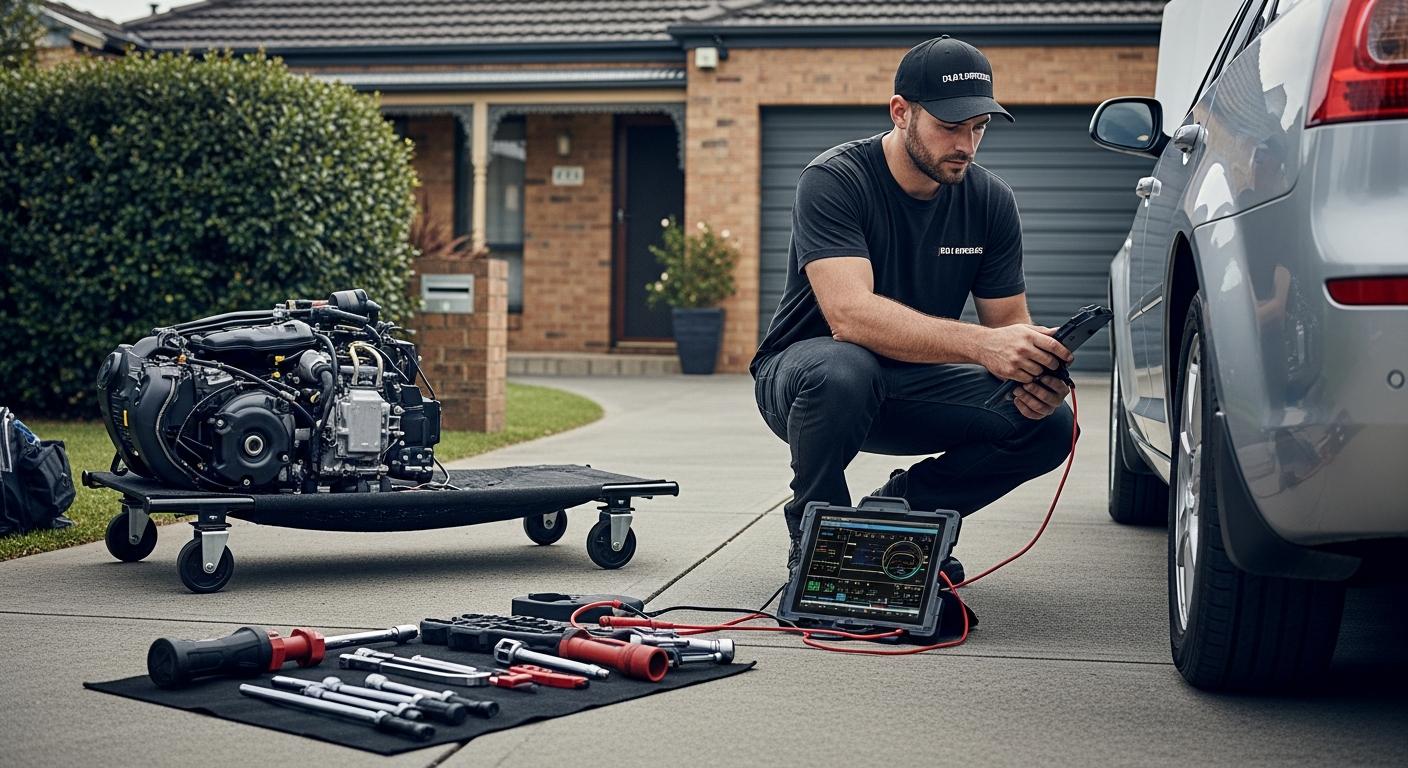
Some repairs need equipment, space or controlled conditions that a typical driveway does not provide. Examples may include:
- Major engine or transmission repairs: internal repairs and component removal can require specialist tooling, lifting equipment and extensive disassembly.
- Repairs needing a hoist or specialist underbody access: safe access cannot be assumed on a sloped or uneven driveway.
- Wheel alignment and some calibration work: these tasks may require dedicated equipment and a controlled setup.
- Complex electrical or high-voltage repairs: hybrid and electric vehicle systems require the right training, isolation procedures and equipment.
- Welding, fabrication or extensive exhaust work: these can require specialised facilities and appropriate fire safety controls.
- Repairs requiring extended testing: some faults need longer diagnostic time or repeated tests that are better handled in a workshop.
This list is not absolute. Vehicle design and the provider's equipment matter, so ask for a clear answer about your exact job.
Is your driveway suitable for a mobile mechanic?
Before confirming a visit, consider the working area. A suitable location is generally level, stable, well-lit and large enough for the vehicle and mechanic to work safely. There should be safe access around the car, permission to use the space, and no conflict with moving traffic or pedestrians.
Access is part of the job, not a minor detail. Accurate information about the parking area helps the mechanic decide what tools to bring and whether the appointment can be completed safely.
| Condition at the property | Why it matters | What to do before booking |
|---|---|---|
| Level, stable driveway with room around the car | Usually provides better access and safer working conditions. | Clear the space and mention any slope, low roof or tight access. |
| Steep or uneven surface | Can make lifting and under-vehicle work unsafe. | Tell the provider in advance; a different location may be needed. |
| Underground or apartment parking | Height, ventilation, access, building rules and shared-space restrictions may apply. | Confirm clearance, permissions and whether the requested work is allowed. |
| Street or high-traffic location | Traffic and pedestrian exposure may make repairs unsuitable or unlawful. | Do not assume roadside work is possible; confirm a safe permitted location. |
| Vehicle will not start or is blocked in | Access and movement can affect which tests or repairs are practical. | Explain the symptoms and parking position when requesting a quote. |
- Tell the mechanic if the car is in a basement, narrow garage, shared driveway or underground car park.
- Explain whether the vehicle is blocked in, cannot start, has a flat tyre or is parked on a slope.
- Check whether building, landlord, owners-corporation or site rules restrict vehicle repairs.
- Keep children, pets and bystanders away from the work area.
- Do not arrange work in a location where fluids could enter stormwater drains or where safe lifting is impossible.
What to tell the mechanic before booking
- Vehicle make, model, year, engine or powertrain, and registration details if requested.
- The exact symptom, when it started, warning lights and any recent repairs.
- Whether the car starts, moves and can be safely accessed.
- Your location and parking conditions, including height restrictions or shared access.
- The service or repair you believe is needed, while remaining open to diagnosis.
- Whether you need a quote, diagnostic visit or a confirmed repair appointment.
Accurate information helps the provider bring suitable parts and tools. It also reduces the risk of a wasted visit if the job needs a workshop or specialist equipment.
How mobile mechanic pricing works
Price depends on the vehicle, diagnosis, labour time, parts, travel, access and whether additional work is discovered. Ask whether the quoted amount covers call-out, inspection, parts, labour, consumables and GST, and whether diagnostic time is charged separately. Request approval before additional work begins.
Compare quotes that cover the same work, parts and diagnostic scope. A lower headline price may exclude call-out, testing or consumables, while a more detailed quote may make the total easier to understand.
A written quote should make the scope and exclusions clear.
| Quote item | Question to ask |
|---|---|
| Call-out or travel | Is travel included, and are there location-based fees or parking costs? |
| Diagnostic time | Is diagnosis charged separately from the repair, and how is extra testing approved? |
| Parts and fluids | Are parts, consumables and the correct manufacturer-specified fluids included? |
| Labour and additional work | What work is covered by the quote, and will you contact me before doing anything extra? |
| GST and invoice | Is GST included in the quoted total, and will I receive an itemised invoice? |
| Warranty and limitations | What warranty applies to the supplied parts and labour, and what is excluded? |
A home visit is not automatically cheaper than a workshop repair. Its value may be convenience and reduced disruption, but compare like-for-like scope, parts and warranty terms rather than price alone.
Frequently asked questions
Can a mobile mechanic service my car in my driveway?
Often, if the requested service is supported by the provider and the driveway is safe, level and accessible. Confirm the specific work and site conditions before booking.
Can a mobile mechanic fix any car problem at home?
No. Some repairs require a hoist, specialist diagnostic equipment, controlled workshop facilities or additional technicians. The mechanic should explain when a workshop is necessary.
Can a mobile mechanic change engine oil at home?
Many providers offer oil and filter changes for suitable vehicles, but confirm the correct oil specification, access, disposal arrangements and whether your vehicle requires additional service procedures.
Can a mobile mechanic diagnose a check-engine light?
A mechanic may be able to scan fault codes and perform initial checks on-site. A code does not always identify the failed part, so further diagnosis may be needed.
Can a mobile mechanic repair brakes at home?
Some brake jobs may be possible if the vehicle, equipment and location allow safe access. Confirm the exact work in advance; brake faults can make driving unsafe and may require recovery.
Can a mobile mechanic work in an apartment car park?
Possibly, but height limits, access, ventilation, common-property rules and permission can prevent work. Check the building rules and tell the provider the exact parking conditions before booking.
What if my car will not start?
Describe the symptoms and any dashboard lights when enquiring. A mobile mechanic may be able to test the battery or diagnose some faults, but the cause and location determine whether on-site repair is practical.
Will the mechanic tell me if my car needs a workshop?
A responsible provider should explain when the job exceeds the safe or practical scope of a mobile visit and discuss suitable next steps. Confirm this process when booking.
Choose the right service for your situation
A mobile mechanic is a useful option for many maintenance and repair jobs, but suitability depends on the vehicle and working environment. Describe the problem accurately, check the provider's scope and make sure the location is safe before confirming an appointment.
Review car servicing options, browse the wider service list, or send an enquiry through the online booking page.
A simple decision guide before you book
Use this quick decision sequence to avoid booking the wrong type of appointment:
- Describe the symptom. Include when it started, dashboard warnings, noises, leaks and any recent repair work.
- Share vehicle details. Provide make, model, year, engine or powertrain and registration details if requested.
- Explain access. State whether the car is on a driveway, in a basement, on a slope or unable to move.
- Confirm the service scope. Ask whether the provider can complete the job on site and what could require a workshop.
- Agree on cost approval. Confirm call-out, diagnostic fees, parts, labour, GST and approval for additional work.