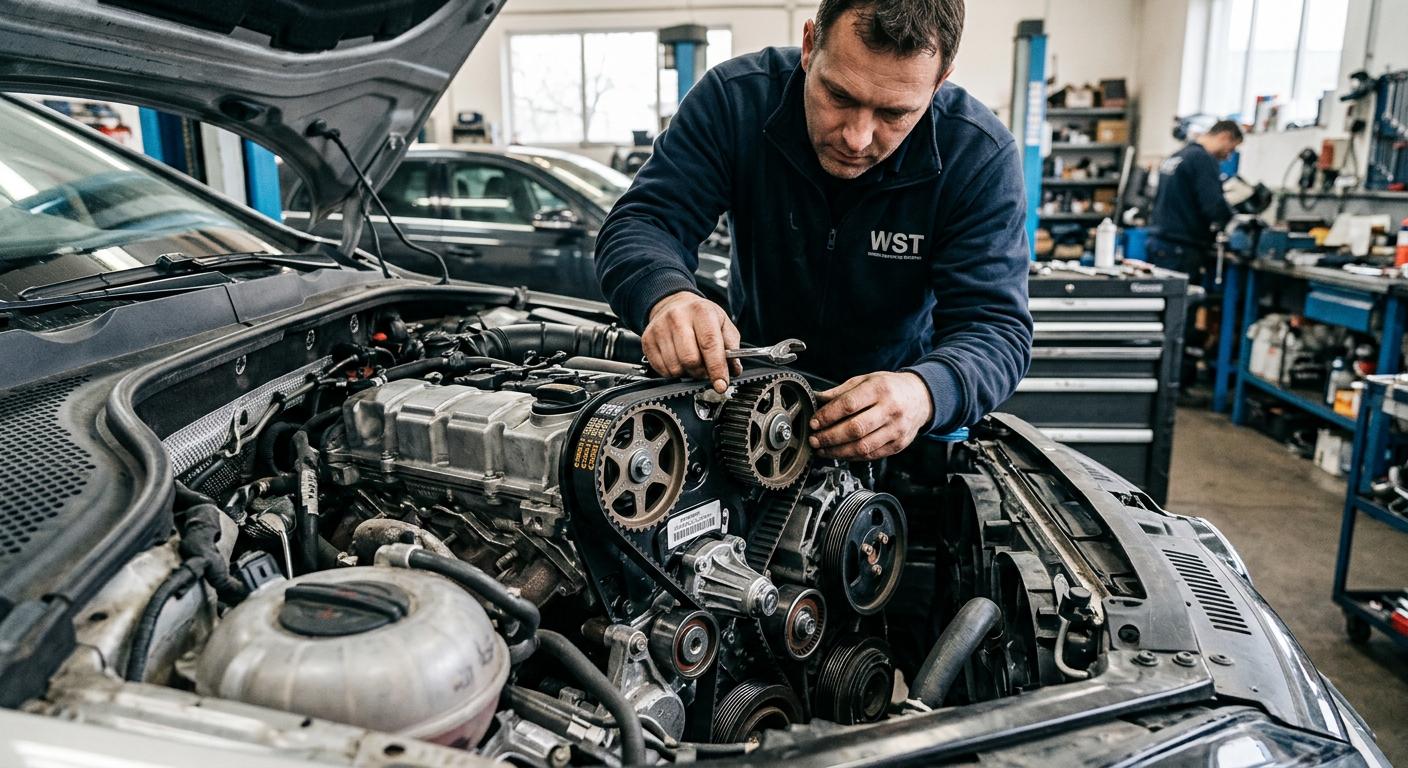
Timing belt, drive belt and serpentine belt are terms drivers often hear during a service, but they do different jobs. A timing belt synchronises engine components on engines designed to use one. An accessory or serpentine belt drives components such as the alternator and, depending on the vehicle, the air-conditioning compressor or hydraulic power-steering pump.
There is no single replacement interval or price for every car. Engine design, access, the manufacturer's maintenance schedule and whether related components need attention all affect the repair. This guide explains the differences, common warning signs and what to ask before approving a quote.
If you suspect a belt issue, review the drive belt replacement service or use the online booking page to discuss your vehicle.
Quick answer: how are the belts different?
- Timing belt: Synchronises crankshaft and camshaft movement so engine valves operate at the right time.
- Serpentine belt: A long accessory belt that can drive several components through a series of pulleys.
- Drive or accessory belt: A general term for belts that transfer engine power to accessories. Some cars use several separate belts.
Everyday terminology can vary, so confirm which belt is meant for your exact make, model, year and engine. Some engines use a timing chain instead of a timing belt.
Timing belts: the critical maintenance item
A timing belt is usually behind protective covers and synchronises internal engine operation. It may deteriorate with age and use even if there is no obvious noise. For that reason, a visual check does not replace the manufacturer's time- and distance-based replacement schedule.
Timing belt warning signs
- Replacement is due: The service interval has been reached, even if the engine seems normal.
- Running or starting problems: Rough running or hard starting can have many causes, but timing issues need proper diagnosis.
- Noise near the timing cover: It may indicate a belt, tensioner or other component problem, but sound alone cannot identify the fault.
- Oil or coolant leaks nearby: Contamination should be investigated because it can affect some belt systems.
Important: If a timing belt breaks or jumps out of position, some engines can suffer serious internal damage. Do not wait for a noise if the scheduled replacement is due. Check the service history and ask a qualified mechanic to confirm the interval for your engine.
Serpentine and accessory drive belts
A serpentine belt winds around multiple pulleys to drive accessories. Depending on the design, these can include the alternator, air-conditioning compressor and hydraulic power-steering pump. Other vehicles use separate belts or electrically driven components.
Signs an accessory belt may need attention
- Squealing or chirping: Possible causes include wear, incorrect tension, misalignment, moisture or a pulley bearing.
- Cracks, fraying or missing ribs: Visible damage can reduce grip and reliability.
- Battery warning light: A failed belt can stop the alternator charging on some vehicles, although other charging faults are possible.
- Suddenly heavy steering: This can happen on vehicles with belt-driven hydraulic power steering. Pull over safely and seek assistance.
- Air-conditioning stops working: A belt or accessory fault may be involved, depending on the layout.
- Engine temperature rises: Some belts drive the water pump. Stop safely and switch off the engine if it overheats.
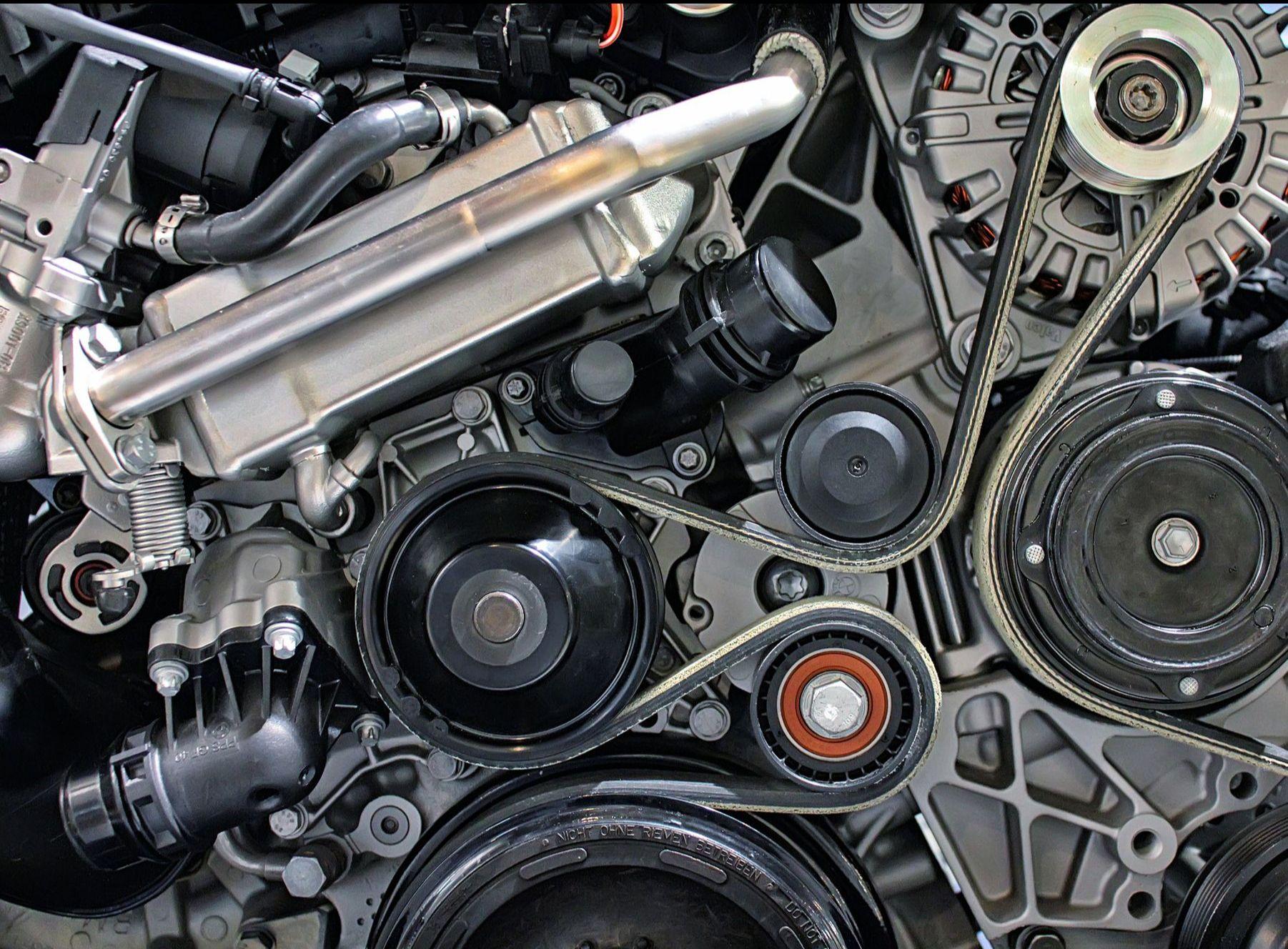
Timing belt vs serpentine belt vs drive belt
| Feature | Timing belt | Accessory/serpentine belt |
|---|---|---|
| Main job | Synchronises engine timing | Drives accessories |
| Typical location | Usually behind covers | Often visible around external pulleys |
| Replacement basis | Manufacturer schedule | Condition and service guidance |
| Failure impact | May cause major engine damage | May affect charging, cooling or steering depending on design |
| Can sound confirm failure? | No | No; pulleys and tensioners can also make noise |
How often should belts be replaced?
Use the manufacturer's maintenance schedule for the exact engine. Timing-belt intervals vary by model and may depend on both age and distance. If service records are missing on a used car, ask a mechanic to establish what is due instead of assuming it has been replaced.
Accessory belt replacement depends on the belt type, inspection findings, operating conditions and manufacturer guidance. A squeal does not automatically mean the belt is the cause, and a belt that looks acceptable may still be near its service limit.
What affects belt replacement cost in Melbourne?
A reliable quote needs your vehicle details. Common factors include:
- Which belt: A timing-belt job is usually a different scope from an accessory-belt replacement.
- Engine layout and access: Some components take longer to reach.
- Parts and specification: Belt type, availability and the correct manufacturer specification matter.
- Related components: Tensioners, idler pulleys, seals or a water pump may be included where the repair procedure or inspection supports it.
- Underlying faults: Oil leaks, damaged pulleys or cooling-system issues may need separate repairs.
- Worksite suitability: Some jobs need workshop equipment or controlled working conditions and may not be suitable for every mobile setup.
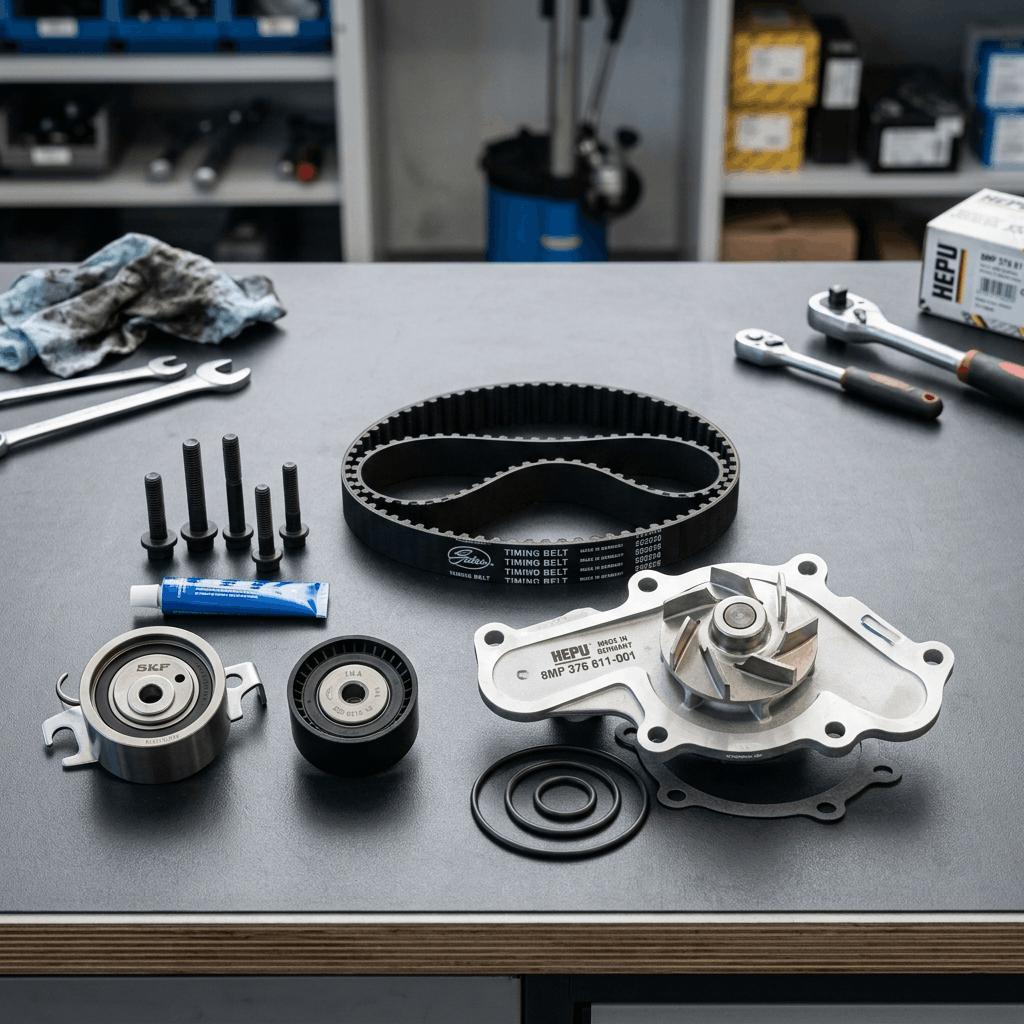
Ask for an itemised quote identifying parts, labour, related components, warranty and any additional work. Compare the scope, not just the headline price.
Can you keep driving with a noisy or damaged belt?
Do not ignore a frayed, slipping or persistently noisy belt. If the battery warning light appears with other symptoms, steering becomes unexpectedly heavy, the engine temperature rises, or you notice smoke or a burning smell, pull over safely and switch off the engine when appropriate. Continuing to drive can turn a repair into a breakdown.
A timing belt due for replacement deserves prompt attention even if the vehicle runs normally. Some failures happen with little warning, so waiting for symptoms is not a safe maintenance plan.
What to tell your mechanic
- Make, model, year and engine details.
- Whether you hear a squeal, see a warning light, notice overheating or need scheduled maintenance.
- When the belt was last replaced, if known.
- Whether the car is safe to drive or needs recovery.
Explore the drive belt replacement service, browse other automotive services, or request a booking.
Belts can also be affected by related maintenance needs. If your vehicle is due for broader maintenance, compare our car servicing options. Where inspection points to a water-pump issue, review the water pump replacement service. For maintenance that follows the manufacturer schedule, see our logbook service information.
Frequently asked questions
Are a timing belt and serpentine belt the same?
No. A timing belt synchronises engine components; a serpentine belt drives accessories on vehicles that use this layout.
Is a drive belt the same as a serpentine belt?
Not always. Drive belt is a broad term for accessory belts. A serpentine belt is one type, while some cars use multiple separate belts.
How much does timing belt replacement cost?
The price depends on the vehicle, engine access, parts, labour and whether related components are included. Request a quote for your exact vehicle.
What happens if a timing belt breaks?
Depending on the engine design, it can stop the engine and cause serious internal damage. Follow the manufacturer's replacement schedule.
Can I drive with a squealing serpentine belt?
Arrange an inspection promptly. If warning lights, overheating, heavy steering or other serious symptoms occur, stop safely and seek assistance.
Does every car have a timing belt?
No. Some engines use a timing chain. Confirm the design for your exact vehicle and engine.
Should the water pump be replaced with a timing belt?
It depends on the engine and manufacturer's procedure. Confirm whether replacement is recommended for your specific vehicle.
Can a mobile mechanic replace a drive belt?
Some accessory-belt jobs may suit mobile repair, depending on access, tools and location. More involved timing-belt work may require a workshop setup.
Final takeaway
Timing belts and accessory belts do different jobs. Follow the timing-belt service schedule, investigate accessory-belt noise early and stop driving if symptoms suggest overheating, loss of charging or unsafe steering. A vehicle-specific inspection and itemised quote clarify the work needed.