
Buying a used car can be exciting, but a polished exterior and a confident seller do not tell you everything about its condition. A pre-purchase car inspection in Melbourne gives you an independent view of the vehicle before you commit your money. It can help identify visible defects, maintenance concerns and warning signs that deserve further investigation.
An inspection is not a guarantee that a car will never break down, and the exact checks depend on the vehicle, access, available records and the inspection service. Treat it as one part of your decision alongside a test drive where permitted, service history, registration and finance checks, and a careful review of the seller's information.
If you are comparing used vehicles, explore the available automotive services and ask what inspection scope can be arranged before you book.
Quick answer: Is a pre-purchase inspection worth it?
It is often worthwhile when you are considering a vehicle with an unknown history, a high asking price, high kilometres, incomplete service records or signs of wear. An independent inspection may help you spot issues before purchase, negotiate based on evidence or decide to walk away.
The value depends on the car and the inspection scope. A basic visual assessment is different from a comprehensive mechanical inspection with a road test and diagnostic scan. Confirm exactly what is included before relying on the report.
What does a pre-purchase car inspection check?
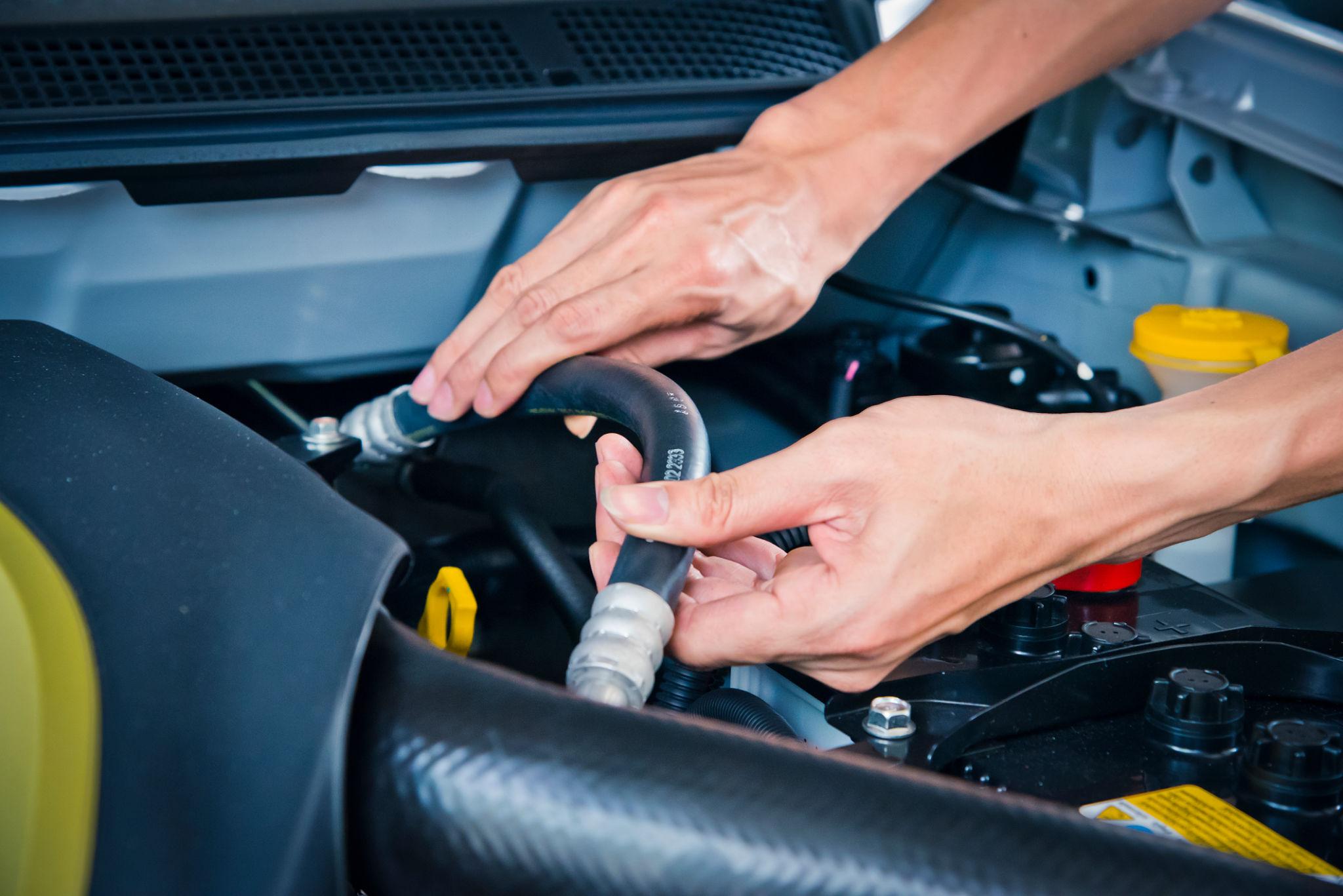
A useful report should separate observations from confirmed faults. It should also explain anything that could not be checked because the vehicle was inaccessible, the seller declined a test, or specialist equipment was unavailable.
Typical inspection areas — actual scope depends on the vehicle and agreed service.
| Inspection area | What may be checked | Questions to ask |
|---|---|---|
| Engine and fluids | Visible leaks, hoses, fluid condition/levels where safe, unusual noises and signs of neglected maintenance. | Can you see evidence of leaks or overheating, and what needs further testing? |
| Tyres and wheels | Tread depth and wear pattern, visible damage, mismatched tyres and obvious wheel concerns. | Is wear even, and could alignment or suspension need a closer check? |
| Brakes, steering and suspension | Accessible components, noises, visible damage and handling symptoms during an agreed road test. | Was a road test possible, and were any checks limited by access? |
| Body and structure | Panel gaps, paint differences, corrosion and visible signs that repairs may have occurred. | Are there clues that justify a specialist body or structural assessment? |
| Electrical systems | Accessible lights, windows, locks, air conditioning and diagnostic fault codes if scanning is included. | Which systems were scanned, and do any codes require diagnosis? |
| Records and maintenance | Available service invoices, odometer consistency in supplied records and upcoming scheduled items. | What maintenance is due soon, and what records are missing? |
Inspection scope varies, but a professional assessment may include the following items where they are accessible and appropriate for the vehicle.
1. Engine bay and visible mechanical condition
- Visible fluid leaks, damaged hoses and loose or deteriorated components.
- Fluid levels and visible condition where checking is safe and appropriate.
- Unusual noises, warning signs or running concerns during permitted checks.
- Signs of poor repairs, neglected maintenance or overheating history, where evidence is visible.
A visual inspection cannot reveal every internal engine problem. Some faults only appear under particular temperatures, loads or operating conditions.
2. Tyres, brakes, steering and suspension
- Tyre tread, uneven wear, visible damage and mismatched tyres.
- Visible brake condition and signs that further assessment may be required.
- Suspension or steering noises and visible damage where accessible.
- Obvious wheel, alignment or handling concerns during a permitted road test.
Not every component can be inspected fully without lifting equipment or dismantling. Ask whether the vehicle will be raised and which underbody areas can be viewed.
3. Body, paint and signs of previous damage
Uneven panel gaps, paint differences, corrosion, poorly aligned panels or signs of repairs can prompt questions about accident history. These clues are not proof of a particular event, and a standard inspection may not establish the full extent of past structural damage.
4. Electrical systems and dashboard warnings
Lights, windows, locks, air conditioning and other accessible functions may be checked. A diagnostic scan may identify stored fault codes, but a code is a clue rather than a complete diagnosis. Some faults are intermittent, recently cleared or not detected by a basic scan tool.
5. Service records and maintenance concerns
Reviewing available invoices and service records can help identify gaps in maintenance. Check whether the records match the vehicle and ask about overdue scheduled items, timing-belt requirements where applicable, recalls and any repairs the seller says have been completed. A mechanic can assess visible condition, but records and manufacturer information are still important.
What a pre-purchase inspection may not detect
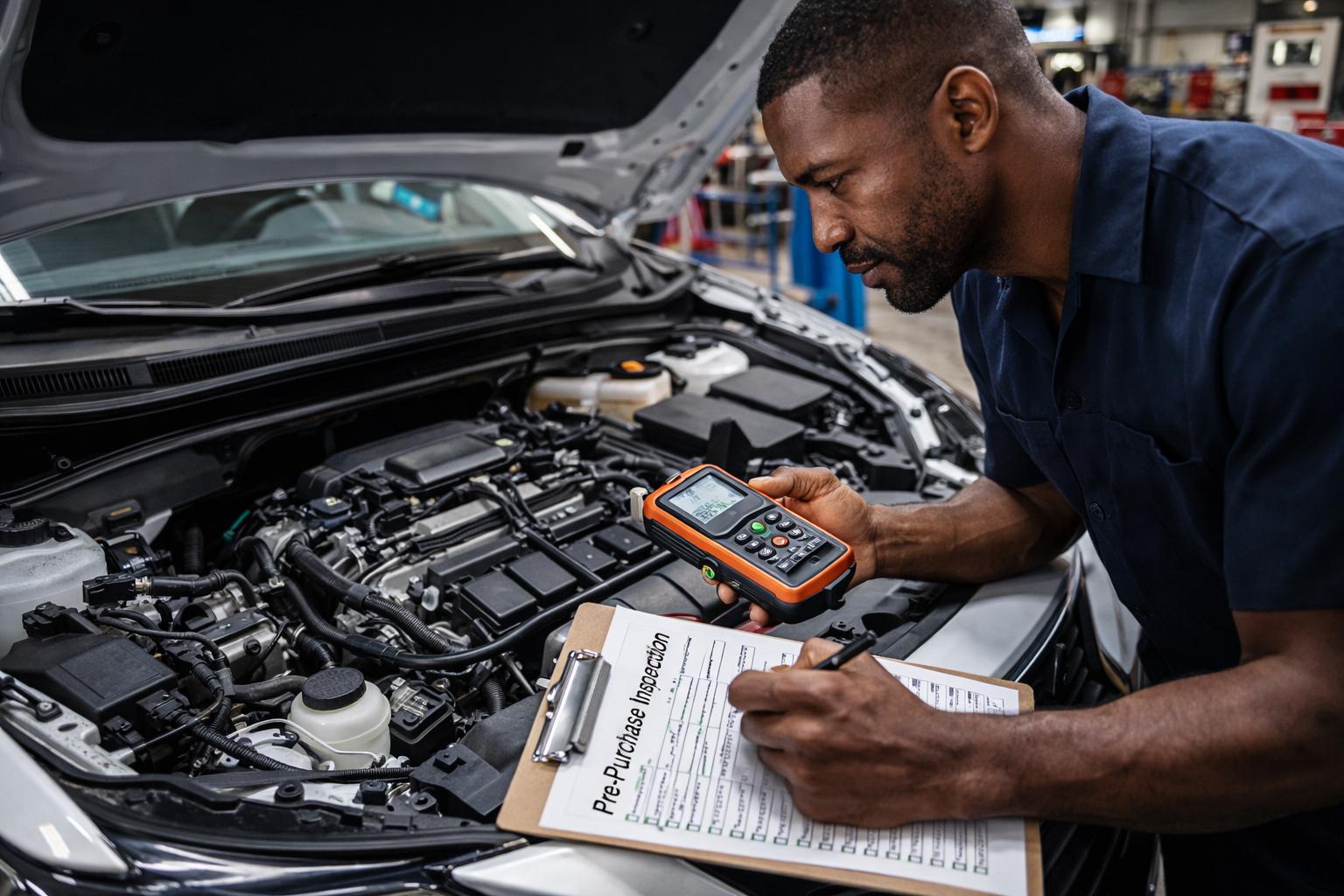
Even a careful inspection has limits. Hidden internal engine or transmission wear, intermittent electrical faults, problems that only occur during a long drive, concealed accident damage and future component failure may not be apparent during a single appointment.
- The vehicle may not be available long enough for every test.
- The seller may not permit a road test, scan or lift inspection.
- Some hybrid, electric, European or specialist vehicles require equipment or expertise beyond a general inspection.
- A diagnostic scan does not replace physical testing or a full mechanical assessment.
Ask for the limitations to be stated clearly in the report. If a concern needs specialist testing, treat it as an unresolved risk rather than assuming the car has passed.
Can a mobile mechanic inspect a car before you buy it?
A mobile inspection may be convenient when the vehicle is parked at a seller's home, workplace or another suitable location. It still depends on safe access, lighting, parking, weather, permission and whether the inspection can be performed without a workshop hoist or specialist equipment.
Confirm the vehicle's exact location, make, model, year, engine or powertrain, and whether the seller will allow the mechanic to inspect it. Ask whether the service includes a road test, diagnostic scan, underbody inspection, written findings and photographs. Do not assume every mobile inspection includes all of these items.
For other maintenance needs, you can review car servicing options or enquire through the online booking page.
What affects the cost of a pre-purchase inspection in Melbourne?
There is no single price that fits every vehicle or inspection. Request an itemised quote and check what is included. Cost factors can include:
There is no universal inspection price that applies to every car. Ask for the fee and scope before the appointment, and confirm whether any specialist assessment or follow-up testing would be quoted separately.
Compare like-for-like inspection scopes rather than price alone.
| Quote factor | Why it can change the price | What to confirm |
|---|---|---|
| Inspection depth | A visual assessment takes a different amount of time from a longer inspection with a road test and scan. | Ask for the included checklist and exclusions in writing. |
| Vehicle type | Vehicle layout, specialist systems and access can affect the tools and expertise required. | Provide make, model, year, engine/powertrain and VIN if available. |
| Location and access | Travel distance, parking restrictions and the ability to access the vehicle can affect feasibility. | Share the exact address area, parking type and seller availability. |
| Diagnostic scan or road test | These may be excluded from a basic inspection or unavailable in certain circumstances. | Confirm whether each item is included and any conditions. |
| Written report and photos | Report detail and documentation can vary between providers. | Ask whether findings, photographs and recommendations are supplied. |
- Inspection depth: a visual check differs from a longer assessment with diagnostic scanning and a road test.
- Vehicle type: access, design and specialist requirements can affect time and equipment.
- Location and access: travel distance, parking arrangements and whether the vehicle can be safely inspected matter.
- Additional testing: specialist diagnostics, a lift inspection or further testing may be separate.
- Report format: confirm whether written findings and photographs are supplied.
Be cautious about comparing quotes that describe different services. A low-cost check may be useful, but it should not be treated as equivalent to a more comprehensive inspection unless the scope matches.
How to prepare before the inspection
- Get the seller's permission and confirm the appointment location.
- Ask for the VIN or registration details and compare them with the vehicle and available paperwork.
- Request service records, repair invoices, manuals and information about known faults.
- Tell the inspector about your concerns, such as a warning light, noise, accident history or unusual wear.
- Ask what the inspection does and does not cover, including whether a road test and diagnostic scan are possible.
- Wait for the findings before making a non-refundable commitment wherever possible.
How to use the inspection report when deciding
Separate findings into three groups: urgent safety or major mechanical concerns, maintenance likely to be needed soon, and minor cosmetic issues. Ask the inspector to explain uncertainty and recommend further tests where needed.
Before negotiating, ask the inspector to explain the difference between a confirmed defect, a possible cause and a recommendation for more testing. That distinction helps you avoid treating an uncertain observation as a final diagnosis.
| Report category | Examples | Practical next step |
|---|---|---|
| Safety-critical or major concern | Brake concerns, severe leaks, structural warning signs, overheating evidence or serious drivability symptoms. | Pause the purchase decision and seek clarification or specialist assessment. |
| Maintenance due soon | Tyres nearing replacement, overdue scheduled service, worn components or age-related maintenance. | Request an itemised repair/maintenance estimate and factor it into ownership costs. |
| Minor or cosmetic issue | Small paint marks, trim damage or non-critical cosmetic wear. | Decide whether it matters to you and use it as part of the overall comparison. |
| Unable to confirm | No road test, limited underbody access, intermittent symptoms or specialist systems not tested. | Treat it as unresolved risk; do not interpret it as a clean bill of health. |
Use documented findings to ask the seller questions or seek a repair quote. Do not assume the seller must reduce the price, and do not ignore serious concerns simply because the vehicle is attractive or popular. If the report identifies a major unresolved risk, walking away may be the sensible choice.
Frequently asked questions
Is a pre-purchase inspection the same as a roadworthy certificate?
No. A pre-purchase inspection helps you assess a vehicle before buying it and may cover areas beyond a roadworthiness check. A roadworthy certificate has a specific regulatory purpose and inspection requirements; neither should be treated as a guarantee of future reliability.
Should I get an inspection if the car has a full service history?
It can still be worthwhile. Records show what has been documented, but they do not prove the vehicle's current condition or rule out new faults.
Can an inspection guarantee the car will not break down?
No. It provides a snapshot of condition and identifies concerns that can be detected within the agreed scope. Hidden, intermittent or future failures can still occur.
Can a mechanic inspect a car at the seller's home?
Often, if the location is safe and suitable and the inspection scope can be completed there. Access, lighting, permission and the need for lifting or specialist equipment may limit what can be checked.
Does a pre-purchase inspection include a diagnostic scan?
Not automatically. Confirm whether a scan is included and ask which systems can be checked. Scan results need to be interpreted alongside physical inspection and symptoms.
Can the mechanic test-drive the vehicle?
Only when the seller permits it, the vehicle is appropriately registered and insured for the proposed use, and conditions are safe. Confirm this before booking.
What if the inspection finds a major problem?
Ask for the finding and its uncertainty to be explained, then consider a specialist assessment or repair quote. You can negotiate, request further evidence or decide not to proceed.
When should I book the inspection?
Arrange it before committing to the purchase where possible, and allow enough time to review the report and follow up on any concerns before making your final decision.
Make an informed decision before buying
A pre-purchase inspection is most useful when you understand its scope and limitations. Combine the findings with service records, ownership and finance checks, a careful test drive where permitted and questions for the seller. If you need help arranging suitable vehicle checks or ongoing maintenance, explore available automotive services or use the online booking page to enquire about your vehicle.
Used-car checks to complete alongside the mechanic inspection
A mechanical inspection is only one part of due diligence. Before paying a deposit or signing an agreement, independently confirm the vehicle identity and paperwork, check the registration and relevant history records, review finance or encumbrance information where applicable, and make sure the seller has authority to sell the vehicle. Requirements and available checks can differ by state and vehicle type.
- Match the VIN and registration details on the vehicle with the supplied documents.
- Review service invoices and ask about gaps, repeated repairs or warning lights that have appeared.
- Confirm whether any recall or manufacturer campaign applies and how it has been addressed.
- Read the inspection scope and limitations before relying on the report.
- Do not let urgency or a seller’s deadline pressure you into skipping checks you consider essential.