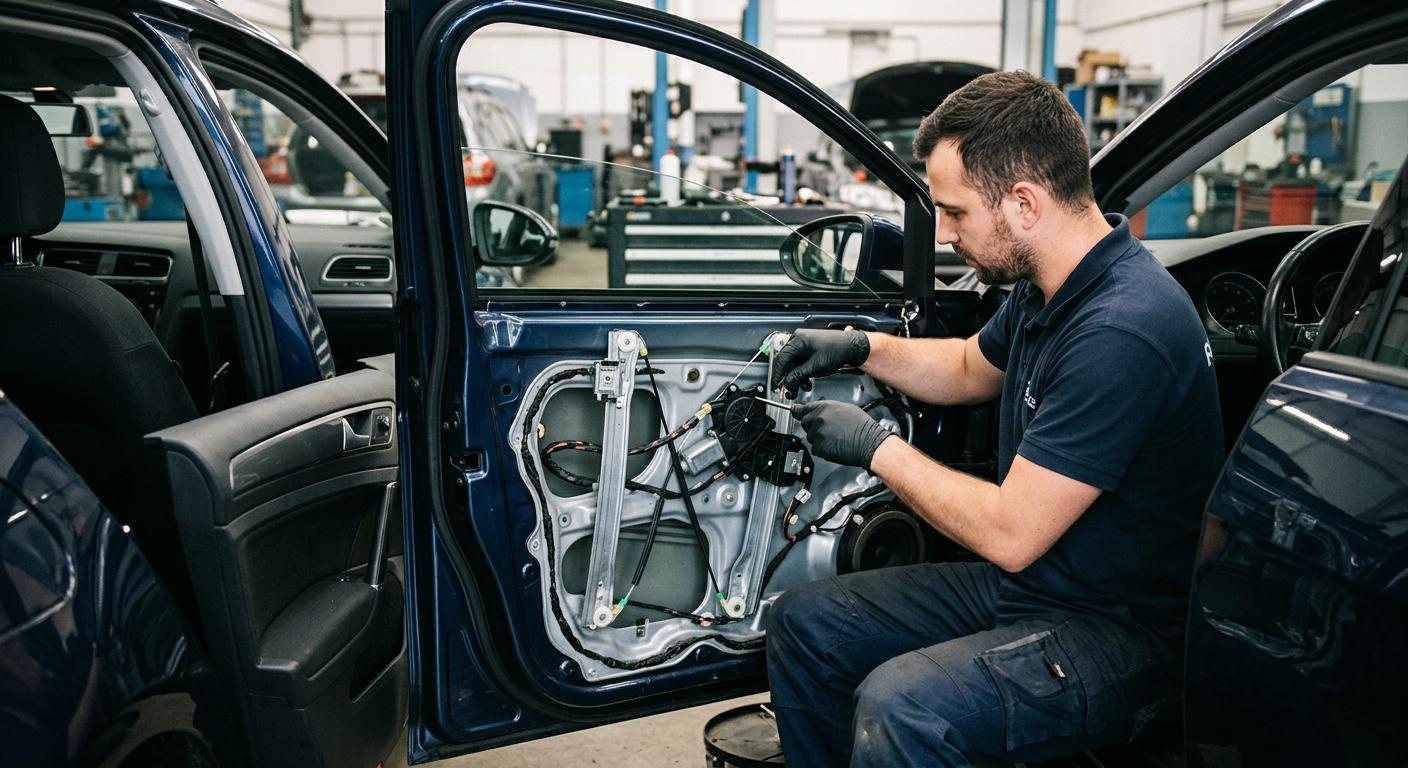
A power window that refuses to close can quickly become more than an inconvenience. Rain, dust, security concerns and the risk of further damage can make a stuck window stressful, particularly when the car is parked away from home. Sometimes the window moves slowly or makes a clicking or grinding sound before it stops working completely.
Two common components involved in power-window faults are the window motor and the window regulator. They work together, but perform different jobs. Understanding the difference helps you describe the symptoms accurately and understand why a technician needs to diagnose the fault before quoting for a replacement.
How Does a Power Window Work?
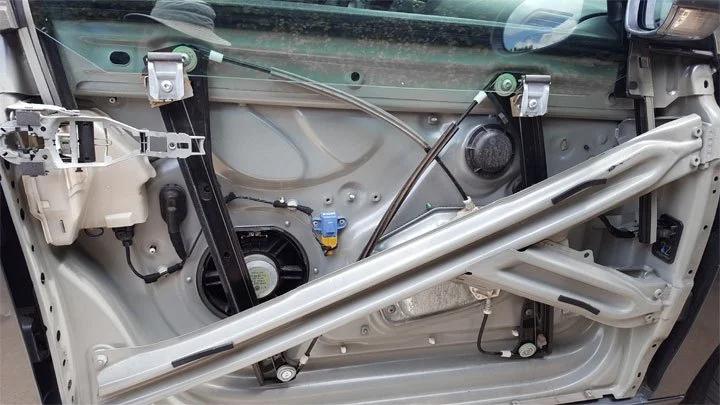
A typical electric window system uses a switch, electrical wiring, a motor and a regulator mechanism. When you operate the switch, the electrical circuit activates the motor. The regulator converts the motor's movement into the movement needed to raise or lower the glass along its guides.
The exact arrangement varies between vehicles. Some designs use a cable-driven regulator, while others use arms, tracks or integrated assemblies. The motor and regulator may be replaceable separately on some vehicles, while other designs make replacing the combined assembly more practical.
The switch, fuse, wiring, connector, door control module, glass guides and mechanical mounting points can also affect window operation. A window that does not move should not automatically be diagnosed as a failed motor.
Window Motor vs Window Regulator: What Is the Difference?
What Does the Window Motor Do?
The window motor supplies the movement needed to raise or lower the glass. If the motor has worn internal components, lost its electrical supply or developed another fault, the window may stop moving or operate intermittently.
Possible motor-related symptoms include no movement when the switch is pressed, slow operation, intermittent response or unusual motor noises. However, a faulty switch, poor connection, jammed regulator or binding glass can produce similar symptoms. Testing is needed to determine whether the motor itself has failed.
What Does the Window Regulator Do?
The regulator guides and supports the window as it travels up and down. It may use cables, tracks, pulleys, arms or other mechanical components, depending on the design. If part of the mechanism breaks, becomes detached or jams, the glass may tilt, move unevenly or fall inside the door.
A regulator fault may produce clicking, crunching or grinding sounds, uneven movement, a window that rises partway before stopping, or glass that drops unexpectedly. A damaged regulator can also place extra strain on a working motor.
Can the Motor and Regulator Fail Together?
Yes. A regulator that binds or jams can make the motor work harder than intended. A motor fault can also leave the window stuck even if the regulator is mechanically sound. The correct repair depends on the design of the assembly and the results of the inspection.
On some vehicles, the motor is supplied separately; on others, the practical replacement may be a combined motor-and-regulator unit. The technician should identify the correct component for the vehicle rather than assume every model uses the same arrangement.
Seven Common Signs of a Power Window Problem
1. The Window Does Not Move at All
If pressing the switch produces no movement, possible causes include a faulty switch, blown fuse, damaged wiring, poor connection, control-module fault, failed motor or jammed mechanism. Check the vehicle handbook for the correct fuse information, but avoid repeatedly replacing a fuse that blows again. A recurring electrical fault needs investigation.
2. The Window Moves Slowly
Slow movement can occur when the motor is weakening, the regulator is binding or the glass is resisting movement in its guides. Dirt, wear, misalignment and electrical-supply problems can also contribute. Forcing the window repeatedly may increase strain on the mechanism.
3. You Hear Grinding, Clicking or Crunching
Unusual noises can indicate damaged regulator cables, worn mechanical components or a motor struggling against resistance. Stop repeated operation if the noise is severe or the glass moves unevenly. Continuing to use a damaged mechanism can make the repair more involved.
4. The Glass Tilts or Moves Unevenly
A window that leans to one side, catches in the frame or moves at an angle may have a regulator, guide or mounting problem. The glass can become unstable if a support or attachment has failed, so avoid forcing it up or down.
5. The Window Drops Into the Door
If the glass suddenly falls or will not remain raised, a regulator cable, support or mounting component may have broken or detached. Treat this as a mechanical fault rather than continuing to operate the switch. The glass may need to be secured and the door assembly inspected before the vehicle is used normally.
6. The Window Works Intermittently
If the window works on some attempts but not others, the fault could involve a switch, wiring connection, motor or control system. Note whether the issue affects one window or several, and whether it occurs when the door is moved. This information can help narrow down the possible causes.
7. Only One Window Is Affected
A single non-working window may indicate a local switch, motor, regulator, wiring or connection fault. If several windows stop working together, the cause may involve a shared power supply, fuse, control module or another common electrical component. These patterns are useful clues, but neither confirms the cause on its own.
Quick Comparison: Motor, Regulator or Electrical Fault?
| Symptom | Possible cause | What diagnosis should check |
|---|---|---|
| No movement or sound | Switch, fuse, wiring, control module or motor | Power supply, switch signal, connections and motor operation |
| Motor sound but glass does not move | Regulator, detached glass or damaged mechanism | Regulator condition, glass attachments and mechanical movement |
| Grinding or crunching noise | Damaged regulator or binding mechanism | Cables, tracks, pulleys, mounting points and glass alignment |
| Slow or uneven movement | Motor wear, binding guides, regulator or electrical supply | Movement resistance, voltage supply and component condition |
| Several windows fail at once | Shared electrical supply, fuse or control-system fault | Common power and control circuits |
| Glass drops or tilts | Regulator support or glass mounting failure | Glass stability and the complete lifting mechanism |
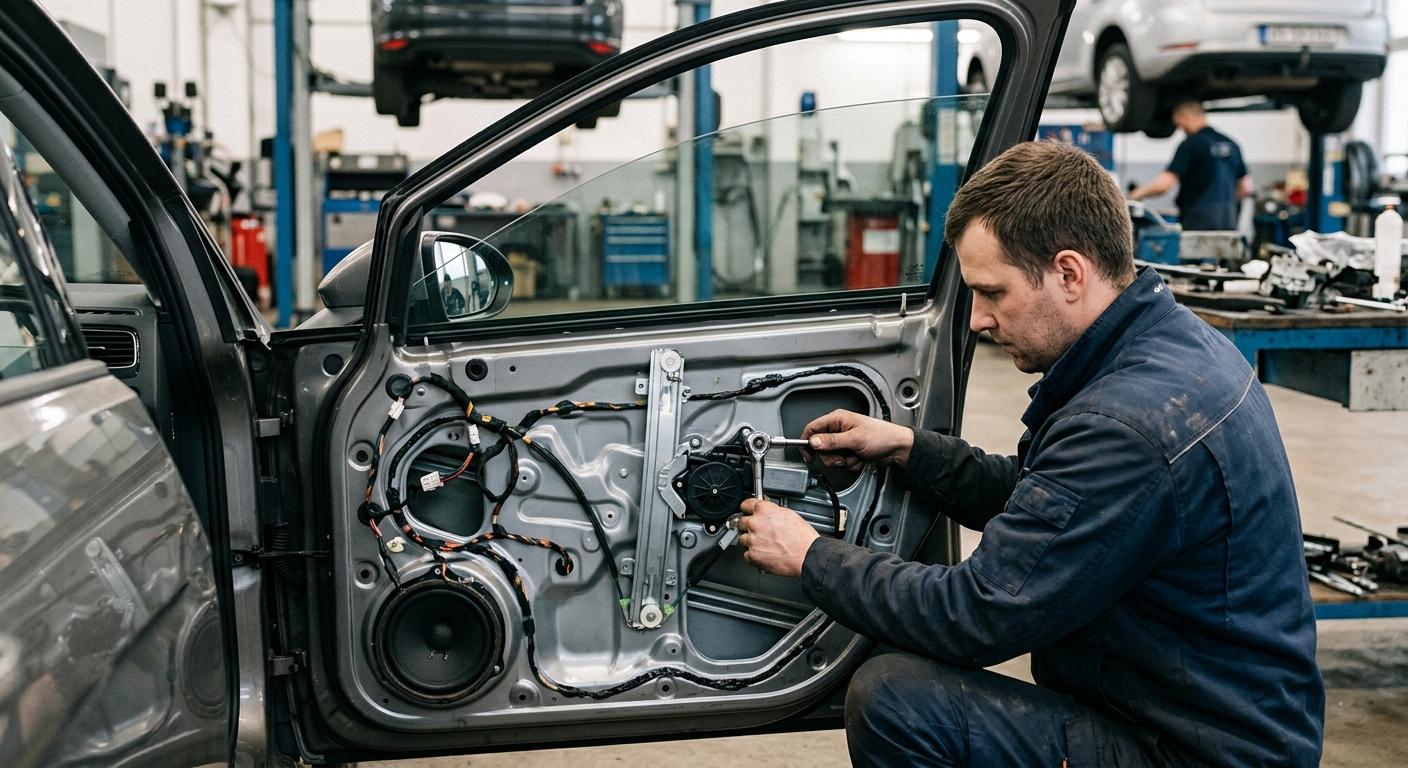
This table helps describe symptoms but does not replace an inspection. A technician may need to remove the interior door trim to inspect the regulator, glass attachments and motor safely.
How Much Does Power Window Repair Cost?
Power-window repair costs vary by vehicle and by the component that has actually failed. A switch or wiring repair involves different work from replacing a motor or regulator assembly. Some doors provide straightforward access, while others require more disassembly or use components supplied together.
- Fault location: A switch, fuse, wiring fault, motor failure and broken regulator are different repairs.
- Vehicle make and model: Parts availability, assembly design and door construction affect the work involved.
- Separate or combined parts: Some vehicles allow the motor and regulator to be replaced separately, while others use a combined assembly.
- Door access and disassembly: Removing trim, accessing the mechanism and securing the glass can affect labour time.
- Additional damage: Broken mounts, damaged glass guides or other affected parts may need attention.
- Testing and adjustment: The window should be checked for smooth movement, correct alignment and secure closing after the repair.
Do not rely on a generic price as a guaranteed quote. Provide the vehicle make, model, year, which window is affected and what happens when you press the switch. Ask whether the quote includes diagnosis, parts, labour, reassembly and post-repair testing.
How Long Does a Window Motor or Regulator Repair Take?
Repair time depends on the vehicle's design, access to the door components and whether the fault is straightforward. A repair involving an accessible component may be simpler than one requiring extensive trim removal, glass support, difficult fasteners or investigation of an intermittent electrical issue.
Parts availability can also affect the time until the vehicle is fully repaired. A technician can provide a more useful estimate after confirming the vehicle details and likely fault. Ask whether the quoted time refers to the repair itself or the total wait for diagnosis and parts.
Can You Close a Stuck Power Window Temporarily?
If the window is partly open, do not repeatedly force it upwards or pull the glass by hand. The glass may be under tension, misaligned or unsupported by a damaged regulator. Keep hands away from moving parts and avoid removing door trim unless you are qualified to work safely around the mechanism and side-impact components.
If the glass has dropped, is tilted or feels loose, arrange an inspection and safe securing of the window. Protect the interior from rain where possible without obstructing visibility or creating a driving hazard. If the window is unstable or affects the driver's view, do not drive until the vehicle can be used safely.
What Happens During a Power Window Repair?
A technician will usually confirm the symptoms, check the switch and electrical supply, and inspect the window's movement. Depending on the results, the door trim may need to be removed to examine the motor, regulator, cables, guides and glass attachments.
Once the failed component is identified, the appropriate part can be repaired or replaced. The technician should then check the window's travel, alignment, closing and operation of the switch. On some vehicles, reset or initialisation procedures may also be needed after the repair.
Power Window Repair in Melbourne
When arranging an inspection, explain which window is affected, whether the motor makes a sound, whether the glass moves unevenly and whether it is stuck open or closed. Include the vehicle make, model and year if known. This information helps determine what parts, access and diagnostic checks may be required.
Learn more about window motor replacement, browse our mechanic services or book a service to discuss the problem and next steps.
Frequently Asked Questions
How do I know if my window motor or regulator is faulty?
A motor or electrical fault may leave the window unresponsive, while a damaged regulator can cause grinding noises, uneven movement, a tilted window or glass that drops. The symptoms overlap, so the motor, electrical supply and lifting mechanism should be inspected before deciding what to replace.
Can a window regulator be replaced without changing the motor?
On some vehicles, the regulator and motor can be replaced separately. On others, the components are supplied or installed as a combined assembly. The correct option depends on the vehicle design, the fault and parts availability.
How much does power window repair cost in Melbourne?
The cost depends on whether the fault is in the switch, wiring, motor, regulator or another component, as well as the vehicle and labour required. Provide your vehicle details and symptoms, then request a quote that explains parts, labour and testing.
How long does window motor replacement take?
Time varies by vehicle design, access, fault complexity and parts availability. A technician can give a more accurate estimate after identifying the vehicle and confirming what needs to be replaced.
Why can I hear the motor but the window will not move?
The regulator may be damaged, a cable or support may have failed, or the glass may have become detached from the lifting mechanism. Avoid repeatedly operating the switch until the mechanism has been inspected.
Can I drive with a stuck-open car window?
A stuck-open window can expose the cabin to rain and create security or visibility concerns. If the glass is unstable or obstructs your view, do not drive the vehicle. Arrange an inspection and have the window secured safely before using the car if necessary.
Can a mobile mechanic repair a power window?
Availability depends on the vehicle, location, parts and nature of the fault. Explain which window is affected, whether the motor makes a sound and whether the glass is tilted or stuck open when asking about a mobile appointment.