
Search for a car problem online and you may find diagnostic apps, video consultations and services that offer advice without seeing the vehicle. These tools can help you understand possible causes, prepare useful questions and decide what information to collect. But an online conversation is not the same as a physical inspection: many vehicle faults need measurements, hands-on checks or controlled testing before the cause can be confirmed.
This guide compares online car-mechanic advice with a mobile mechanic who visits the vehicle, explains what remote diagnosis can and cannot do, and helps you decide what to do next. If you need an in-person assessment, you can review our service options or request a booking.
What does “online car mechanic” mean?
The term can describe several different services: a mechanic answering questions by chat or video, a remote consultation based on photos and symptoms, a diagnostic tool or app that reads information from a vehicle, or a booking service that connects drivers with a repairer. These are not all the same. Before paying for a service, check whether it provides general advice, code interpretation, a formal inspection or an actual repair appointment.
Remote guidance is most useful when it helps organise the symptoms and identify sensible next steps. It should not be treated as a guaranteed diagnosis when the underlying cause has not been verified.
Can a car really be diagnosed online?
Some faults can be narrowed down remotely, especially when the symptoms are clear and there is reliable supporting information. A mechanic may be able to explain common possibilities, interpret a diagnostic code in context or recommend whether the vehicle should be inspected urgently. Photos, videos, service history and the exact conditions in which the fault occurs can make a remote conversation more useful.
However, similar symptoms can have different causes. A clicking noise, for example, may come from more than one component depending on when it occurs. A warning light can indicate a system fault without identifying the failed part. A remote adviser may help create a shortlist of possibilities, but physical testing may still be required to distinguish them.
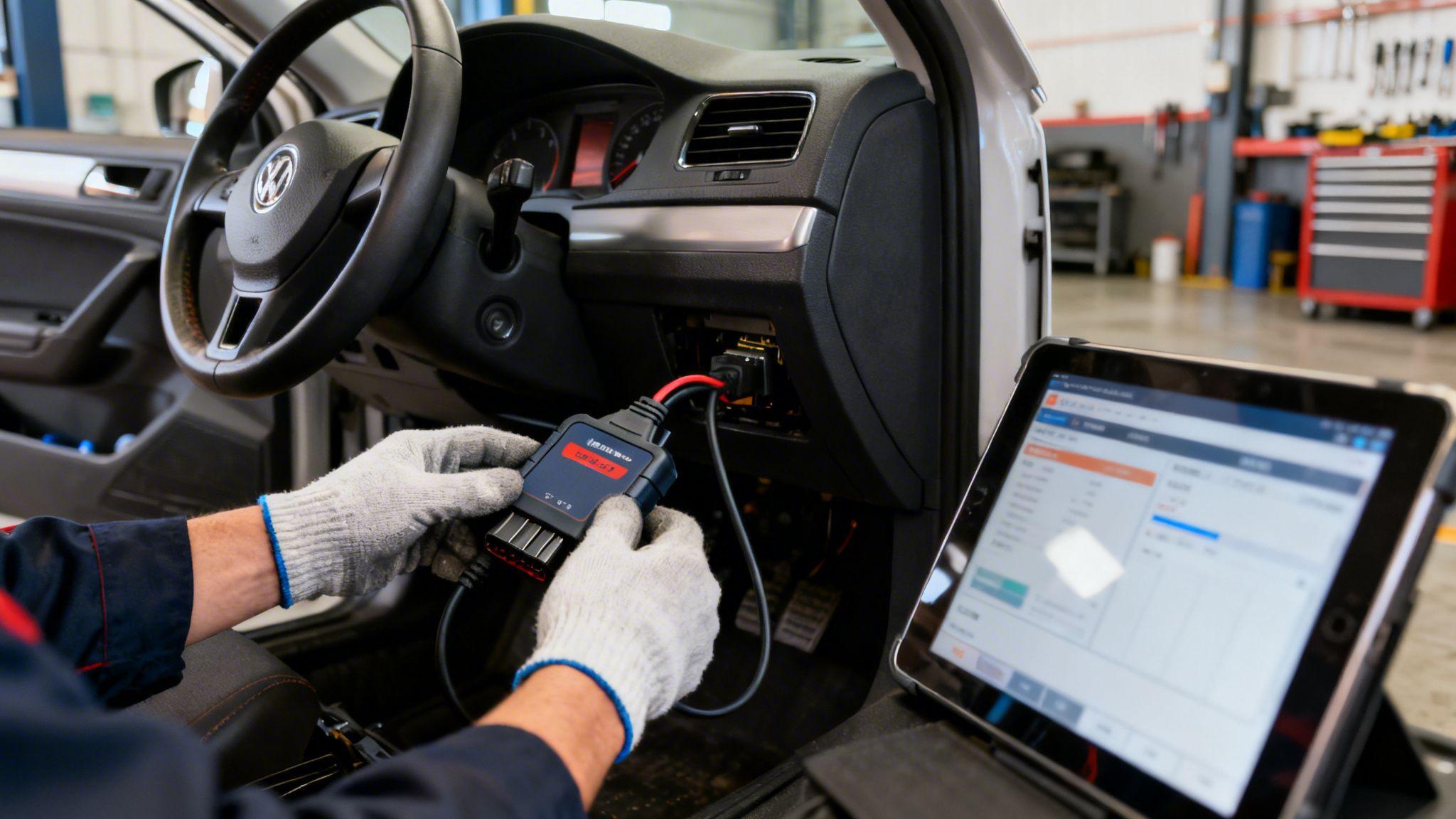
What remote advice can help with
- Symptom triage: organising when a noise, vibration, smell or warning light appears.
- Code interpretation: explaining what a diagnostic trouble code generally refers to and what it does not prove.
- Preparation: identifying vehicle details, service records and observations that will help an in-person mechanic.
- Next-step planning: deciding whether to arrange an inspection, seek further testing or stop driving and obtain assistance.
- Repair literacy: helping you understand a quote or prepare questions about a recommended repair.
The quality of advice depends on the information available and the expertise of the person or service providing it. If symptoms are incomplete or the problem is intermittent, a remote conclusion should remain provisional.
What usually needs an in-person inspection?
Many problems require direct inspection or testing to confirm the cause. This can include fluid leaks, mechanical noises, worn suspension parts, brake concerns, electrical faults, overheating, charging-system issues and faults that appear only under particular conditions. The necessary tests vary by vehicle and symptom.
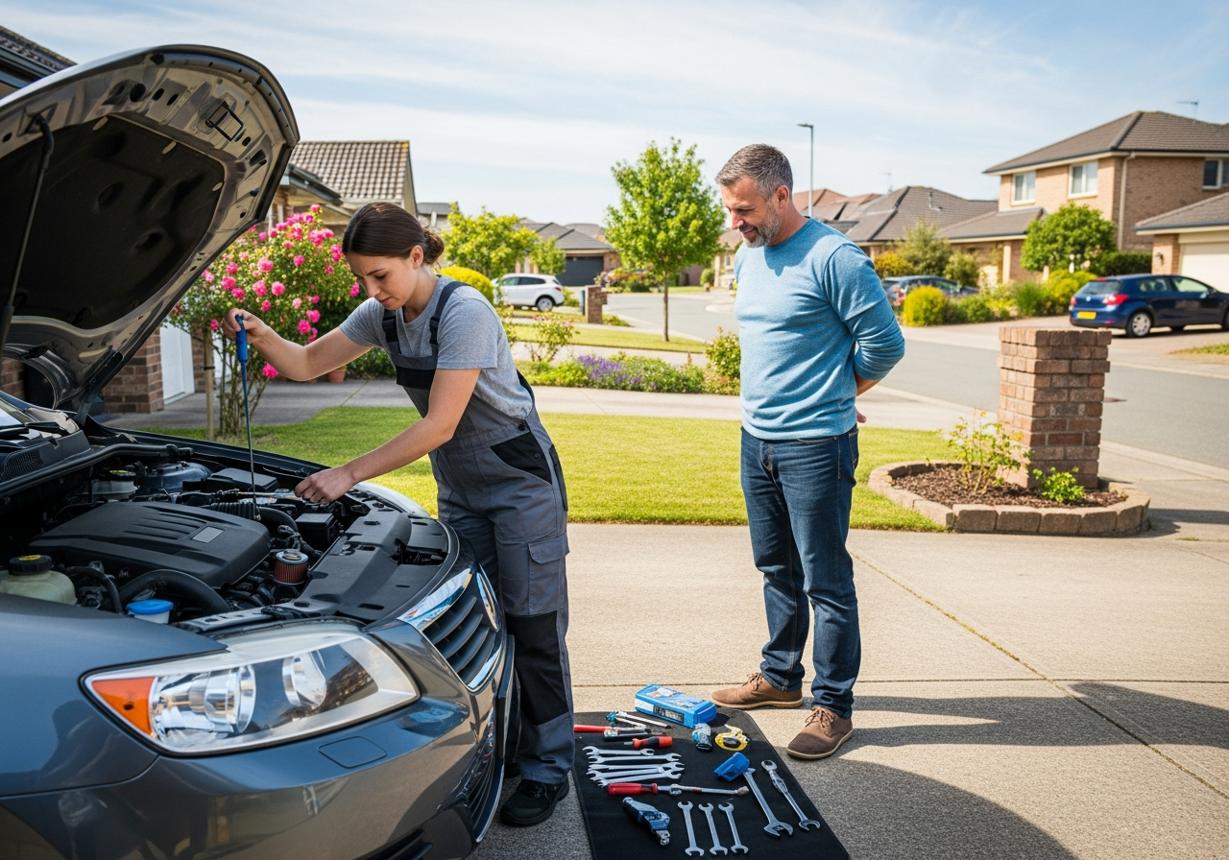
A mechanic attending the vehicle can inspect accessible components, perform suitable tests and gather evidence that a chat or photo alone cannot provide. Some repairs still require workshop equipment, a hoist or specialist facilities, so an on-site visit does not mean every fault can be fully diagnosed or repaired at the roadside or driveway.
Online mechanic vs mobile mechanic: key differences
| Factor | Online advice or app | Mobile mechanic visit |
|---|---|---|
| Information available | Relies on your description, photos, video or connected vehicle data. | Can inspect the vehicle directly and perform suitable on-site checks. |
| Best use | Initial guidance, symptom organisation and code explanation. | Hands-on inspection, selected diagnostics and suitable repairs. |
| Diagnostic certainty | Often limited by what can be observed remotely. | Can gather direct evidence, though some faults still need more testing. |
| Physical repair | Cannot itself replace a failed component or perform hands-on work. | May complete suitable repairs if parts, tools and conditions allow. |
| Workshop needs | Cannot substitute for physical workshop testing. | Can help identify when a hoist, specialist tool or workshop is needed. |
| Convenience | Can be accessed remotely, often without moving the vehicle. | May avoid a workshop trip for jobs that are mobile-suitable. |
Can an OBD-II scanner diagnose a car by itself?
An OBD-II scanner can retrieve diagnostic trouble codes and, depending on the vehicle and tool, display selected live data or other information. That information can be useful, but a code is not automatically a verdict that a particular component needs replacing. The same code can have several possible causes, and not every mechanical issue produces a code.
Scanner capabilities vary by vehicle and tool; interpret results alongside symptoms and testing.
| Information from a scanner | What it can tell you | What it cannot prove by itself |
|---|---|---|
| Diagnostic trouble code (DTC) | Which system or condition the vehicle computer has detected or recorded. | That one named part is definitely faulty. |
| Freeze-frame data, if available | Conditions recorded when a fault was stored, such as selected engine data. | The complete cause of an intermittent fault. |
| Live data, if supported | Readings from selected sensors or systems under the conditions observed. | That every reading is accurate or that a component is defective without further tests. |
| Cleared or absent codes | Whether a code is currently stored or has been cleared, depending on the tool and vehicle. | That the vehicle has no mechanical problem. |
A sound diagnostic process combines the code with symptoms, inspection and appropriate tests. If you are sharing a code online, provide the exact code, the vehicle details and any related symptoms. Avoid buying parts solely because an app names a system or component.
How to prepare for a useful online consultation
- Record the vehicle make, model, year, engine or powertrain details where known.
- Write down the exact warning message or diagnostic code, including letters and numbers.
- Describe when the issue occurs: cold start, acceleration, braking, turning, idling or after a long drive.
- Note any recent repairs, battery replacement, jump-start, service or unusual event.
- Share clear photos or a short video only when it is safe to capture them. Never record while driving or place yourself near moving traffic or hot components.
- Ask what can be concluded from the available information and what remains unconfirmed.
Do not deliberately reproduce a dangerous symptom to record it. If the vehicle has severe braking or steering problems, significant overheating, smoke, fuel smell or another immediate hazard, stop in a safe place and seek appropriate roadside or emergency assistance.
When should you skip online troubleshooting and get help?
Remote advice is not a safe substitute for urgent assessment when the car may be dangerous to drive. If you experience brake failure or a major loss of braking, severe steering problems, smoke or fire, a strong fuel smell, rapidly rising temperature, or a serious warning accompanied by abnormal behaviour, stop safely and arrange appropriate assistance. Do not continue driving just to gather more information.
For less urgent symptoms, an online discussion may help you prepare, but book an in-person inspection if the issue persists, returns, affects drivability or cannot be identified confidently. If a warning light is flashing or the vehicle is running roughly, consult the owner's manual and obtain advice promptly rather than assuming it is safe to continue.
Can a mobile mechanic diagnose and repair the problem at home?
A mobile mechanic may be able to inspect the vehicle and complete selected diagnostics or repairs at your home, workplace or another suitable location. What is possible depends on the fault, access, equipment, parts and safety conditions. If the job needs a hoist, extensive dismantling or specialist workshop testing, the mechanic may recommend a workshop instead. For related help, explore our car servicing options.
When booking, explain the symptoms rather than requesting only a part replacement based on an online guess. Share any codes and previous checks, but make clear what has not yet been confirmed. This gives the mechanic a better starting point without locking the diagnosis into an assumption.
How to choose between online advice, mobile service and a workshop
Choose online guidance for early questions
If you want to understand a warning message, organise symptoms or prepare for a quote, a remote consultation may be a useful first step. Check what the service actually includes and whether the adviser will explain the limits of the information available.
| Situation | Reasonable next step | Important caution |
|---|---|---|
| You want to understand a warning message | Use reliable remote guidance to understand possible meanings and prepare questions. | Do not treat a general explanation as a confirmed diagnosis. |
| You have a fault code but no clear cause | Record the exact code and vehicle details, then arrange suitable diagnostic testing if needed. | Avoid replacing parts solely because an app suggests them. |
| The issue is persistent or affects drivability | Arrange an in-person assessment appropriate to the symptom. | Explain when it happens and any recent repair or battery work. |
| Brake, steering, smoke, fuel smell or severe overheating concern | Stop safely and seek appropriate roadside or emergency assistance. | Do not continue driving or reproduce the symptom to collect evidence. |
| The job requires specialist tools or extensive dismantling | Ask whether a workshop assessment is needed. | A mobile visit cannot replace equipment that the task requires. |
Choose a mobile inspection for hands-on checks
If the car needs physical inspection and the task is suitable for mobile work, an in-person appointment can provide evidence that remote advice cannot. Give the provider the vehicle details and explain any symptoms or safety concerns when booking.
Choose a workshop when the job requires it
Complex repairs, some underbody work, wheel alignment and tasks requiring specialised equipment or controlled conditions may be better suited to a workshop. A mobile mechanic may help identify that requirement, but cannot make unsuitable conditions safe simply by attending the vehicle.
Get the next step right
Online advice can be useful for understanding possibilities, but the right diagnosis depends on the evidence. Treat remote suggestions as provisional when the fault has not been physically tested, and do not replace parts solely on a guess. If the vehicle needs hands-on attention, describe the symptoms accurately and arrange an inspection appropriate to the job.
Explore our service options or book an assessment to discuss the vehicle and the work you need.
Frequently asked questions
Can an online mechanic diagnose a car without seeing it?
They may narrow down possible causes using symptoms, codes, photos or video, but many faults need physical inspection or testing to confirm. Remote advice should be treated as provisional when evidence is limited.
Are online car diagnostic apps accurate?
They can provide useful information, such as diagnostic codes or selected vehicle data, but the quality and coverage depend on the tool and vehicle. A code does not always identify the failed component.
Can a mechanic diagnose a car from a video?
A video may help demonstrate a noise, warning light or visible symptom, but it cannot reliably show every underlying cause. The mechanic may still need to inspect and test the vehicle in person.
Is a mobile mechanic better than an online mechanic?
They serve different purposes. Online advice can help with initial questions, while a mobile mechanic can physically inspect the vehicle and perform suitable work. The right choice depends on the issue and the evidence available.
Can an OBD-II code tell me which part to replace?
Not always. Codes often point to a system or condition and may have several causes. Further testing is usually needed before deciding which component, if any, should be replaced.
When should I stop driving and get help?
Stop safely and seek appropriate assistance for serious brake or steering problems, smoke or fire, a strong fuel smell, severe overheating or other symptoms that make the car unsafe. Do not continue driving to collect diagnostic information.
Can a mobile mechanic fix a problem diagnosed online?
Potentially, if inspection confirms the fault and the repair is suitable for mobile work. The online diagnosis may be incomplete, and some repairs require workshop equipment or additional testing.
What information should I send before booking a diagnosis?
Share the vehicle make, model, year, symptoms, warning messages or exact codes, when the problem occurs, recent repairs and your location. Explain what has been tested and what remains a guess.
What information helps a mechanic diagnose a fault faster?
Useful information is specific and factual. Instead of saying only that the car feels wrong, describe the symptom, timing and conditions. This does not replace testing, but it can help the mechanic plan the first checks and avoid starting from an inaccurate assumption.
- Vehicle: make, model, year, engine or powertrain and relevant mileage.
- Symptom: the sound, smell, vibration, warning message or change in performance.
- Timing: cold start, hot engine, acceleration, braking, turning, idling or after a long drive.
- History: recent servicing, repairs, jump-starts, battery replacement or other changes.
- Evidence: exact diagnostic codes, safe-to-capture photos, and any test results already obtained.
- Safety: whether the car starts and moves, and whether there are signs that make driving unsafe.