
Searching for Melbourne mechanic labour rates in 2026 can bring up a wide range of figures, but a headline hourly rate rarely tells the whole story. One workshop may quote labour separately, another may price a job as a package, and a mobile mechanic may include travel or call-out costs in the total.
This guide explains how labour charges work, why prices can differ between Melbourne suburbs and repair types, and how to compare quotes without being misled by a low advertised rate. It does not publish an invented suburb-by-suburb price table: meaningful local comparisons require current, like-for-like quotes collected from real providers.
Is there one standard mechanic hourly rate in Melbourne?
No single rate applies to every workshop, vehicle or repair. Businesses set their own pricing based on operating costs, technician skills, equipment, location, workload and the work being performed. Some repairs are quoted using estimated labour time and parts; others use a packaged price or a diagnostic fee followed by a repair estimate.
When researching rates, check whether a figure is an hourly labour charge, a minimum charge, a diagnostic fee or the total price for a specific job. Those figures are not interchangeable. An advertised starting price may also apply only to selected vehicles or a defined service scope.
Why workshop labour charges differ by suburb
Location can influence business overheads, rent, parking, access and travel time, but a suburb name does not reliably predict what a repair should cost. A workshop in the Melbourne CBD may face different operating conditions from a suburban workshop, while a provider serving the west may travel between customer locations. These factors can affect the quote, but the actual vehicle and job still matter.
For a fair comparison, compare the same repair, on the same vehicle, with the same parts assumptions and inclusions. Comparing a basic inspection in one suburb with a repair package elsewhere does not establish which provider has the better labour rate.
What is included in a mechanic's labour charge?
Ask the provider to explain the quote. Depending on the job, labour may cover access and removal, fitting, reassembly, checks and a road test where appropriate and safe. It may not include diagnostic investigation, parts, fluids, consumables, specialist machining, programming, wheel alignment or a call-out fee unless those items are stated.
For complex faults, diagnosis may be charged separately because the technician needs to identify the cause before knowing which repair is required. A scan-tool reading alone does not always confirm a failed component. Further testing may involve wiring checks, live data, physical inspection or a road test.
Hourly rate versus fixed-price repair
An hourly rate can help explain how labour is billed, but it does not automatically reveal the total cost. A repair taking less time at a higher hourly rate may cost less overall than a longer job at a lower rate. A fixed-price quote can make budgeting easier when the scope is clear, but you should still ask what happens if additional faults are discovered.
Before approving work, establish whether the quote is fixed or an estimate, what assumptions it uses, and whether the mechanic will contact you for approval if the scope changes. Ask for the proposed work and exclusions in writing.
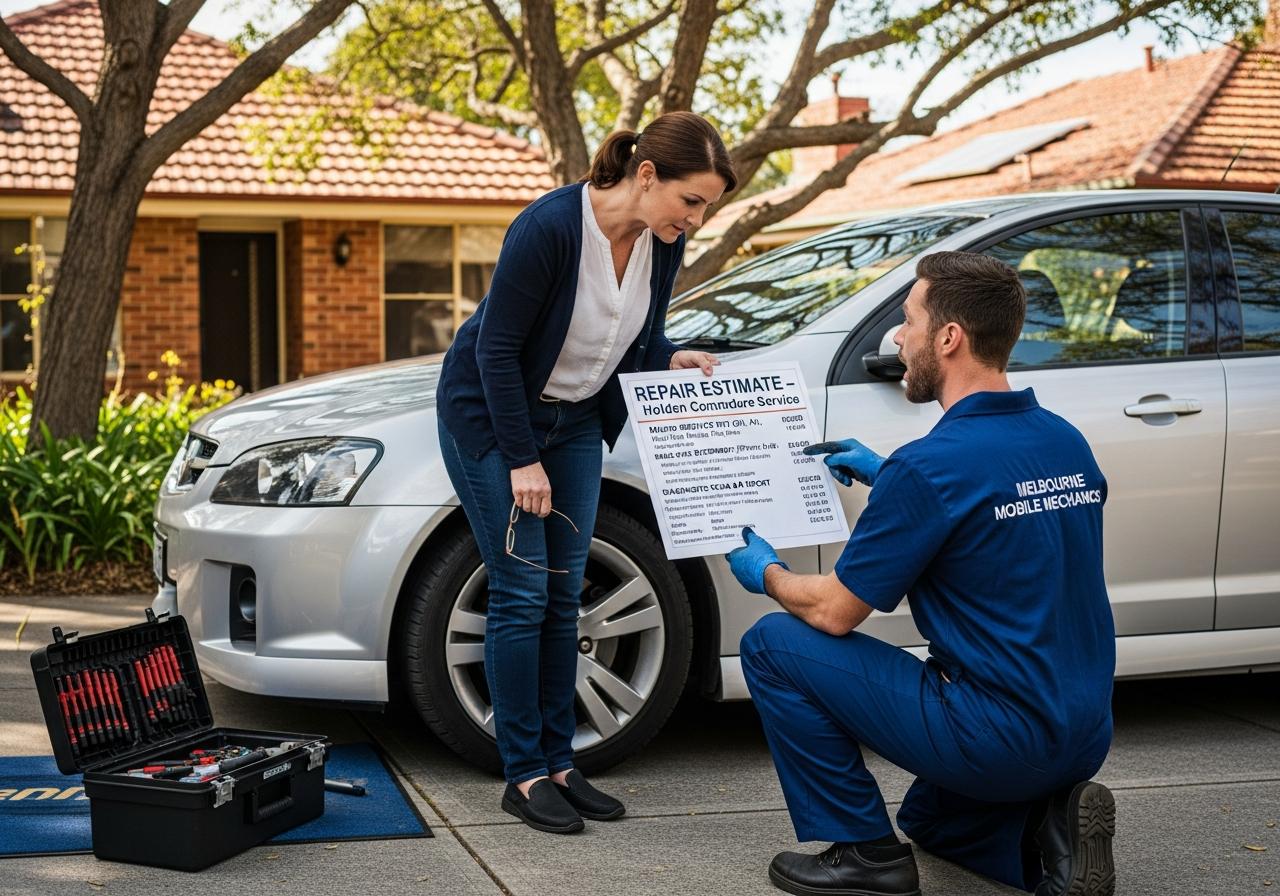
Hourly rate and fixed-price quote compared
| Pricing approach | What it tells you | What to confirm |
|---|---|---|
| Hourly labour rate | The rate used to calculate labour charges | Estimated hours, minimum charge, parts, diagnostics and fees |
| Fixed-price repair | An agreed price for a defined scope of work | Included parts, exclusions, taxes and what happens if new faults appear |
| Diagnostic fee | The charge for an initial or specified investigation | Whether further testing or repair labour is separate |
| Packaged service | A bundled price for listed tasks | Exact inclusions, vehicle eligibility and any extra items |
How mobile mechanic pricing can differ
A mobile mechanic travels to a suitable location such as a home or workplace. Depending on the provider, the quote may include travel, a call-out fee, a minimum charge or a defined service package. The convenience of avoiding a workshop trip can be valuable, but it should be compared using the full price and service scope rather than an hourly rate alone.
Not every repair can be completed at every location. Some jobs need a workshop hoist, specialised equipment, extensive dismantling or conditions that are not available on a driveway. Confirm that the provider can perform the requested work on your vehicle before booking.
Why vehicle type and repair complexity matter
- Vehicle make, model and year: parts availability, component layout and manufacturer procedures differ.
- Engine and trim: access can vary between versions of what appears to be the same model.
- Fault certainty: an intermittent electrical issue may require more testing than a confirmed straightforward replacement.
- Parts selection: genuine, aftermarket and remanufactured components can differ in price, availability and warranty.
- Additional work: seized fasteners, corrosion or related failures can change the labour required.
- Equipment or programming: some vehicles need specialist tools, calibration or electronic procedures.
How to collect reliable labour-rate data
If you are researching rates for a specific suburb, collect quotes for the same clearly defined job from several providers. Record the date, suburb, vehicle details, repair scope, whether the quote is hourly or fixed, diagnostic fees, parts assumptions, call-out charges and whether GST is included. Keep the source and quote evidence so the comparison can be checked later.
A useful comparison should state the sample size and collection date, distinguish advertised rates from quotes actually supplied, and avoid implying that a handful of quotes represents every workshop in Melbourne. Do not publish a suburb ranking unless the data genuinely supports it.
Like-for-like quote comparison checklist
| Comparison field | Record for every provider |
|---|---|
| Provider and location | Business name, suburb and date the quote was received |
| Vehicle and job | Make, model, year, engine/variant and clearly defined repair |
| Pricing method | Hourly rate, fixed price, minimum charge or diagnostic fee |
| Inclusions | Parts, labour, fluids, consumables, GST, travel and call-out |
| Conditions | Exclusions, additional-work approval, warranty and quote validity |
| Evidence | Written estimate or dated source; distinguish real quotes from advertised prices |
Questions to ask before choosing a mechanic
- Is this a diagnostic fee, hourly labour rate or total repair quote?
- What work is included and what is excluded?
- Are parts, fluids, consumables, GST and call-out charges included?
- What evidence confirms the fault and the proposed repair?
- Will you contact me for approval before additional work?
- What warranty applies to the supplied parts and workmanship?
- Will I receive an itemised invoice and notes about the work completed?
Quote review: green flags and warning signs
| Good sign | Warning sign | What to do |
|---|---|---|
| Written scope with itemised inclusions | Vague total with no explanation | Request the proposed work and exclusions in writing. |
| Diagnosis linked to observed evidence | Parts recommended without explaining why | Ask what testing or inspection supports the repair. |
| Clear approval process for extra work | Pressure to approve unrelated work immediately | Ask for evidence, urgency and a separate estimate. |
| Warranty terms explained | Unclear responsibility for parts or workmanship | Confirm warranty coverage before booking. |
Red flags when comparing unusually cheap quotes
A low price is not automatically a problem, but investigate quotes that omit the repair scope, refuse to explain parts, promise a diagnosis without inspecting the vehicle, or pressure you to approve unrelated work immediately. Similarly, a higher quote should be supported by a clear explanation of parts, labour, testing and warranty—not just a premium-sounding label.
Ask for a written estimate and take time to compare like for like. If a provider discovers another issue, request evidence, urgency and a separate price before deciding.
How to request a useful quote in Melbourne
Include your make, model, year, engine or variant if known, odometer reading, suburb, symptoms, warning lights and any recent repair history. A photo or short recording may help describe a sound, but it cannot replace a proper diagnosis. State whether you need a mobile visit or can take the vehicle to a workshop.
Start with our Melbourne service-area information, review the available services, or send a booking request. Confirm service coverage and appointment availability for your exact suburb and repair before relying on a visit.
Rates change over time and vary by provider and job. This article explains how to compare charges; it is not a verified survey of current labour rates in every Melbourne suburb.
Request a quote with enough detail
For a more useful estimate, share your vehicle details, suburb, symptoms and any warning lights, then ask what diagnosis and labour are included. Review the available car services, check Melbourne service-area information, and use the booking request page to describe the job.