How Long Do Brake Pads Last? Signs You Need Brake Replacement in Melbourne (2026 Guide)
Wondering how long brake pads last? Learn the warning signs of worn brake pads, average replacement intervals, repair costs, and when to book a trusted mobile mechanic in Melbourne.
Quick Answer
If you're wondering how long brake pads last, the average lifespan is between 30,000 and 70,000 kilometres, depending on your driving habits, vehicle type, road conditions, and the quality of the brake pads installed. Drivers who regularly travel through heavy Melbourne traffic often need brake pad replacement sooner than those who mainly drive on highways.
Ignoring worn brake pads can lead to expensive brake rotor damage, reduced stopping performance, and serious safety risks. If you hear squealing noises, notice grinding sounds, or experience reduced braking power, it's time to arrange a professional brake inspection.
Introduction
Your brakes are the most important safety system on your vehicle.
Whether you're driving through Melbourne's busy CBD, commuting to work in Werribee, or taking the family out from Wyndham Vale on the weekend, you rely on your brakes every single time you drive.
Yet brake pads are also one of the most commonly ignored maintenance items.
Many drivers don't think about them until they hear a loud squealing noise or the vehicle suddenly doesn't stop as confidently as it used to.
Unfortunately, waiting too long can turn a relatively inexpensive brake pad replacement into a much larger repair involving brake rotors, calipers, or even the complete braking system.
Understanding how long brake pads normally last, recognising the warning signs early, and booking a professional inspection before serious damage occurs can save hundreds of dollars while keeping you and your family safe on the road.
In this complete guide, we'll explain exactly how long brake pads last, what affects their lifespan, the warning signs you should never ignore, and when it's time to call a trusted mobile mechanic in Melbourne.
Who Is This Guide For?
This guide is written for:
- Melbourne drivers
- Daily commuters
- Families
- Uber & rideshare drivers
- Tradies
- Fleet vehicle owners
- Anyone wondering whether their brakes need replacing
Whether your vehicle is making strange noises or you're simply following your maintenance schedule, this guide will help you understand exactly what your brakes are trying to tell you.
Table of Contents
- How Long Do Brake Pads Normally Last?
- What Affects Brake Pad Life?
- 7 Warning Signs Your Brake Pads Need Replacing
- Can You Drive With Worn Brake Pads?
- Brake Pad Replacement Cost in Melbourne
- Why Mobile Brake Replacement Is Better
- Frequently Asked Questions
- Final Thoughts
How Long Do Brake Pads Normally Last?
Most modern passenger vehicles require brake pad replacement somewhere between 30,000 km and 70,000 km.
However, there isn't one fixed answer because every driver's situation is different.
Some brake pads may last well beyond 80,000 kilometres, while others can wear out in less than 25,000 kilometres depending on how and where the vehicle is driven.
For example, someone who spends most of the day driving through Melbourne traffic with constant stop-start conditions will naturally wear their brakes much faster than someone who mainly drives on open highways.
Likewise, drivers who regularly tow trailers or carry heavy loads place much greater stress on the braking system, reducing brake pad life considerably.
The quality of the brake pads also plays a major role. Premium ceramic brake pads generally last longer, produce less dust, and create less brake noise than cheaper alternatives.
The good news is that brake pads rarely fail without warning. In most cases, your vehicle gives several signs that replacement is approaching—provided you know what to look for.
What Actually Causes Brake Pads to Wear Out?
Every time you press the brake pedal, the brake pads clamp against the brake rotor to slow your vehicle.
This process creates friction.
Friction creates heat.
Over thousands of braking cycles, the friction material gradually becomes thinner until the pads eventually reach their minimum safe thickness.
This is completely normal and expected.
The important part is replacing the pads before they wear down enough to damage the brake rotors.
Once metal begins contacting metal, repair costs increase significantly.

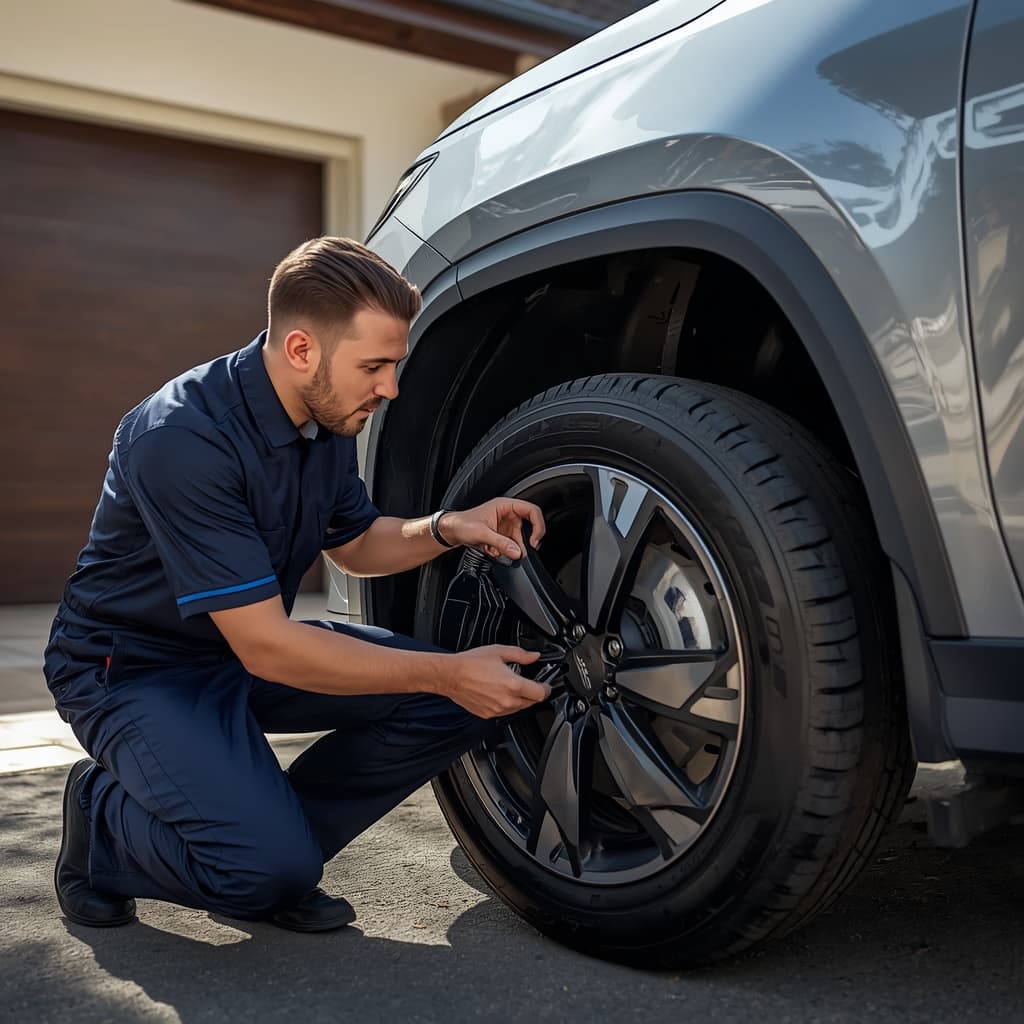
Professional mechanic replacing brake pads on customer's vehicle.
A professional mobile mechanic replacing worn brake pads before they begin damaging the brake rotors.
What Factors Affect Brake Pad Lifespan?
Brake pad lifespan depends on several different factors.
1. Driving Style
Aggressive braking is one of the biggest reasons brake pads wear out early.
If you regularly brake hard at traffic lights or follow other vehicles too closely, your brake pads will wear much faster than someone who brakes smoothly and anticipates traffic.
2. Melbourne Traffic
Melbourne's heavy stop-start traffic means drivers often use their brakes hundreds of times during a single trip.
This repeated braking creates additional heat and friction, accelerating brake wear.
3. Vehicle Weight
Larger SUVs, utes, and commercial vehicles require more braking force than smaller hatchbacks.
More braking force means brake pads wear faster.
4. Brake Pad Quality
Not all brake pads are manufactured to the same standard.
Premium brake pads usually:
- Last longer
- Produce less brake dust
- Reduce brake noise
- Improve stopping performance
- Protect brake rotors better
Choosing quality parts often saves money over the long term.
If your brakes are already making noise or showing signs of wear, our Brake & Rotor Replacement service can inspect and replace worn components before more expensive damage occurs.
Regular Car Servicing also helps identify brake wear before it becomes a safety issue.
7 Warning Signs Your Brake Pads Need Replacing
Brake pads usually don't fail overnight.
Instead, your vehicle gives several warning signs before they become dangerous. Recognising these symptoms early can prevent expensive repairs and, more importantly, keep you safe on the road.
Let's look at the most common signs every Melbourne driver should know.
1. Squealing or Screeching Noise When Braking
One of the earliest signs of worn brake pads is a high-pitched squealing noise.
Most modern brake pads are fitted with a small metal wear indicator. As the friction material becomes thin, this indicator rubs against the brake rotor and creates a loud squealing sound.
Manufacturers include this feature deliberately to warn drivers before the brake pads become dangerously worn.
Many people ignore the noise because the vehicle still stops normally.
Unfortunately, this is usually the best time to replace the pads.
Waiting longer often results in rotor damage, increasing the repair cost significantly.
If your brakes squeal every time you slow down, it's worth booking a professional inspection as soon as possible.
2. Brake Warning Light Appears
Modern vehicles constantly monitor important braking components.
If the brake warning light suddenly appears on your dashboard, never ignore it.
While the warning light doesn't always mean the brake pads are completely worn out, it does indicate that the braking system requires immediate inspection.
Sometimes the warning may be triggered by:
- Low brake fluid
- Worn brake pads
- ABS system faults
- Brake sensor issues
- Hydraulic problems
Driving for weeks with the warning light illuminated increases the risk of a more serious failure.
Professional diagnostics can quickly identify the actual cause before it becomes a costly repair.

Brake warning lights should never be ignored. Early diagnosis helps prevent expensive brake repairs and keeps your vehicle safe.
3. Grinding Noise While Braking
Grinding is very different from squealing.
A grinding sound usually means the brake pad friction material has completely worn away.
At this stage, the metal backing plate begins rubbing directly against the brake rotor.
This causes:
- Deep grooves in the rotor
- Poor braking performance
- Excessive heat
- Longer stopping distances
- Much higher repair costs
Once grinding starts, replacing the brake pads alone is rarely enough.
In many cases, the brake rotors also need replacing because their surface has already been damaged.
If you hear grinding, stop driving whenever possible and arrange an inspection immediately.
4. Vehicle Takes Longer to Stop
Have you noticed your car doesn't stop as confidently as it used to?
Longer stopping distances are one of the biggest warning signs that your braking system needs attention.
As brake pads wear thinner, they generate less friction against the brake rotor.
That means your vehicle needs more distance to stop safely.
This becomes especially dangerous during:
- Wet weather
- Emergency braking
- Heavy traffic
- Highway driving
If the brake pedal feels normal but the vehicle simply doesn't stop like it once did, worn brake pads may be the cause.
5. Vibrations While Braking
If the steering wheel or brake pedal vibrates whenever you slow down, it usually indicates uneven brake wear.
Common causes include:
- Warped brake rotors
- Uneven brake pad wear
- Heat damage
- Poor quality brake components
Many drivers mistake this for a suspension problem when it's actually related to the braking system.
Professional inspection can quickly identify the source of the vibration before additional components become damaged.
6. Brake Pedal Feels Soft or Spongy
A healthy brake pedal should feel firm and responsive.
If it suddenly feels soft, sinks lower than normal, or requires extra pressure before the vehicle begins slowing down, something isn't right.
Possible causes include:
- Worn brake pads
- Air inside brake lines
- Low brake fluid
- Brake fluid leaks
- Master cylinder issues
Because this symptom directly affects your ability to stop safely, it should never be ignored.
7. Visible Thin Brake Pads
You don't always need professional equipment to spot worn brake pads.
If you can see through your wheel spokes, look at the brake pad sitting against the brake rotor.
A healthy brake pad normally has around 10–12 mm of friction material when new.
Once the pad reaches around 3 mm, replacement should be arranged as soon as possible.
Driving below this thickness dramatically increases the chance of damaging the brake rotor.

Worn brake pads (left) compared with new brake pads (right). Replacing pads before they reach minimum thickness helps protect expensive brake rotors.
Why You Should Never Ignore Worn Brake Pads
Many drivers delay brake replacement because the vehicle still "feels okay."
Unfortunately, brake wear doesn't improve on its own.
Every extra kilometre driven with worn brake pads increases the chance of:
- Damaging brake rotors
- Reduced braking performance
- Higher repair costs
- Unsafe stopping distances
- Brake system failure in emergency situations
Replacing brake pads early is one of the most affordable maintenance jobs on any vehicle.
Replacing damaged rotors, calipers, and other braking components is far more expensive.
If your brakes have already started making grinding noises, our Brake & Rotor Replacement service can inspect the complete braking system and replace worn components before further damage occurs.
If your vehicle also displays dashboard warning lights, our Vehicle Diagnostics service can quickly identify brake system faults and other mechanical issues.
How Much Does Mobile Brake Pad Replacement Cost in Melbourne?
One of the first questions drivers ask is:
"How much does brake pad replacement cost in Melbourne?"
The answer depends on several factors, including your vehicle, the quality of the brake pads, whether the brake rotors also require replacement, and whether you're using a traditional workshop or a mobile mechanic.
In most cases, replacing brake pads early is far more affordable than waiting until additional components become damaged.
While every vehicle is different, most mobile brake pad replacement jobs in Melbourne fall within a reasonable price range when the issue is identified early.
Several factors influence the final cost.
Vehicle Make and Model
Luxury vehicles often require premium brake components.
European brands such as BMW, Mercedes-Benz and Audi usually have larger braking systems than smaller passenger vehicles, meaning replacement parts are generally more expensive.
SUVs, 4WDs and commercial vehicles also tend to use larger brake assemblies designed to handle additional weight.
Because of this, replacing brake pads on these vehicles usually costs more than replacing pads on a small hatchback.
Brake Pad Quality
Not all brake pads are manufactured to the same standard.
Drivers typically have three options:
Economy Brake Pads
- Lowest initial cost
- Suitable for light driving
- May create more brake dust
- Often wear out faster
Premium Brake Pads
- Better stopping performance
- Reduced brake dust
- Quieter operation
- Longer lifespan
- Better heat resistance
OEM Brake Pads
OEM (Original Equipment Manufacturer) brake pads are designed specifically for your vehicle.
They offer factory-level performance and are often recommended for newer vehicles still under manufacturer servicing schedules.
Although OEM parts cost more initially, they often provide excellent long-term value.
Do Your Brake Rotors Also Need Replacing?
Many customers expect to replace only the brake pads.
However, if the pads have worn down completely, the brake rotors may already be damaged.
Common signs include:
- Deep grooves
- Blue heat spots
- Excessive scoring
- Warped rotor surfaces
- Steering wheel vibration while braking
If the rotors are beyond safe limits, replacing only the brake pads isn't recommended.
Installing new pads onto damaged rotors often leads to poor braking performance and uneven wear.
Labour Costs
Labour also contributes to the overall repair cost.
Fortunately, mobile mechanics usually offer competitive pricing because customers avoid many of the overhead expenses associated with traditional workshops.
Instead of travelling to a repair centre, your mechanic comes directly to your home, workplace or roadside location.
For busy Melbourne drivers, this convenience often saves several hours.
Why Replacing Brake Pads Early Saves Money
Many people delay replacing brake pads because the vehicle still seems to stop normally.
Unfortunately, this small delay often leads to much larger repair bills.
Once the friction material disappears completely, the metal backing plate begins grinding directly against the brake rotor.
Instead of replacing only the brake pads, you may suddenly need:
- New brake rotors
- Brake pad replacement
- Rotor machining (where applicable)
- Brake fluid inspection
- Additional labour
What could have been a straightforward maintenance job quickly becomes a much more expensive repair.
Early replacement almost always costs less than waiting.
Mobile Mechanic vs Traditional Workshop
Many Melbourne drivers now prefer mobile mechanics because the process is much simpler.
Instead of:
- Driving to a workshop
- Waiting for availability
- Organising transport home
- Returning later to collect the vehicle
A mobile mechanic performs the work wherever your vehicle is already parked.
Whether you're at home, at work or stranded on the roadside, many brake repairs can be completed on-site.
This makes mobile brake replacement especially convenient for busy families, professionals and business owners.
Real Customer Story
Recently, a customer from Tarneit contacted Mechanic Near You after hearing a loud squealing noise every morning.
They assumed the brakes still had several months of life remaining because the vehicle stopped normally.
After inspecting the vehicle, we discovered the brake pads had almost completely worn out.
Fortunately, the brake rotors had not yet been damaged.
By replacing the brake pads immediately, the customer avoided a much larger repair bill that would likely have included new rotors only a few weeks later.
This is one of the biggest reasons we recommend brake inspections as soon as unusual noises begin.
Early diagnosis almost always saves money.
If your vehicle is also due for routine maintenance, combining your brake repair with our General Car Service can save both time and future repair costs.
Booking a professional Mobile Mechanic means your brakes can often be inspected and repaired without the inconvenience of visiting a workshop.
Before You Replace Your Brake Pads…
Before approving any repair, always ask your mechanic:
- Are only the brake pads worn?
- Do the brake rotors also need replacing?
- Which brand of brake pads are being installed?
- Are both sides being replaced together?
- Has the braking system been fully inspected?
A trustworthy mechanic will explain the condition of your braking system and recommend only the repairs your vehicle genuinely needs.
Frequently Asked Questions
How often should brake pads be inspected?
Even if your brakes seem to be working normally, it's recommended to have them inspected during every scheduled service or at least every 10,000–15,000 kilometres. Regular inspections help identify uneven wear before it becomes a safety concern.
Can I drive with worn brake pads?
Technically, a vehicle may still be able to drive with worn brake pads, but it's never recommended. Thin brake pads reduce stopping performance and can quickly damage the brake rotors. Delaying replacement usually results in higher repair costs and increased safety risks.
How do I know if my brake rotors also need replacing?
Brake rotors may require replacement if they have deep grooves, excessive scoring, heat damage, cracking, or have worn below the manufacturer's minimum thickness. During a professional inspection, your mechanic will measure the rotors and determine whether they can continue to be used safely.
Are premium brake pads worth the extra cost?
For most drivers, yes.
Premium brake pads generally provide quieter braking, produce less brake dust, offer better stopping performance, and typically last longer than lower-cost alternatives. Although they cost more initially, they often provide better long-term value.
Why do my brakes squeal even though they still work?
Squealing brakes are often an early warning that the brake pads are approaching the end of their service life. Most manufacturers include a small wear indicator that intentionally creates this noise before the pads become dangerously worn. Having the brakes inspected early can prevent more expensive repairs later.
Can a mobile mechanic replace brake pads at my home?
Yes.
In many cases, brake pad replacement can be completed at your home, workplace, or another convenient location. Mobile mechanics carry professional tools and quality replacement parts, allowing many brake repairs to be completed without visiting a workshop.
How long does brake pad replacement usually take?
For most vehicles, replacing brake pads typically takes between one and two hours, depending on the vehicle, brake condition, and whether additional repairs such as rotor replacement are required.
Why Choose Mechanic Near You?
At Mechanic Near You, we understand that brake problems are more than just an inconvenience—they're a safety issue.
That's why our experienced mobile mechanics provide professional brake inspections and repairs across Melbourne's western suburbs, delivering workshop-quality service directly to your location.
When you choose Mechanic Near You, you benefit from:
- Professional mobile brake inspections
- High-quality replacement brake pads
- Honest advice with no unnecessary repairs
- Transparent pricing before work begins
- Convenient home, workplace, or roadside service
- Experienced technicians using professional equipment
- Reliable workmanship focused on long-term safety
Whether your vehicle needs new brake pads, brake rotor replacement, or a complete braking system inspection, our goal is always the same: keep you and your family safe on the road.
If your vehicle is due for routine maintenance, our Major Car Service includes a complete inspection of your braking system and other essential safety components.
You can also Book a Mobile Mechanic online and choose a convenient time for your brake inspection or repair.
Final Thoughts
Your brakes work every single time you drive, yet they're often one of the most overlooked safety components on a vehicle.
Understanding how long brake pads last, recognising the early warning signs of wear, and arranging a professional inspection before serious damage occurs can save you money, improve your vehicle's performance, and most importantly, help keep you safe.
Whether you've noticed squealing brakes, grinding noises, longer stopping distances, or simply want peace of mind, acting early is always the smartest decision.
At Mechanic Near You, we're committed to making brake repairs simple, convenient, and stress-free. Our experienced mobile mechanics come directly to your home, workplace, or roadside location across Melbourne's western suburbs, providing professional inspections and quality repairs without the hassle of visiting a workshop.
If you think your brake pads may be worn or it's simply time for an inspection, don't wait until a small issue becomes an expensive repair.
Book your mobile brake inspection today and let Mechanic Near You help keep your vehicle safe, reliable, and ready for every journey.
Last Updated: July 2026
⏱ Reading Time: 9 Minutes
Written by
Mechanic Near You Editorial Team
Experienced Mobile Mechanics servicing Melbourne and surrounding suburbs.
Need Professional Vehicle Assistance?
Our trusted mobile mechanics come directly to your location for repairs, diagnostics, maintenance and emergency roadside assistance.