
A failing fuel pump can make a vehicle difficult to start, cause hesitation during acceleration or leave the engine unable to run. However, these symptoms can also be caused by electrical faults, fuel delivery restrictions, sensor problems and other engine issues. If you are researching fuel pump replacement cost in Melbourne, the first step is to establish whether the pump is actually faulty.
The final repair cost depends on your vehicle, the type of pump fitted, parts availability, labour access and the results of diagnostic testing. Rather than relying on a generic online price, ask for a vehicle-specific assessment and a quote that clearly explains the parts and work involved.
What does a fuel pump do?
The fuel pump moves fuel from the tank or supply system towards the engine at the pressure and flow rate required for the vehicle. Different engines use different fuel delivery designs. Some petrol engines use an in-tank pump to supply fuel to the engine, while many modern direct-injection petrol engines and diesel engines also use a high-pressure pump as part of the injection system.
Because these systems differ, fuel pump replacement is not the same job on every car. A technician needs to identify the vehicle's engine and fuel system before determining which component may have failed. Replacing the wrong pump or overlooking a supply, electrical or control issue can leave the original symptom unresolved.
How much does fuel pump replacement cost in Melbourne?
There is no single price that accurately covers every fuel pump replacement. The total depends on the vehicle's make and model, pump type, parts quality and availability, labour time and whether related components require attention. A pump that is accessible through a service opening may involve a different procedure from a pump that requires more extensive access work.
High-pressure fuel pumps can have different parts and diagnostic requirements from low-pressure supply pumps. Some vehicles also require additional checks or replacement of related seals and components. A reliable quote should identify the pump being replaced, the diagnostic work performed, the expected labour and any other items included.
Be cautious of a quote based only on a symptom such as hard starting. That symptom does not prove the pump has failed. A proper diagnosis helps avoid paying for a new pump when the underlying issue is elsewhere.
What affects the final replacement cost?
Low-pressure versus high-pressure fuel pumps
A low-pressure pump generally supplies fuel from the tank towards the engine's fuel system. High-pressure pumps are used in certain injection systems to deliver fuel at much higher pressures. These components are not interchangeable, and their prices, testing procedures and replacement requirements can differ considerably.
The correct component must be identified for the specific engine. If a vehicle has more than one pump, the workshop should explain which pump is suspected, what testing supports the diagnosis and why replacement is recommended.
Vehicle design and access
Fuel pump location influences labour requirements. Depending on the vehicle, access may be relatively straightforward or may require additional disassembly. Tank design, surrounding components and manufacturer procedures all affect the work involved.
Ask whether the quote includes the complete necessary access and reassembly procedure. The cheapest advertised price may not represent the total cost of completing the job properly on your particular vehicle.
Parts quality and availability
Parts availability varies by make, model, engine and production year. The quote may differ depending on whether a suitable original-equipment component or quality aftermarket part is available and appropriate. Compatibility, fuel-system requirements and the part's warranty should be considered alongside price.
Ask the workshop to identify the proposed component and explain whether it meets the vehicle's requirements. A part should not be selected solely because it is the cheapest option available.
Related faults and additional repairs
A fuel delivery problem may involve a blocked filter where separately serviceable, a damaged connector, a wiring fault, a relay, a pressure regulator or another component. Some vehicles integrate components differently, so the correct checks depend on the design.
If further work is needed, ask for the reason and cost to be explained before authorising it. A transparent workshop should distinguish the confirmed fault from possible additional issues that require testing.
Common signs of a failing fuel pump
Long cranking or difficulty starting
If the engine takes longer than usual to start, fuel pressure or delivery may be one possible cause. However, a weak battery, starter issue, ignition fault, sensor problem or other fuel-system fault can produce similar symptoms. Repeatedly cranking the engine without identifying the cause may also place unnecessary strain on the battery and starter.
Engine hesitation or loss of power
A vehicle that hesitates under acceleration or struggles under load may not be receiving the fuel delivery required by the engine. The symptom can also arise from ignition, air intake, exhaust, sensor or other engine-management problems. Diagnostic testing should be used to narrow down the cause rather than assuming the pump is responsible.
Unexpected stalling
If the engine stalls while driving or repeatedly cuts out, the cause may involve fuel delivery or an electrical or engine-management fault. Unexpected stalling can create a road safety risk. If the vehicle cannot run reliably, stop in a safe location and arrange professional assistance instead of continuing to drive in traffic.
Unusual noise near the fuel tank
A change in pump noise may be worth investigating, particularly if it appears alongside starting or performance problems. Noise alone does not confirm pump failure, and some fuel pump noise is normal for certain vehicles. A technician should assess the symptom in the context of the vehicle's design and other test results.
Engine cranks but will not start
A cranking engine that will not start may have a fuel delivery problem, but ignition, engine timing, immobiliser and sensor faults can produce the same outcome. Avoid repeated attempts if the vehicle shows signs of a serious fault. Professional diagnosis can establish whether fuel pressure, electrical supply and other required conditions are present.
How mechanics diagnose fuel pump problems
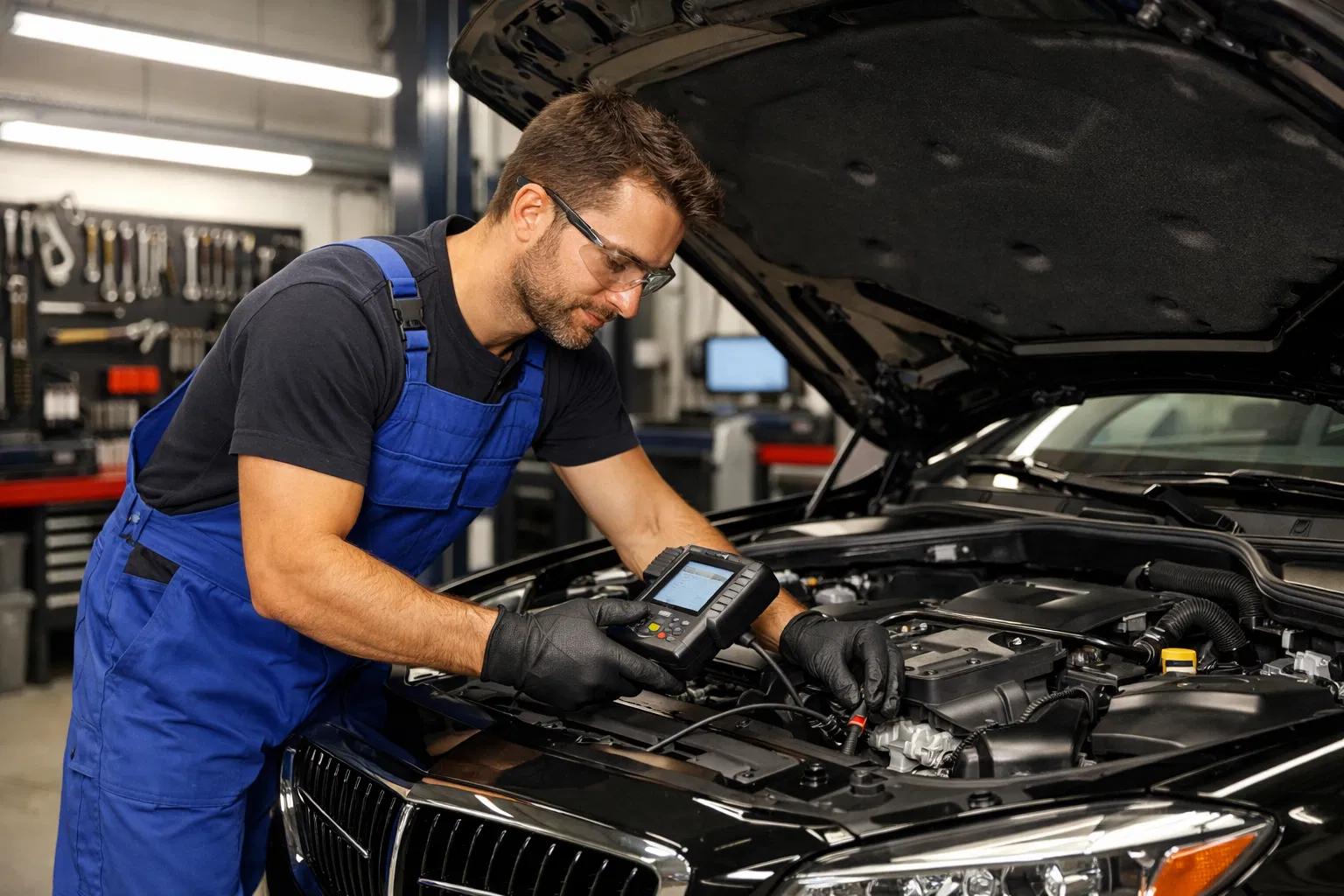
Diagnosis generally starts with the symptoms, vehicle history and any stored diagnostic fault codes. Depending on the fuel system, a technician may check relevant fuses and electrical supplies, inspect wiring and connectors, measure fuel pressure or delivery, and compare readings with the manufacturer's specifications. The exact process varies by vehicle.
A diagnostic code is a clue rather than automatic proof that a pump must be replaced. The workshop should consider whether the pump is receiving the correct electrical supply and whether other components could explain the symptoms. High-pressure fuel systems require appropriate professional procedures and equipment because fuel can remain under dangerous pressure.
How long does fuel pump replacement take?
Repair time depends on the vehicle, pump location, access requirements, parts availability and any additional diagnostic work. Some jobs are relatively straightforward once the fault is confirmed, while others require more extensive disassembly or additional testing. It is best to obtain an estimate for your exact vehicle rather than relying on a universal time figure.
The workshop may also need time to source the correct part, complete the installation, check for leaks and confirm that the engine operates as expected. Ask whether the estimated turnaround includes diagnosis and post-repair testing, and whether the workshop will contact you before undertaking any additional work.
Is it safe to keep driving with a suspected fuel pump fault?
A vehicle that stalls, loses power unpredictably or will not start reliably should be checked promptly. Continued driving can leave you stranded or create a hazard if the engine loses power in traffic. If the vehicle stalls or becomes unsafe to operate, move to a safe location where possible and arrange assistance.
Fuel-system repairs involve flammable fuel and, on some vehicles, high-pressure components. They should be handled by appropriately equipped professionals using the correct safety procedures. Do not attempt to open or dismantle a fuel system at home based on a general online guide.
How to avoid paying for unnecessary fuel pump replacement
Describe the symptoms clearly, including when the problem occurs, whether the engine is hot or cold and whether any warning lights appear. Share relevant repair history and tell the workshop if the vehicle has recently had fuel-system work. These details can help guide the diagnostic process.
Before approving the repair, ask what tests support the diagnosis, which component is being replaced, what the quote includes and what warranty applies. If the diagnosis remains uncertain, ask whether further testing is recommended before installing a new part.
Fuel pump replacement in Melbourne's west
Drivers searching for fuel pump replacement in Melbourne should look for a service that includes appropriate diagnosis rather than parts replacement based on symptoms alone. A vehicle-specific assessment can help identify the actual cause and determine the correct repair approach.
Read more about our fuel pump replacement service, explore our automotive services or arrange an assessment through the online booking page.
Frequently asked questions
How much does fuel pump replacement cost in Melbourne?
The cost depends on the vehicle, pump type, parts availability, labour access and related repairs. An accurate estimate requires vehicle details and appropriate diagnosis.
Can a bad fuel pump cause a car not to start?
Yes. A fuel pump that cannot supply the required fuel may prevent an engine from starting. Other faults can cause the same symptom, so testing is needed before replacing parts.
Can a fuel pump be repaired instead of replaced?
The appropriate solution depends on the specific component, vehicle design and diagnostic findings. Some related fuel delivery or electrical faults may be repairable without replacing the pump, while a confirmed failed pump may need replacement.
How long does a fuel pump replacement take?
Time varies according to pump location, access, vehicle design, parts availability and the amount of testing required. Ask the workshop for a vehicle-specific estimate.
Is it safe to drive when the engine keeps stalling?
Repeated stalling or unpredictable power loss can create a safety risk. Stop somewhere safe and arrange professional assistance if the vehicle cannot operate reliably.
How do I book a fuel pump inspection?
Visit the fuel pump replacement service page or use the online booking page to arrange an assessment.