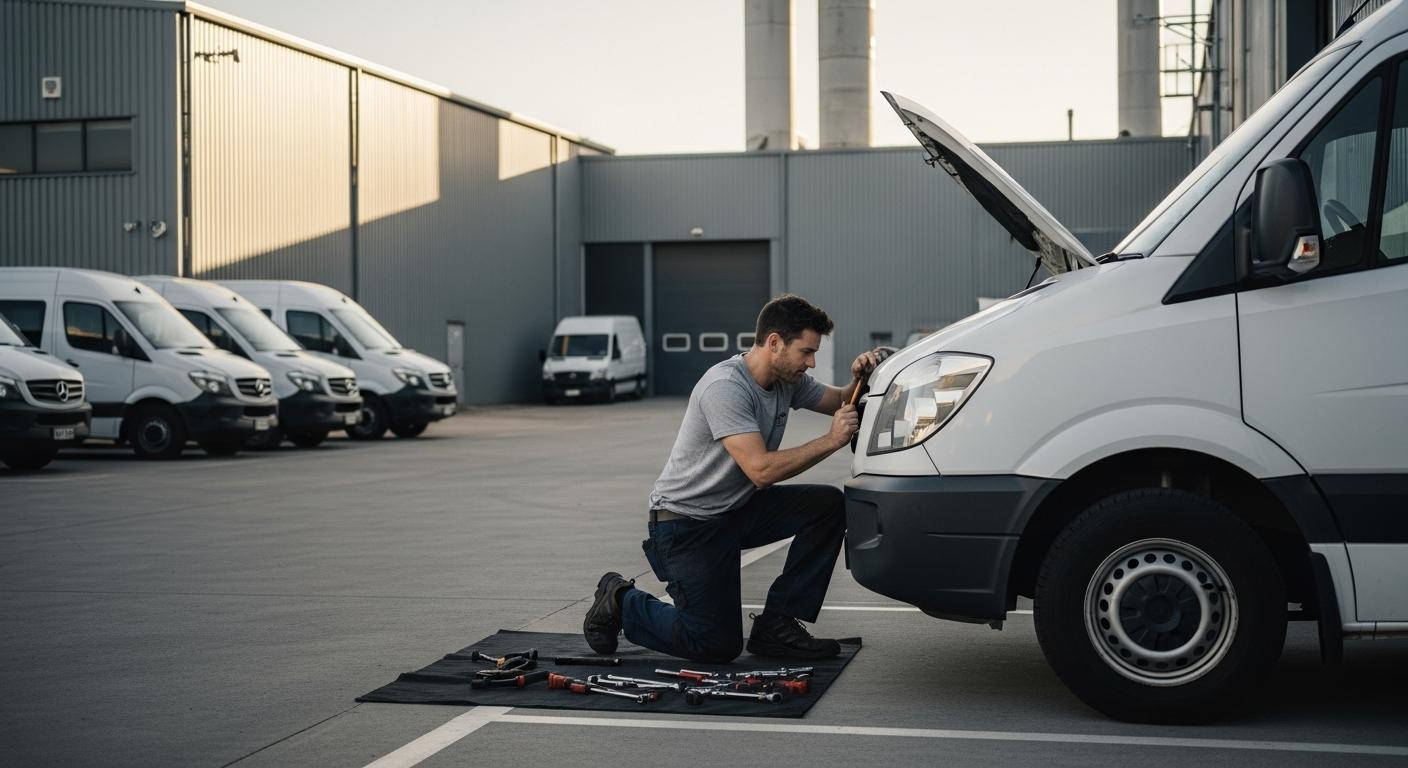
For a trade business, a ute or van is more than transport: it carries tools, materials and the ability to get to the next job. When several vehicles need maintenance, sending each one to a workshop can complicate scheduling and leave fewer vehicles available for work. On-site fleet servicing may help where the vehicle and task are suitable, but it needs planning rather than a one-size-fits-all promise.
This guide explains how tradies and small fleet operators can organise vehicle maintenance at a depot, workplace or suitable customer-approved site, what jobs may be practical, what needs a workshop, and which details to confirm before booking.
Start by reviewing the available automotive services and use the online booking page to enquire about your vehicles and worksite.
What is on-site fleet and tradie vehicle servicing?
On-site servicing means a technician attends an agreed location to carry out work that can be completed safely and properly with the available access, equipment and parts. Depending on the vehicle and service scope, this may include scheduled maintenance checks, oil and filter service, selected inspections or diagnostics. The exact work must be confirmed before the visit.
It is not a guarantee that every repair can be completed in a driveway or depot. Jobs requiring a hoist, specialist equipment, extensive dismantling, controlled workshop conditions or additional parts may need a workshop appointment or a separate repair plan.
Which vehicles can be included?
- Tradie utes: Consider the service schedule, towing and load use, tyre condition, brakes, suspension, fluids and any warning lights.
- Work vans: Confirm vehicle height and access, especially in underground or multi-storey parking. Payload and frequent stop-start driving may affect maintenance needs.
- Passenger vehicles: Company cars may be included where the location and requested work are suitable.
- Mixed fleets: Supply a list of each vehicle rather than assuming a single service package fits all models.
How to minimise downtime without skipping maintenance
Build a maintenance register
Track each vehicle’s registration or fleet ID, make and model, odometer, service history, next due date, reported symptoms and work completed. A simple register helps you identify vehicles approaching service and plan around busy periods.
Group suitable jobs together
Where several vehicles are due for similar routine work, arranging them at one site may simplify coordination. This is not always faster or cheaper: parts availability, vehicle differences, diagnostic issues and access can change the plan. Ask for confirmation of the proposed scope and timing.
Book around operational needs
Choose a time when vehicles can be parked safely and released for the agreed work. If a vehicle is essential for a particular job, plan an alternative or schedule maintenance before that commitment. Do not delay a safety-critical repair just to preserve the day’s roster.
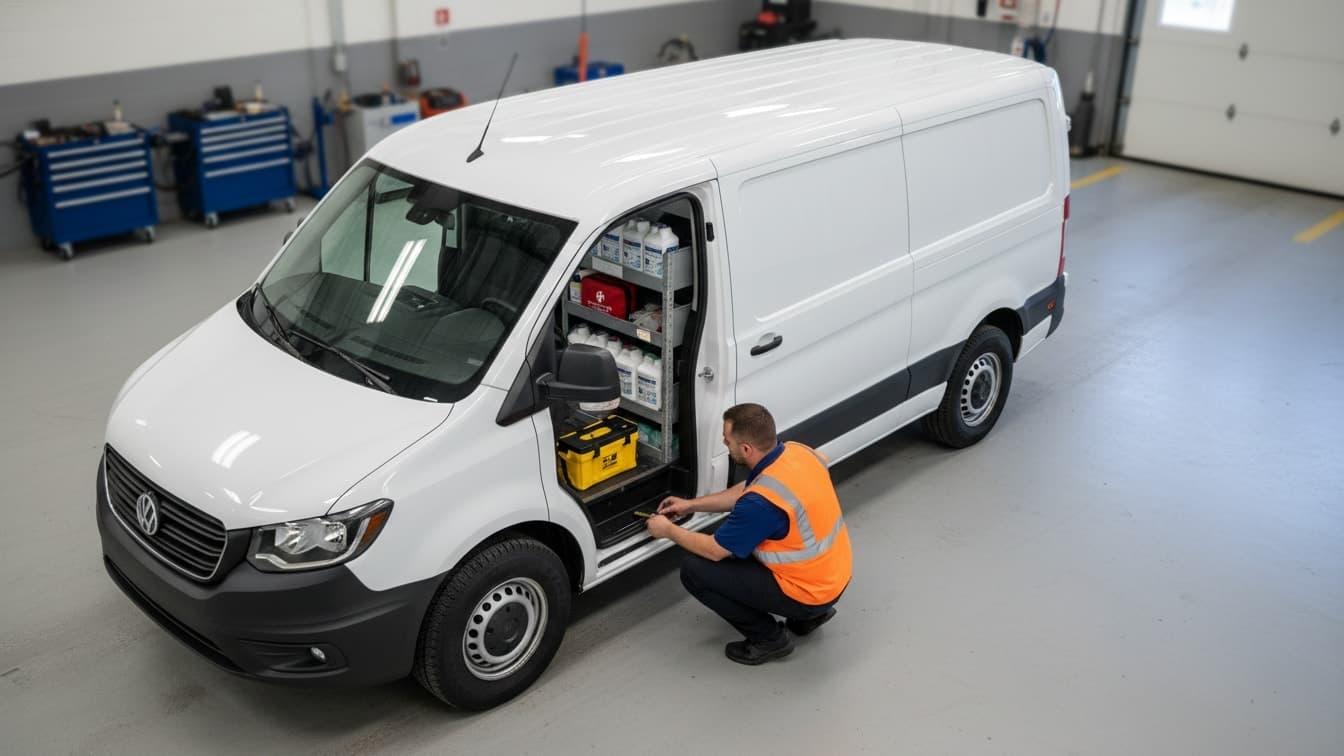
What makes a worksite suitable?
The site should provide legal parking, enough space around each vehicle, safe pedestrian separation and permission from the property owner or site manager. The technician must be able to access the vehicle without blocking emergency routes, loading areas or other workers. Underground car parks, restricted-height areas, steep driveways and congested depots may not be suitable for every job.
Businesses should explain site induction requirements, personal protective equipment rules, vehicle keys and contact arrangements in advance. Do not assume a mobile visit can proceed if the location has unsafe access or does not permit vehicle repairs.
For routine maintenance, confirm whether the job includes an oil change service. If a vehicle has starting or charging concerns, discuss whether battery replacement or further diagnosis is appropriate. Brake concerns should be assessed promptly and may require brake repair work.
What affects the cost of fleet servicing?
Fleet servicing is not automatically a single flat rate. The quote can depend on the number and type of vehicles, service schedules, oil and filter specifications, labour, parts, fault diagnosis, access and any agreed travel or site arrangements. A routine service for one model may not be comparable with another vehicle requiring extra filters or investigation.
Ask for a written scope: which vehicles are included, what maintenance is planned, what is excluded, how additional faults will be approved and whether the quote includes parts and labour. If several vehicles are being serviced, ask how records and invoices will identify each vehicle separately.

Keep fleet records useful and audit-ready
After work is completed, retain the invoice or job record with the date, odometer reading, service items, fluids and parts used, inspection observations and recommendations. Follow the manufacturer’s schedule and any relevant contractual, safety or regulatory requirements for your operation. A record of maintenance does not replace a proper response to a new fault or safety concern.
Plan your next fleet maintenance visit
On-site servicing can be a practical option for suitable vehicles and jobs, especially when careful scheduling helps keep work vehicles available. The key is to confirm the scope, site conditions and each vehicle’s requirements before setting the appointment.
Explore available automotive services and submit your enquiry through the booking page. Include your vehicle list, worksite details and maintenance priorities so the request can be assessed accurately.
Frequently asked questions
Can a mobile mechanic service multiple fleet vehicles at one worksite?
It may be possible to arrange servicing for several vehicles, depending on the fleet size, vehicle types, access, available time and each vehicle’s needs. Share the vehicle list and preferred schedule so feasibility can be confirmed before booking.
Which vehicles suit on-site fleet servicing?
Many light commercial vehicles, utes and passenger vehicles may be suitable for selected routine maintenance at a depot or workplace. Heavy vehicles, specialist equipment and repairs requiring workshop facilities need separate assessment.
How can on-site servicing reduce fleet downtime?
When suitable work is completed at the workplace, vehicles may avoid some travel and waiting time associated with a workshop visit. The actual time saved depends on the job, technician availability, parts and site access.
What maintenance records should a business keep?
Keep dated invoices, odometer readings, work completed, parts and fluids used, inspection findings and recommended follow-up. Follow the manufacturer schedule and any applicable workplace or fleet requirements.
Can all repairs be completed at the worksite?
No. Some repairs require a hoist, specialist tools, controlled workshop conditions, extensive dismantling or a road test that cannot be safely arranged on site. Confirm the scope before scheduling.
How should I schedule servicing for tradie vans?
Build the plan around each vehicle’s manufacturer schedule, kilometres, engine hours if relevant, workload and upcoming jobs. Allow time for parts or diagnostic follow-up and avoid postponing safety-critical repairs to fit a busy calendar.
Does fleet servicing have one fixed price per vehicle?
Not necessarily. Cost depends on vehicle type, service requirements, parts, labour, travel or site arrangements where applicable, and additional faults. Ask for a written scope and quote rather than assuming every vehicle costs the same.
What information should I provide for a fleet booking?
Provide the number of vehicles, registration or fleet IDs, make and model, year, odometer readings, service due dates, reported faults, site address, parking arrangements and any access or safety rules.