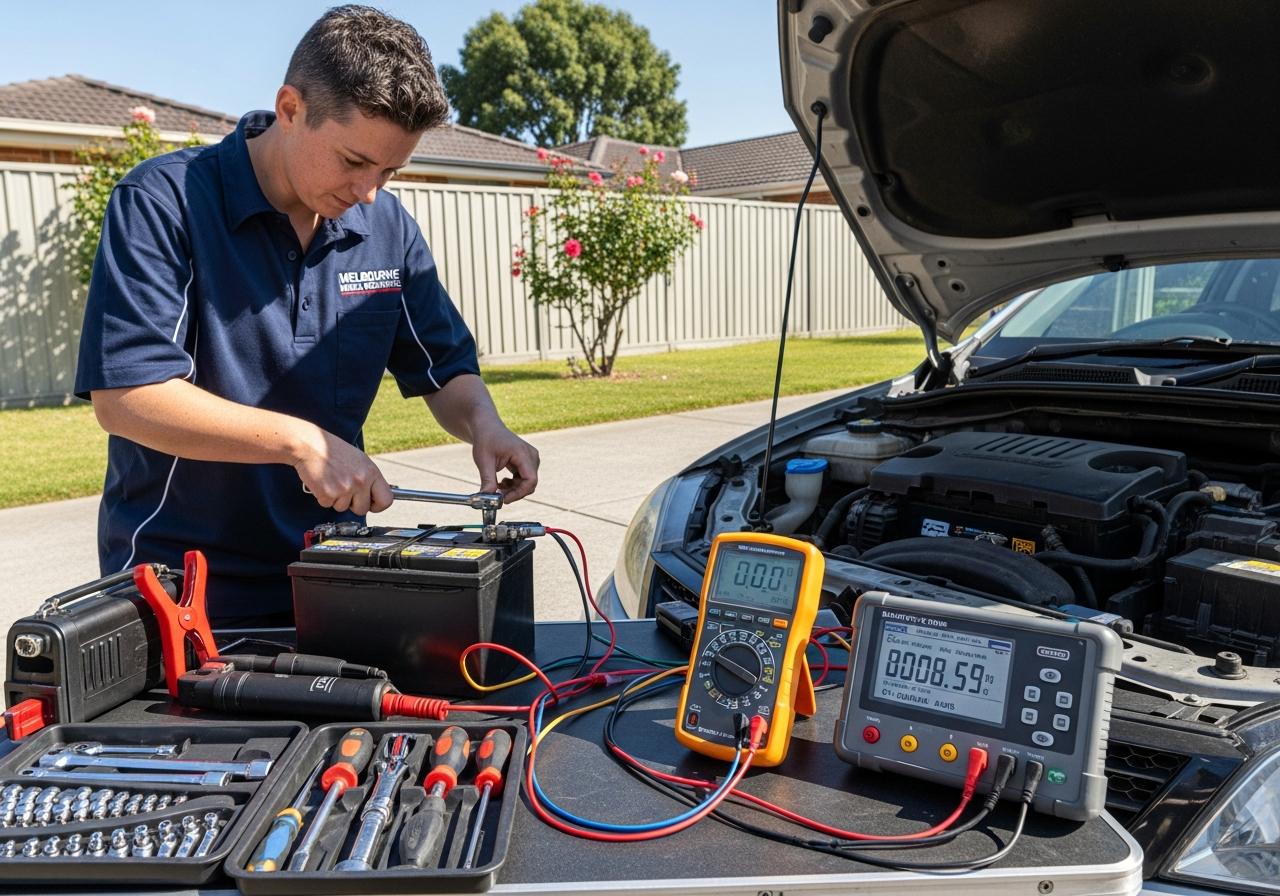
You turn the key or press the start button, but your car will not start. You may hear a clicking sound, notice dim dashboard lights or find that the vehicle has no electrical power. A flat battery is one possible cause, but it is not the only one. The important question is whether the battery has simply discharged or has reached the point where replacement is needed.
A jump start can get a suitable vehicle started temporarily, but it does not repair a worn-out battery or fix a charging-system fault. The right decision depends on why the battery went flat, its age and condition, and whether the alternator and related electrical systems are working properly.
This guide helps Melbourne drivers compare a jump start with battery replacement, recognise warning signs, understand what testing can reveal and choose a sensible next step without replacing parts unnecessarily.
Jump start or replace? A quick decision guide
| What you noticePossible explanationReasonable next step | ||
| Battery went flat after lights were left on | The battery may have discharged but could still be serviceable | If safe and permitted by the vehicle instructions, arrange a jump start followed by battery and charging-system checks |
| Battery repeatedly goes flat | Battery deterioration, charging fault or electrical drain | Arrange proper testing instead of relying on repeated jump starts |
| Battery is ageing and starting is slow | Reduced battery capacity or another starting-system fault | Test the battery and starting system before deciding on replacement |
| Engine starts but charging warnings appear or it stalls | Charging-system or another electrical fault may be present | Arrange professional diagnosis; a jump start may not solve the underlying issue |
| Battery case is swollen, cracked or leaking | Potentially unsafe battery condition | Do not jump-start or handle it; seek professional assistance |
This table is a guide, not a diagnosis. Similar symptoms can have different causes. A battery test, combined with checks of the charging and starting systems when appropriate, is a more reliable basis for deciding what to do.
When is a jump start likely to be enough?
A jump start may be suitable when a battery has discharged because a light was left on, the vehicle was not used for an extended period or another temporary cause is identified. That is only a reasonable option when the battery is in suitable physical condition and the vehicle manufacturer's jump-start instructions can be followed.
Once the engine starts, do not assume the problem is permanently fixed. A deeply discharged battery may need proper recharging, and an ageing battery may fail again soon. A short drive is not guaranteed to restore a discharged battery, particularly if the charging system is not working correctly.
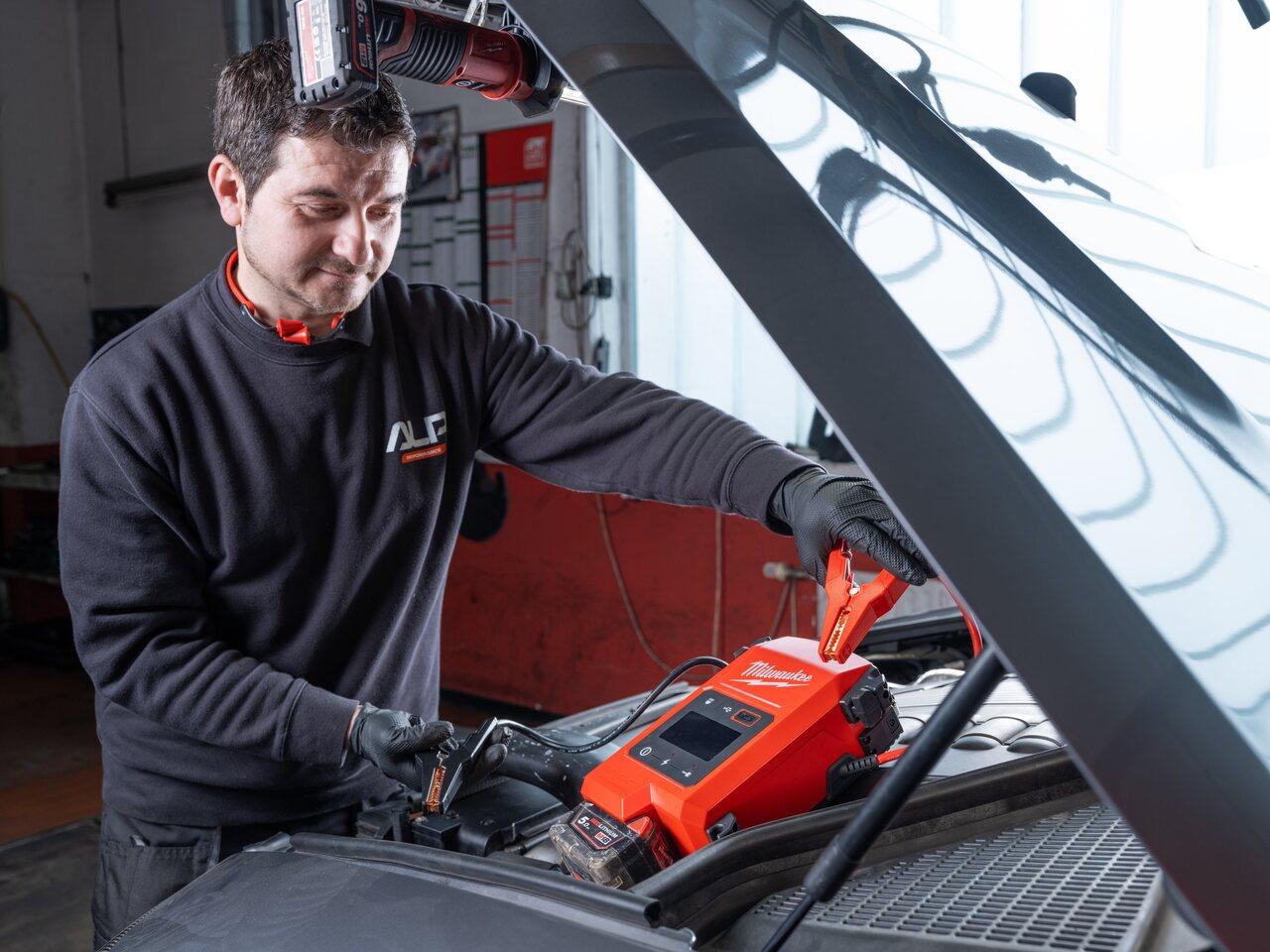
Modern vehicles may have designated jump-start terminals, battery-monitoring systems and specific precautions. Incorrect connections can damage electronics or create a safety risk. If you are unsure about the procedure, have a qualified professional handle it. Never attempt to jump-start a battery that is swollen, cracked, leaking or otherwise visibly damaged.
Signs your car battery may need replacing
1. The engine cranks slowly
If the starter turns the engine more slowly than usual, the battery may not be delivering enough power. However, a starter-motor problem, poor electrical connection or another fault can cause similar symptoms. Testing helps prevent replacing a battery when the actual issue is elsewhere.
2. You need repeated jump starts
A battery that repeatedly goes flat deserves investigation. It may have lost capacity, but a charging fault, parasitic electrical drain, loose connection or frequent short trips could also be involved. Repeatedly jump-starting the vehicle without identifying the cause can leave you stranded again.
3. The battery is ageing and performance is changing
Car batteries have a finite service life, but age alone does not prove that a replacement is required. If an older battery starts becoming unreliable, arrange a condition test and consider the result alongside your driving needs and the manufacturer's requirements.
4. Lights or electrical systems behave inconsistently
Dim lights during starting, reset clocks and unexpected electrical glitches can occur when voltage is low. These symptoms are not exclusive to battery failure, so they should be assessed rather than treated as automatic proof that the battery needs replacing.
5. The battery is visibly damaged
A swollen, cracked or leaking battery should not be treated as an ordinary flat battery. Avoid jump-starting or handling leaking material. Keep clear and arrange professional assistance because damaged batteries can present chemical and electrical hazards.
Why does a car battery keep going flat?
Before replacing the battery, it is worth understanding why it discharged. Common possibilities include:
- Interior or exterior lights left on.
- Long periods without driving.
- Frequent short trips that do not provide enough charging time.
- An ageing or internally damaged battery.
- An alternator or charging-system fault.
- An electrical component continuing to draw power when the car is switched off.
- Loose, corroded or damaged battery connections.
Replacing the battery without addressing an underlying charging fault or electrical drain can lead to the same problem happening again. If a new battery becomes flat soon after installation, arrange diagnosis instead of assuming the replacement battery is automatically faulty.
Battery testing: the step between a jump start and replacement
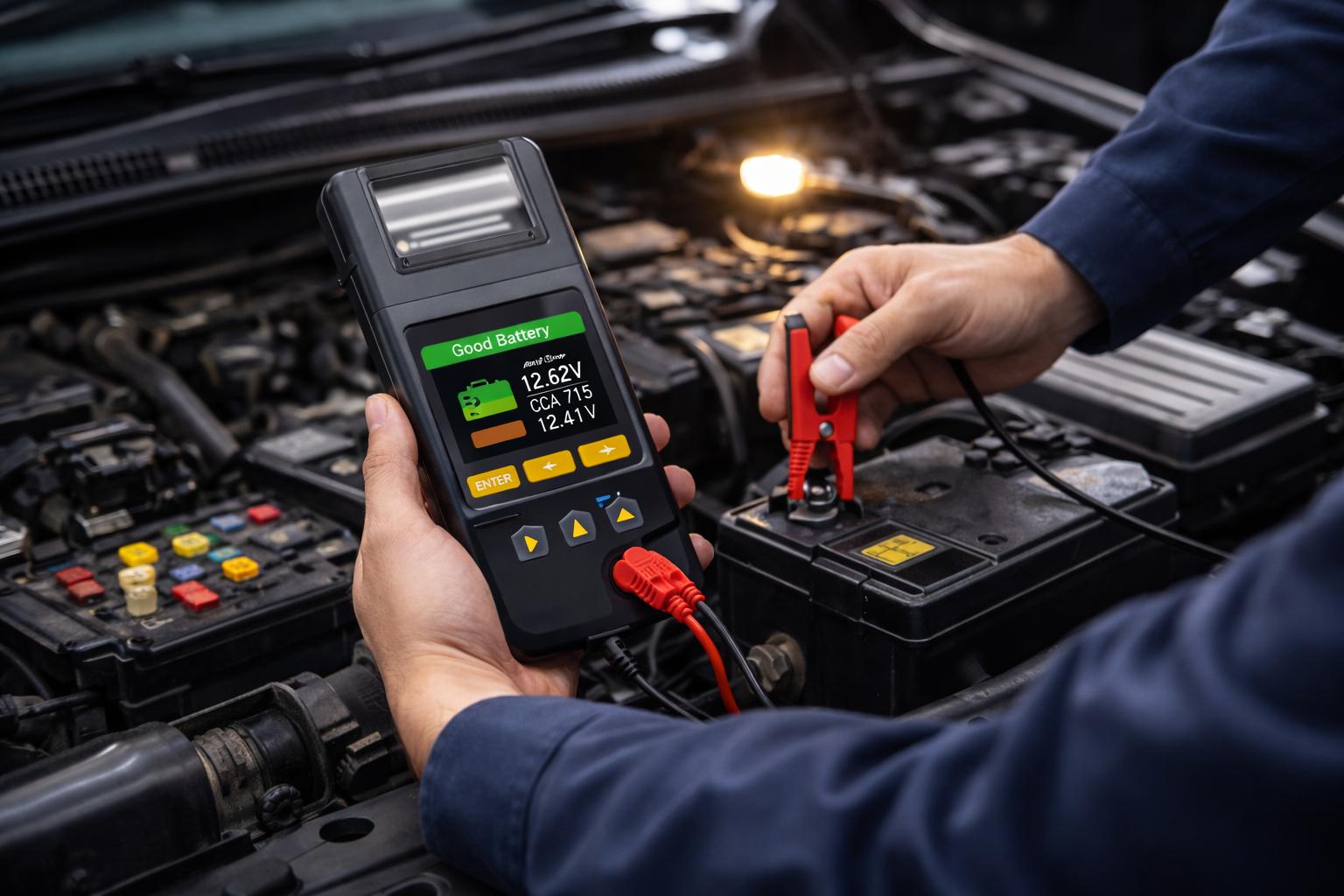
A proper assessment can help distinguish a discharged battery from one that has lost capacity. Depending on the vehicle and symptoms, a mechanic may check the battery's condition and starting performance, inspect connections, assess charging-system operation and investigate possible electrical drains.
A battery can show a reasonable voltage while still struggling to deliver enough current to start the engine. Equally, a healthy battery can go flat because it is not being charged properly. A test result should be interpreted alongside the vehicle's symptoms, battery type and manufacturer specifications.
What affects the cost of flat-battery assistance?
The total price depends on the service required, your location, vehicle access and battery specifications. A jump start and a replacement battery are different jobs, so ask what the quote includes before deciding.
- Type of service: a jump start, battery test and battery replacement involve different work.
- Battery specification: size, capacity, technology and performance requirements vary by vehicle.
- Access and labour: some batteries are more difficult to reach than others.
- Call-out or travel charges: these may vary by provider and location.
- Vehicle electronics: some vehicles require battery registration, coding or reset procedures.
- Additional diagnosis: repeated discharge may require charging-system or electrical checks.
Ask for a clear quote and confirm the battery meets your vehicle's requirements. Some vehicles use EFB or AGM batteries, and a stop-start system may require a particular specification. The cheapest battery is not necessarily suitable for every vehicle.
Can a mobile mechanic help with a flat battery in Melbourne?
Depending on your location, vehicle and the provider's equipment, mobile assistance may be able to test the battery, provide a jump start or arrange a suitable replacement at the vehicle's location. This can be helpful when the car will not start and arranging transport to a workshop is difficult.
Explore the jump-start and car battery service in Melbourne to discuss your symptoms and possible options. You can also review other mechanic services or request a service booking.
For assistance, call +61 406 396 397 or email infomechanicnearyou@gmail.com. Share your vehicle make, model, location and the symptoms you are experiencing so the next step can be discussed.
What to do while waiting for help
- Park in a safe location away from moving traffic where possible.
- Switch off unnecessary electrical accessories and avoid repeated starting attempts.
- Do not attempt a jump start if the battery is visibly damaged or you are unsure of the correct procedure.
- Keep your vehicle details and location ready for the service provider.
- If the vehicle is in a dangerous position, prioritise personal safety and follow appropriate roadside instructions.
Frequently asked questions
Does a flat battery always need replacing?
No. A battery may simply have discharged and could remain serviceable. Testing helps determine whether it can be recharged or whether replacement is appropriate.
Can I drive immediately after a jump start?
That depends on the vehicle and the reason the battery went flat. A jump start is temporary assistance, not proof that the battery or charging system is healthy. Follow professional advice and arrange testing if the cause is unclear.
Why does my battery keep going flat?
Possible causes include an ageing battery, short trips, lights left on, electrical drain, poor connections or a charging-system fault. Testing can help identify the cause.
How long should a car battery last?
Battery life varies with battery type, temperature, driving habits and maintenance. Have an ageing battery tested if starting becomes unreliable rather than relying on age alone.
Can a mobile mechanic replace my car battery?
Depending on your vehicle and location, mobile battery replacement may be available. Some vehicles require specific battery types, registration or electronic procedures.
Is it safe to jump-start every flat battery?
No. Do not jump-start a battery that is swollen, cracked, leaking or otherwise visibly damaged. Follow the manufacturer's instructions and seek professional assistance if you are unsure.