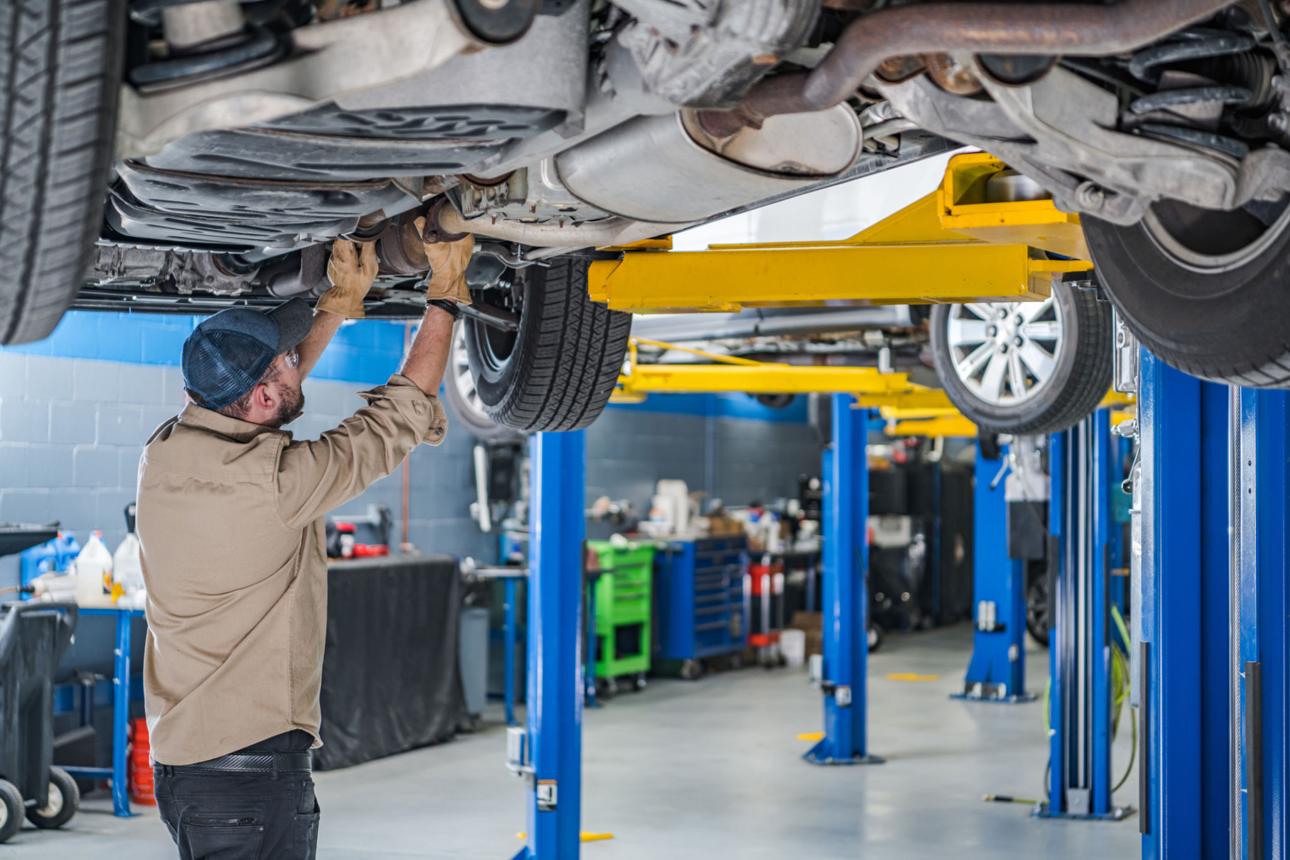
An exhaust leak can sound like a harmless extra rumble, but its location matters. A leak near the engine can expose occupants to dangerous exhaust gases, while a leak further along the system can affect noise, emissions equipment and vehicle performance. Carbon monoxide is colourless and odourless, so smell alone cannot tell you whether the air is safe.
This guide covers common exhaust leak symptoms, when driving may be unsafe, what can affect repair costs in Melbourne and how a mechanic identifies the source. If you suspect a problem, arrange an assessment through the exhaust repair service or use the online booking page to describe the symptoms.
Quick answer: is an exhaust leak safe to drive with?
Do not assume an exhaust leak is safe. If fumes enter the cabin, the exhaust is unusually loud, you feel unwell, or the leak appears near the engine or passenger compartment, stop in a safe location, turn off the engine, move into fresh air and arrange assistance. Carbon monoxide exposure can be life-threatening.
If there is no obvious cabin smell, that still does not prove the vehicle is safe. Have the fault assessed promptly, especially if the exhaust has become suddenly louder, warning lights appear or the engine runs differently.
Common exhaust leak symptoms
- Louder-than-normal exhaust: A leak may create a deeper roar, rasp or sudden increase in volume.
- Ticking or puffing near the engine: A leak at a manifold, gasket or joint may sound sharper when the engine is cold or under load.
- Exhaust fumes: Fumes near the vehicle or inside the cabin require immediate caution.
- Vibration or unusual resonance: A damaged pipe, loose hanger or exhaust contact with the body can create vibration.
- Reduced performance: Some faults can affect engine operation, though performance loss has many possible causes.
- Check-engine light: A leak can affect emissions readings in some situations, but sensor or engine faults may also trigger the light.
- Visible corrosion or damage: Rust, impact damage, cracked joints or failed hangers may indicate a problem.
Symptoms alone cannot reliably identify the exact failed part. A mechanic may need to inspect the exhaust cold, check mounting points, use suitable leak-detection methods and assess relevant diagnostic data.
Why exhaust leaks can be dangerous
Engine exhaust contains a mixture of gases, including carbon monoxide under some operating conditions. Carbon monoxide cannot be reliably detected by smell or sight. A cabin exhaust smell is a serious warning, but the absence of a smell does not guarantee that carbon monoxide is absent.
If you suspect exhaust fumes inside the vehicle:
- Pull over somewhere safe as soon as possible.
- Switch off the engine and leave the vehicle.
- Move to fresh air and do not sit in the vehicle with the engine running.
- Arrange professional assistance rather than continuing the trip.
- If anyone experiences headache, dizziness, nausea, weakness, confusion or other concerning symptoms, seek urgent medical help.
Do not crawl under a vehicle supported only by a jack, touch hot exhaust components or run an engine in a poorly ventilated garage to locate a leak.
Where can an exhaust leak occur?
Exhaust manifold and manifold gasket
The manifold carries exhaust gases away from the engine. A crack, loose fastener or failed gasket can create noise and may be particularly concerning if gases can reach the engine bay or cabin ventilation intake.
Flexible joint, flange or gasket
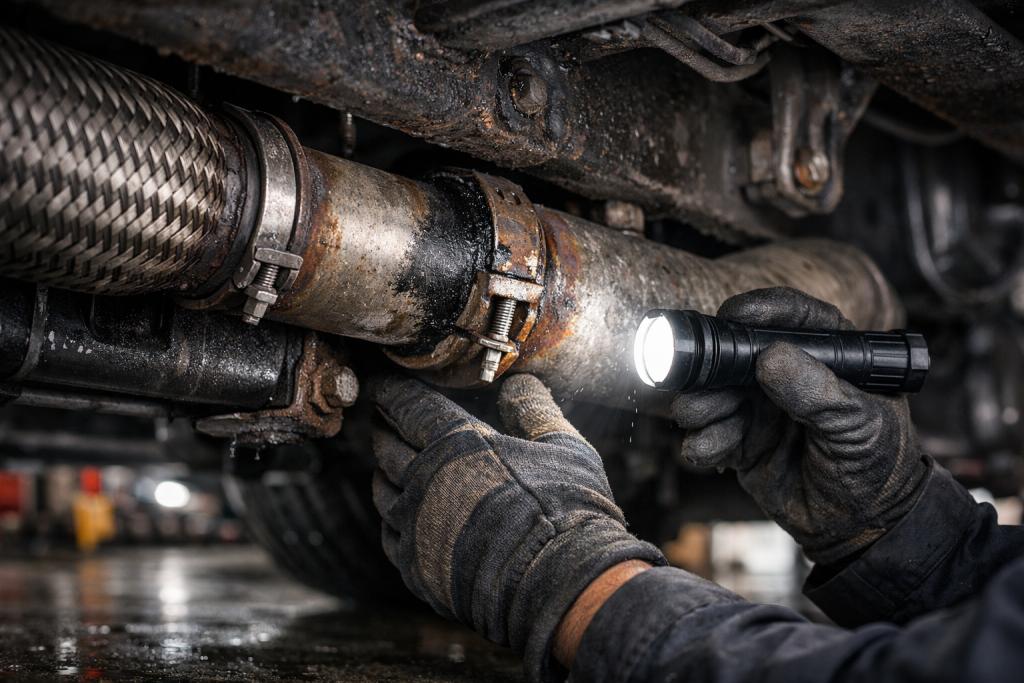
Flexible sections and exhaust joints experience heat and movement. Corrosion, fatigue or damaged sealing surfaces can lead to leaks that sound like ticking, puffing or rasping.
Exhaust pipe, muffler or resonator
Road debris, corrosion and impact damage can perforate pipes or silencers. The result may be louder exhaust noise, vibration or a visible hole.
Catalytic converter and oxygen-sensor area
Leaks around emissions components can complicate diagnosis and may affect sensor readings. A catalytic converter or oxygen sensor should not be replaced just because an exhaust leak is suspected; the source and actual component condition need to be confirmed.
What affects exhaust leak repair cost in Melbourne?
There is no single price for every exhaust leak. A small accessible gasket repair is different from replacing a corroded pipe or a damaged emissions component. Cost factors can include:
- Location and access: Some joints are straightforward to inspect, while others require more disassembly.
- Component condition: Rusted fasteners, seized fittings and extensive corrosion can add labour.
- Repair method: Depending on the damage, the correct solution may involve a gasket, clamp, pipe section, hanger or complete component.
- Emissions equipment: Repairs involving a catalytic converter or sensor may have higher parts costs and must comply with applicable requirements.
- Diagnosis: Noise or warning lights can have several causes, so inspection and testing may be needed before parts are authorised.
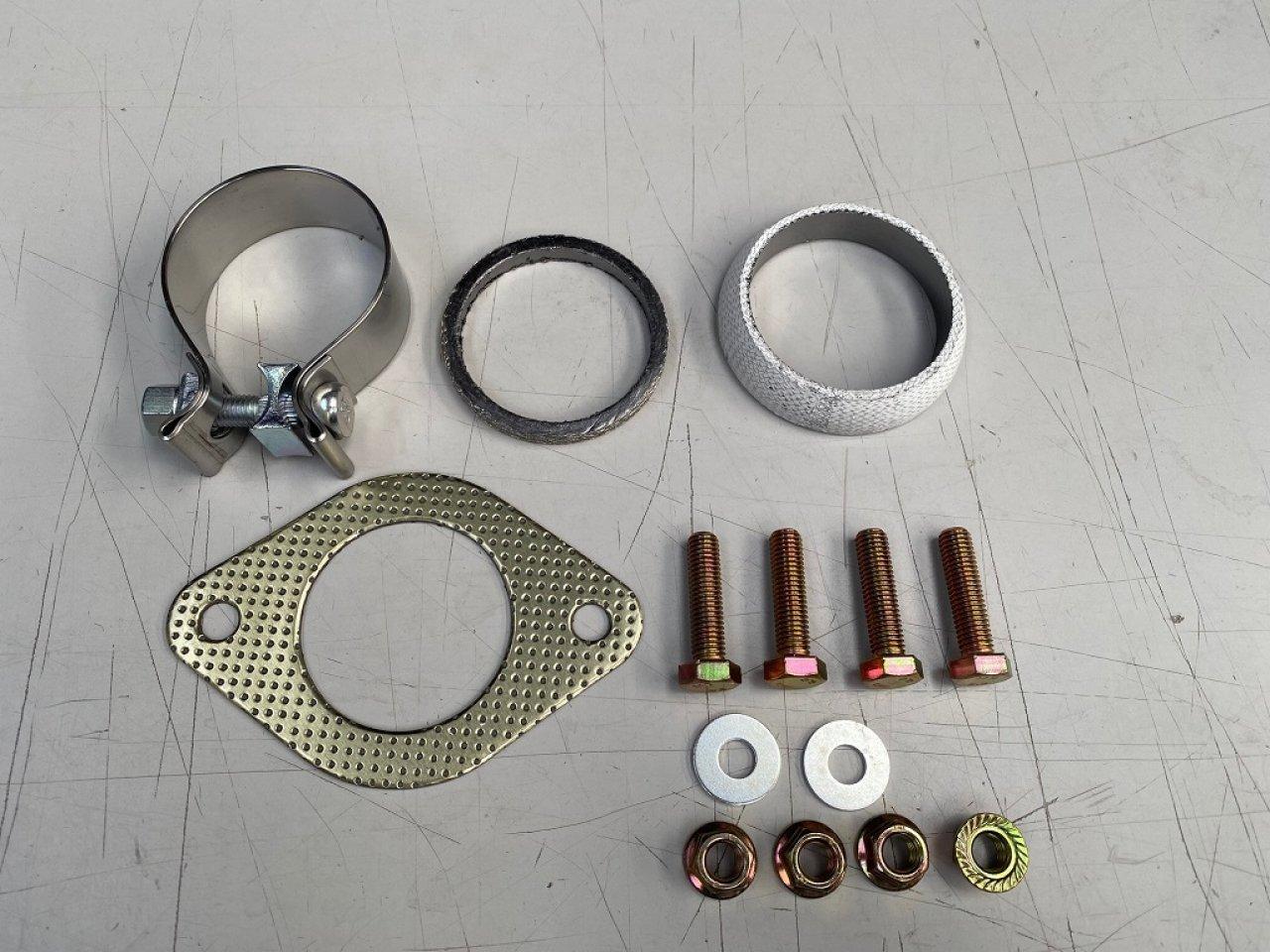
Ask for an itemised quote explaining the confirmed leak location, proposed repair, parts, labour and any diagnostic charges. A patch or clamp is not automatically appropriate; the repair must suit the damaged section, operating temperature and applicable road and emissions requirements.
Can you temporarily seal an exhaust leak?
Do not rely on tape, sealant or exhaust paste as a universal fix. Products have temperature and application limits, and a temporary patch may fail or leave a dangerous leak unresolved. The correct repair depends on the component, the size and location of the damage and the manufacturer’s requirements.
Never use a temporary repair as a reason to continue driving when fumes may enter the cabin or when the exhaust is damaged near the engine. Safety comes first; arrange an inspection and follow the technician's advice.
How a mechanic diagnoses an exhaust leak
A proper assessment typically starts with your description of when the noise or smell occurs. Depending on the vehicle, the technician may inspect the manifold, joints, flexible section, pipes, muffler, hangers and emissions components; check for soot marks or physical damage; and use an appropriate leak test or diagnostic scan.
The goal is to locate the source before replacing parts. A check-engine light can point toward an emissions or engine-management issue, but codes must be interpreted alongside physical checks rather than treated as an automatic instruction to replace a sensor or catalytic converter.
What information should you provide when booking?
- Whether the sound is a tick, hiss, puff, rattle, rasp or deep roar.
- Whether it occurs on a cold start, during acceleration, at idle or over bumps.
- Whether you have noticed fumes, a warning light, loss of power or a recent impact.
- Your vehicle make, model, year and location.
Review the exhaust repair service, browse other available automotive services or send the details through the online booking page. If there may be exhaust gases in the cabin, do not drive the vehicle to the appointment—explain the safety concern and ask about the safest next step.
Frequently asked questions
Is it safe to drive with an exhaust leak?
Not always. Exhaust gases can contain carbon monoxide, which is dangerous and cannot be reliably detected by smell. If fumes enter the cabin, you feel unwell, or the leak is near the engine or passenger compartment, stop driving in a safe place, get fresh air and arrange professional assistance.
What are the most common signs of an exhaust leak?
Possible signs include a louder exhaust, ticking or puffing noise, fumes, vibration, reduced performance or an engine warning light. Symptoms vary with leak location and size, and other faults can produce similar signs.
How much does exhaust leak repair cost in Melbourne?
Cost depends on the leak location, access, damaged component, corrosion, gaskets, clamps, welding suitability and whether a catalytic converter or sensor is affected. A proper inspection is needed before an accurate quote can be provided.
Can an exhaust leak cause a check-engine light?
Yes, some leaks can affect oxygen-sensor readings or emissions control and may trigger a warning light. However, the light can have many causes, so diagnostic codes and appropriate tests should be used to identify the fault.
Can I use exhaust paste or tape as a permanent repair?
Temporary products are not suitable for every leak or component and may not withstand the temperatures or pressure involved. The correct repair depends on the location, damage and manufacturer requirements; have the system inspected.
Can an exhaust leak cause poor fuel economy?
It can in some circumstances, especially if the leak affects sensor readings or engine management. But poor fuel economy has many possible causes, so it should not be attributed to an exhaust leak without diagnosis.
What should I do if I smell exhaust inside the car?
Pull over safely, switch off the engine, leave the vehicle and get fresh air. Do not continue driving to test whether the smell goes away. Arrange professional help; seek urgent medical assistance if anyone has symptoms such as headache, dizziness, nausea, confusion or weakness.
Can a mobile mechanic repair an exhaust leak?
It depends on the vehicle, leak location, repair required, access and available equipment. Some inspections or component repairs may be possible on-site, while extensive exhaust work may require workshop facilities. Confirm suitability before booking.
The bottom line
Exhaust leaks can range from noisy joint failures to serious safety concerns. Treat cabin fumes, sudden exhaust changes and related symptoms seriously. Avoid unsafe DIY inspections, get the source diagnosed and request a clear quote for a repair appropriate to the vehicle and the damaged component.