
An engine misfire can make a car shake at idle, hesitate when accelerating, lose power or illuminate the check-engine light. Spark plugs and ignition coils are possible causes, but they are not the only ones. Fuel delivery, air leaks, wiring, compression and other engine-management issues can create similar symptoms.
The best way to avoid paying for parts that are not needed is to diagnose the cause first. This guide explains what spark plugs and ignition coils do, which warning signs matter and what to ask before approving a repair.
What is an engine misfire?
A petrol engine needs the correct mixture of air and fuel, compression and a properly timed spark to run smoothly. If combustion does not happen as expected in one or more cylinders, the engine may misfire. Drivers may notice rough running, a shaking idle, hesitation, reduced power or a change in exhaust sound.
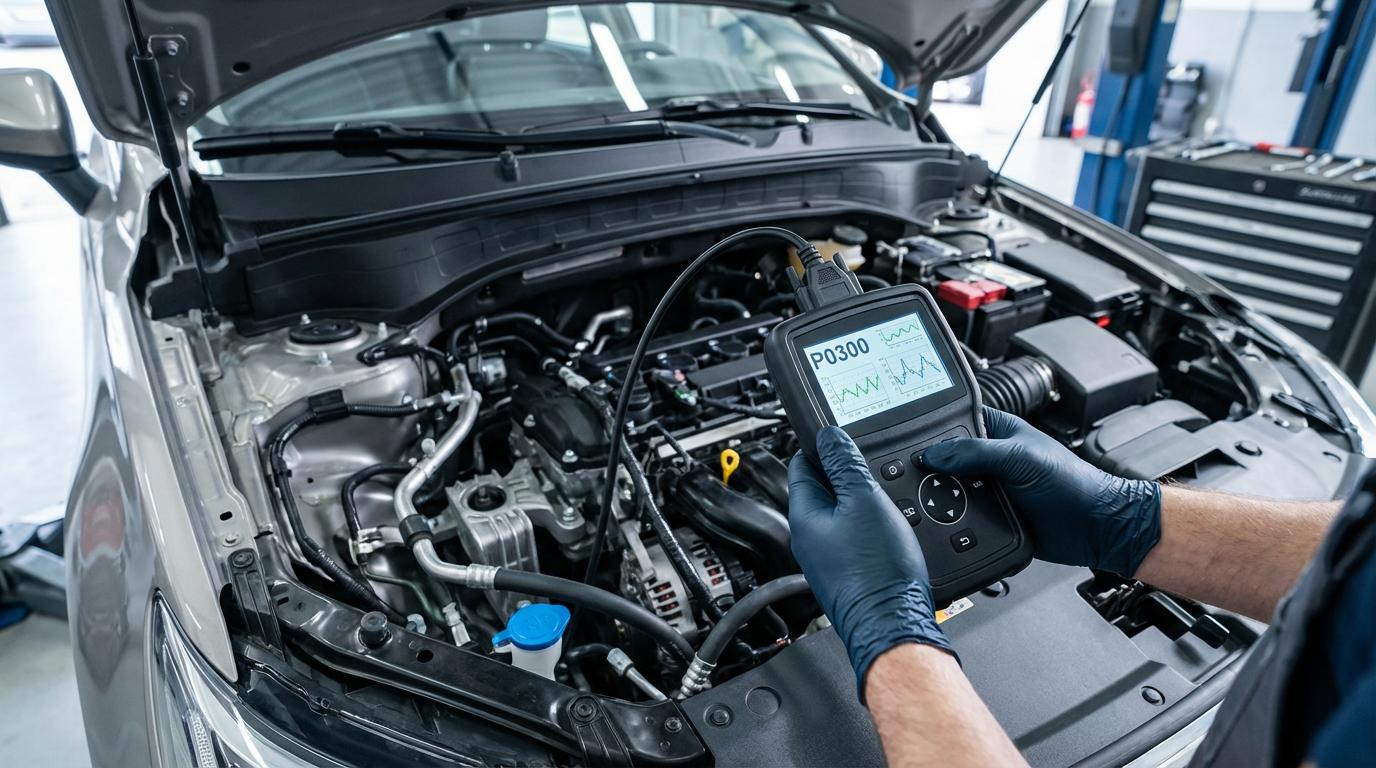
A diagnostic system may store a fault code related to a cylinder or misfire condition. That code is an important clue, but it does not automatically prove that a spark plug or ignition coil has failed. Testing is needed to determine the cause.
What do spark plugs do?
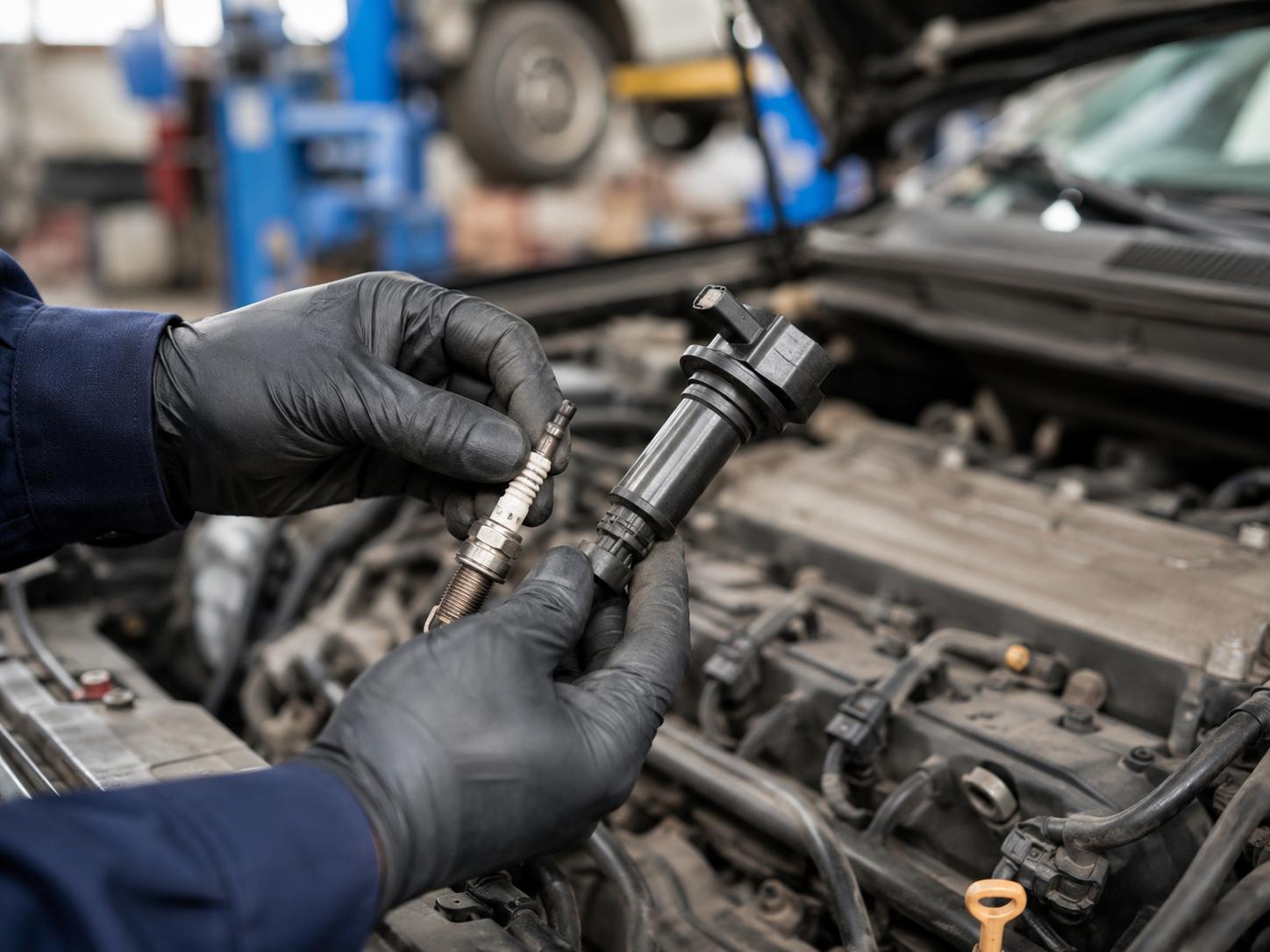
Spark plugs create the spark that ignites the air-fuel mixture in a petrol engine. They wear over time, and the required replacement interval depends on the engine and the specified plug type. Incorrect plugs, worn electrodes, fouling or an unsuitable gap can affect performance.
Diesel engines use a different ignition process and do not use spark plugs for normal combustion in the same way petrol engines do. They may use glow plugs for cold starting, which are a different component and should not be confused with petrol-engine spark plugs.
What does an ignition coil do?
An ignition coil transforms the vehicle's electrical supply into the high voltage needed by the spark plug. Depending on engine design, a vehicle may use individual coil-on-plug units, coil packs or another arrangement. A failing coil can cause misfire symptoms, but connectors, wiring, plugs and other engine systems may produce similar faults.
Coil location and access vary. Some engines make plug replacement relatively straightforward; others require the removal of covers or other components. This affects labour time and the correct procedure.
Common signs of a misfire
- Rough idle: the engine shakes or feels uneven while stationary.
- Hesitation: the vehicle stumbles or responds unevenly when accelerating.
- Reduced power: acceleration may feel weaker than usual.
- Check-engine light: the system may record a fault code, but the code must be interpreted correctly.
- Increased fuel use: a misfire or related engine fault can affect efficiency.
- Unusual exhaust smell or sound: these symptoms can accompany a misfire but may also indicate other faults.
Do not assume that every rough idle is a misfire. Engine mounts, vacuum leaks, fuel system faults and other problems can create similar sensations.
| Symptom or clue | Possible areas to investigate | Useful next step |
|---|---|---|
| Rough idle or shaking | Spark plugs, ignition coils, air leaks, fuel delivery, engine mounts or compression | Record when it happens and scan for codes; confirm the cause with testing |
| Hesitation under acceleration | Ignition components, fuel supply, air measurement, wiring or other engine-management faults | Describe engine load and driving conditions; avoid replacing parts based on symptoms alone |
| Cylinder-specific misfire code | Plug, coil, connector, wiring, injector or mechanical condition for the named cylinder | Use the code as a clue and perform suitable component and circuit tests |
| Flashing check-engine light with rough running | Potential active misfire that may damage the catalytic converter | Reduce load, stop safely and seek professional advice rather than continuing the trip |
| Misfire after recent repair or refuelling | Installation, connection, fuel-related or coincidental faults may need checking | Tell the technician what changed and when symptoms started |
What if the check-engine light is flashing?
A flashing check-engine light can indicate a serious misfire condition that may damage the catalytic converter. Reduce load, stop driving as soon as it is safe and seek professional advice. If the engine shakes heavily, loses power or the vehicle feels unsafe, do not continue the journey simply to reach a workshop.
If the light is steady and the car appears to run normally, consult the owner's manual and arrange diagnosis promptly. The correct response depends on the warning, symptoms and vehicle instructions.
How a mechanic diagnoses a misfire
Diagnosis may include reading stored codes and freeze-frame data, checking live engine data, inspecting plugs and coils, testing connectors and wiring, and assessing fuel, air or compression-related causes as indicated. A road test may be useful when safe. The precise steps depend on the vehicle and the evidence gathered.
A code that names a cylinder does not prove which part on that cylinder has failed. A mechanic should explain why the recommended test or replacement is appropriate. Replacing every coil or every plug without considering the vehicle's condition and manufacturer guidance may add unnecessary cost.
Should you replace spark plugs and coils together?
Not automatically. Spark plugs may be due under the service schedule, and a worn plug can contribute to ignition problems. A coil may be faulty independently. Whether to replace one component, a set of plugs or additional parts depends on test results, mileage, maintenance history and the manufacturer's recommendations.
If one coil has failed, ask whether the other coils have been tested and whether there is a documented reason to replace them. If spark plugs are overdue or the engine requires their removal to access another component, the mechanic can explain the practical options and any labour overlap.
What affects spark plug replacement cost?
Cost depends on the engine design, plug specification, number of cylinders, access, required tools and whether additional diagnosis is needed. Some engines have plugs that are easy to reach; others require more labour. The correct plug type matters, and the cheapest part is not necessarily the correct specification.
Ask whether the quote includes the full set required by the service procedure, labour, any diagnostic fee and applicable taxes. Confirm whether the repair is routine scheduled maintenance or a response to a confirmed fault.
What affects ignition coil replacement cost?
The estimate depends on the coil type, number of units being replaced, access, parts availability and the diagnostic steps needed to confirm the failure. Some vehicles use separate coils; others use a coil pack. Wiring or connector repairs may be needed if testing identifies an electrical fault rather than a failed coil.
Ask the provider to specify which coil or component is being replaced, what testing supports the diagnosis, whether the quote includes labour and whether any additional parts are proposed. Request approval before extra work proceeds.
| Estimate item | Why it affects the quote | What to ask |
|---|---|---|
| Spark plug specification and quantity | Engine design, plug type and number of cylinders affect parts and labour | Does the quote list the correct specification and the required quantity? |
| Ignition coil or coil pack | Vehicle design determines whether coils are individual units or a shared pack | Which coil or assembly has failed, and what test supports that conclusion? |
| Access and labour time | Covers or nearby components may need removal to reach plugs or coils | Is the labour time itemised and is any access-related work included? |
| Diagnostic testing | Fault-code review alone may not identify the failed component | Which checks have been completed and what remains uncertain? |
| Additional parts, fees and tax | Connectors, wiring repairs or other confirmed faults can change the final total | Are parts, labour, diagnostic fees and applicable taxes included, and will extra work require approval? |
Can you drive with a misfire?
Continuing to drive with a misfire can worsen damage, affect drivability and potentially damage emissions-control components. A flashing engine light, severe shaking, strong fuel smell, overheating or major loss of power should be treated as urgent. Stop safely and seek advice rather than trying to complete the trip.
If symptoms are mild and the warning is steady, avoid unnecessary journeys and arrange diagnosis promptly. Follow the owner's manual and the mechanic's advice for your particular vehicle.
How to prepare before booking
- Note whether the engine is rough when cold, warm, idling or accelerating.
- Record whether the check-engine light is steady or flashing.
- Share any diagnostic codes already read, but do not treat them as a final diagnosis.
- Provide make, model, year, engine variant, odometer reading and service history.
- Mention recent refuelling, repairs, plug changes or other changes before symptoms began.
Review our available services, check Melbourne service-area information, or send a booking request. Describe the symptoms and warning-light behaviour so the next diagnostic step can be discussed.
This guide is general information, not a remote diagnosis. Repair procedures and costs vary by vehicle; obtain a vehicle-specific assessment before approving parts replacement.