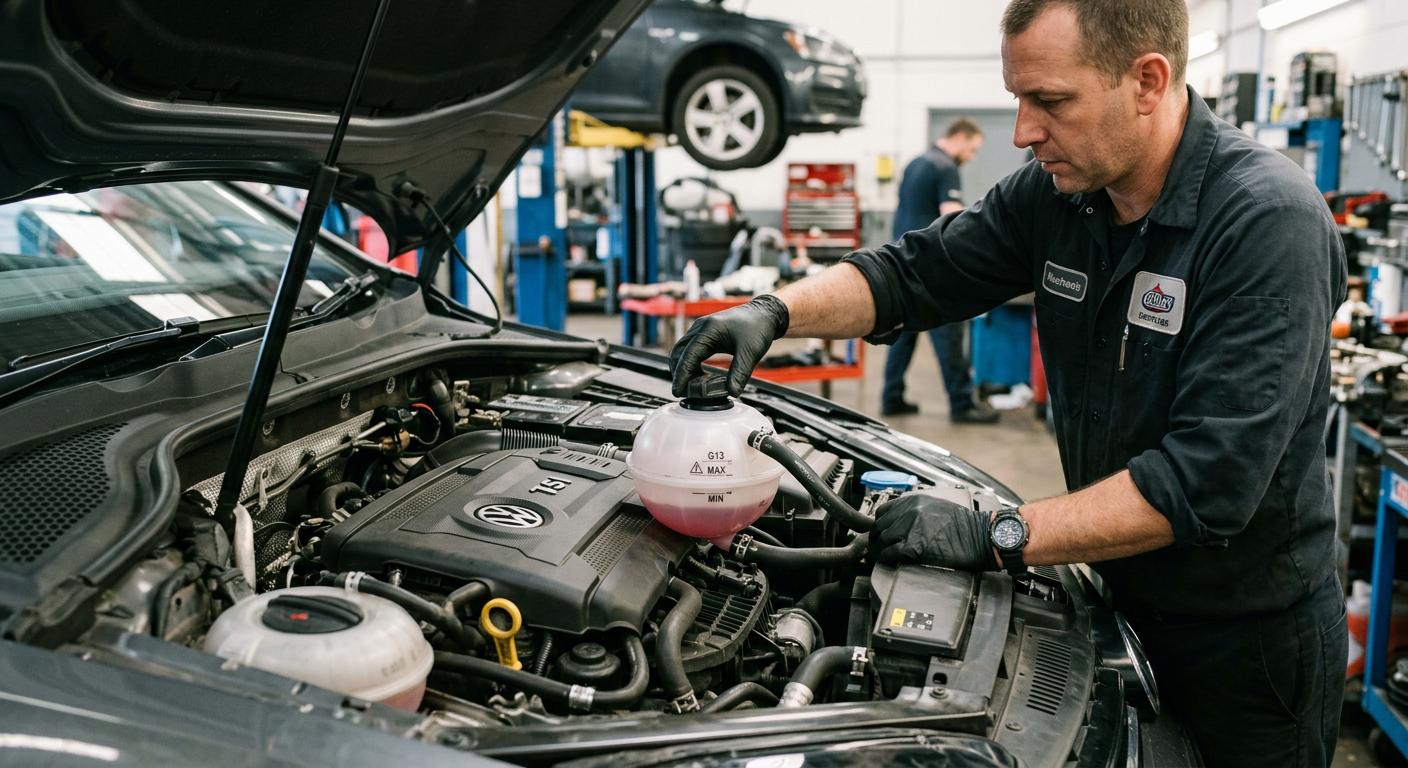
Engine coolant helps regulate temperature, protects compatible cooling-system materials and supports reliable engine operation. Over time, coolant can deteriorate or become contaminated, and a cooling system may also develop leaks or other faults. Knowing when coolant replacement is due can help drivers maintain their vehicles and reduce the risk of avoidable cooling-system problems.
If you are researching coolant replacement and coolant flush cost in Australia, there is no single price that applies to every vehicle. The total depends on the vehicle's coolant capacity, the required fluid specification, the service procedure, system condition and whether additional repairs are needed. This guide explains when coolant should be changed, what a coolant flush involves and what to ask before booking.
How often should you change engine coolant?
There is no universal coolant replacement interval for every car. Some vehicles specify a time-based interval, others use mileage-based requirements, and some have different recommendations according to the coolant type and model year. The correct interval should be taken from the owner's manual or manufacturer maintenance schedule for your exact vehicle.
Do not assume coolant is suitable for the life of the vehicle simply because it still looks coloured or the temperature gauge appears normal. Conversely, changing coolant more often than necessary is not automatically beneficial. The sensible approach is to follow the applicable schedule and investigate any signs of contamination, leakage or cooling-system trouble.
What is a coolant flush?
A coolant flush or cooling-system service involves removing old coolant and servicing the system according to the vehicle's requirements. Depending on the vehicle and the reason for the service, the procedure may involve draining the system, using an approved flushing method where appropriate, refilling with the specified coolant and carrying out the correct bleeding or air-removal procedure.
The exact procedure matters because cooling systems differ. Some vehicles have specific filling requirements, bleed points or electronically controlled components. A generic procedure may not be appropriate for every model, and not every service requires the same flushing method. Ask the workshop to explain what its quoted service includes.
How much does a coolant flush cost in Australia?
Coolant flush cost varies according to the vehicle, coolant capacity, fluid specification, labour requirements and the condition of the cooling system. A straightforward scheduled coolant change may involve different work from a service where contamination, leakage or an existing overheating problem must first be investigated.
The price may also differ according to the coolant required and whether additional components or repairs are necessary. If the reservoir, hoses, radiator or water pump are faulty, a coolant change alone will not correct the underlying problem. A transparent quote should distinguish the planned coolant service from any separate diagnostic work or repair.
For a useful comparison, ask whether the quoted amount includes the correct coolant, draining and refilling, any required flushing procedure, bleeding or air removal, disposal of the old fluid and checks for leaks. Confirm whether additional work is excluded from the original price.
What affects the price of coolant replacement?
Coolant specification and quantity
Different engines require different coolant specifications and capacities. The appropriate fluid must meet the manufacturer's requirements for the particular vehicle. Coolant colour alone does not establish compatibility, and fluids should not be mixed simply because they look similar.
Some vehicles require a specific premixed product, while others permit a suitable concentrate mixed according to its instructions. The correct product and mixture depend on the manufacturer's requirements and the local conditions for which the system is designed. Ask the workshop to confirm the specification being used.
System design and labour time
Cooling-system layouts differ, and some vehicles require additional steps to drain, refill or bleed the system correctly. Access to components and the design of the coolant circuit can affect labour time. This is why an estimate based only on vehicle size or engine capacity may not reflect the exact work required.
Condition of the existing coolant
Coolant that is contaminated, incorrectly mixed or affected by an unresolved mechanical fault may require further investigation. Discolouration alone does not identify the cause, and an ordinary coolant change may be inappropriate if the fluid indicates a more serious issue.
If contamination is suspected, ask the technician to explain what has been observed and whether additional testing is needed. The service should address the underlying problem where one is found, rather than simply replacing the fluid and leaving the cause unresolved.
Leaks and related repairs
A coolant service may reveal that a hose, radiator, reservoir, cap, water pump or another component is leaking or damaged. These repairs are separate from the cost of coolant itself and can change the total quote. The workshop should identify the fault and obtain approval before carrying out additional work.
Signs that your coolant may need attention
Repeated low coolant warnings
If the coolant level repeatedly falls or a warning keeps appearing, the system should be checked for leaks or another fault. Simply topping up the reservoir without finding the cause may allow a developing problem to continue. Follow the vehicle manufacturer's guidance and never open a hot, pressurised cooling system.
Engine temperature higher than normal
Overheating can be associated with low coolant, a radiator problem, a thermostat fault, a water pump issue, a cooling fan failure or another engine problem. Old coolant may be relevant in some situations, but overheating should not automatically be treated as a coolant-change issue.
If the engine overheats, stop somewhere safe and arrange professional assistance. Continued driving can cause serious damage, and a coolant flush alone may not resolve the cause.
Visible contamination or unusual coolant condition
Cloudiness, unusual deposits or an unexpected appearance may indicate contamination or a system issue, but the appearance alone cannot reliably identify the fault. Different coolant formulations also vary in colour. A technician should assess the fluid and cooling system before deciding whether a replacement, cleaning procedure or additional repair is required.
Uncertain maintenance history
If you have purchased a used car and cannot confirm when its coolant was last replaced, check the maintenance schedule and available service records. The correct next step depends on the vehicle's specification and history. A technician can help determine whether scheduled replacement or further inspection is appropriate.
Coolant flush versus coolant top-up
A top-up restores the level when the amount of coolant has fallen, using a compatible product and the correct procedure. A coolant flush or replacement service addresses the condition and renewal of the fluid according to the vehicle's requirements. These are not interchangeable tasks.
If the level is low, the reason should be investigated where appropriate. A top-up may temporarily restore the level, but it will not repair a leaking hose or failed pump. Similarly, replacing coolant will not resolve a faulty thermostat or radiator. The right service depends on the problem and the manufacturer's maintenance requirements.
Why the correct coolant matters
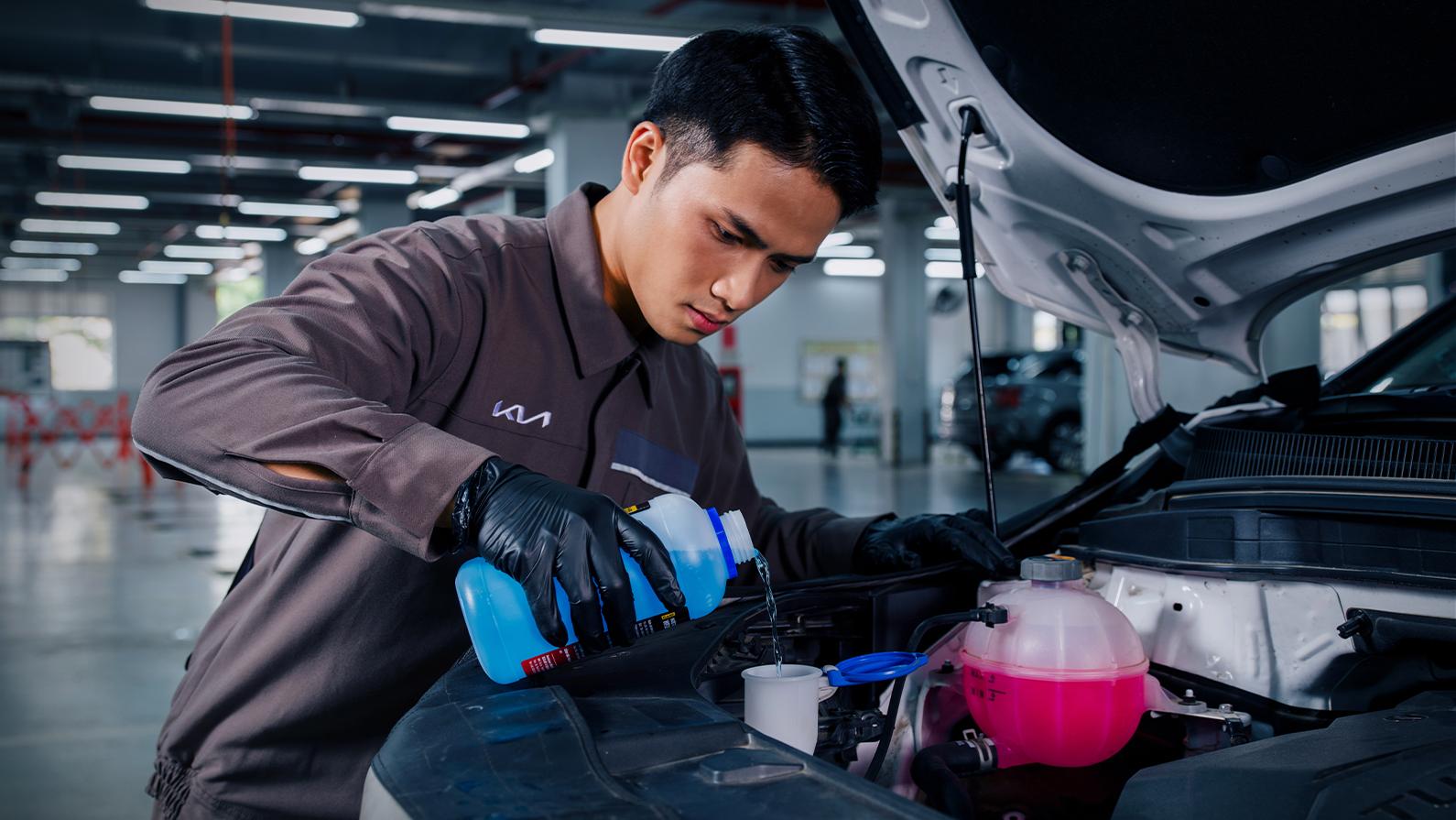
Coolant is formulated to support heat transfer and protect compatible metals, seals and other materials in the cooling system. Using an unsuitable product or mixing incompatible formulations can create problems. Product selection should be based on the vehicle manufacturer's specification, not just the colour printed on the container.
Correct concentration and filling procedures also matter. An incorrect mixture or trapped air can affect system performance, while some vehicles require particular bleeding steps after the system is drained. These details are reasons to use the correct service information for the vehicle rather than relying on one generic process for every car.
Can you change coolant yourself?
Some vehicles permit owner-performed routine maintenance, but coolant handling requires care. Hot coolant can cause severe burns, and spilled coolant must be kept away from children, pets and the environment. Used coolant should be collected and disposed of responsibly rather than poured onto the ground or into a stormwater drain.
Modern vehicles may also require specific filling, bleeding or diagnostic procedures. If you are unsure about the required fluid, the system's condition or the correct procedure, have the work carried out by a qualified professional. Never remove a coolant cap while the system is hot or pressurised.
How to prepare for a coolant replacement appointment
Provide the workshop with the vehicle's make, model, year and engine details. Mention any history of overheating, coolant top-ups, visible leaks, warning lights or recent cooling-system repairs. If you have maintenance records, share them so the technician can compare the work completed with the manufacturer's schedule.
Ask what coolant specification will be used, what the service includes, whether the system will be checked for leaks and whether the quoted price covers the required bleeding procedure. If an additional fault is found, request an explanation and an updated estimate before approving further repairs.
Coolant replacement and cooling-system services in Melbourne's west
Whether your vehicle needs scheduled coolant replacement or has a warning that requires investigation, the service should match the vehicle's specification and condition. A coolant change is maintenance, not a substitute for diagnosing overheating, persistent fluid loss or suspected mechanical failure.
Visit our coolant replacement service page, explore our water pump replacement information, browse all automotive services or arrange an assessment through our online booking page.
Frequently asked questions
How often should car coolant be changed in Australia?
The interval depends on the vehicle, coolant specification and manufacturer maintenance schedule. Check the owner's manual or service information for your exact model rather than using one interval for all cars.
How much does a coolant flush cost?
The cost depends on the coolant type and quantity, vehicle design, labour and whether additional repairs are needed. Request a vehicle-specific quote that explains what is included.
Can I just top up coolant instead of flushing it?
A top-up may restore a low level when the correct compatible fluid is used, but it does not replace scheduled coolant renewal or identify the reason for fluid loss. Repeated low levels should be investigated.
Can I mix different coolant colours?
Colour alone does not establish compatibility. Use the coolant specification required by the vehicle manufacturer and do not mix products unless compatibility is confirmed.
Does a coolant flush fix an overheating engine?
Not necessarily. Overheating can be caused by leaks, a radiator, thermostat, water pump, cooling fan or another fault. The underlying cause should be diagnosed before deciding which repair is required.
How can I book a coolant replacement?
Visit the coolant replacement service page or use the online booking page to arrange an appointment.