
Car repair costs in Melbourne vary widely because two vehicles showing the same symptom may need completely different work. A slow start could be a tired battery, a charging-system fault or a connection issue. A warning light may require a simple repair—or further testing before the cause is known.
This guide explains 15 common repair categories and the factors that affect a quote. It is not a fixed price list: parts, vehicle design, labour time, diagnostic work and access can change the final amount. Ask for a vehicle-specific estimate before authorising repairs.
How to read a car repair quote
A useful quote should explain the concern, the proposed work, parts and labour where applicable, any diagnostic or call-out charge, and whether additional work requires approval. Ask whether the amount is an estimate or a fixed quote, what could change it and whether taxes are included. If a fault has not yet been confirmed, the first step may be diagnosis rather than immediate parts replacement.
Be cautious of a quote that names a part without explaining the evidence for replacing it. Equally, the cheapest quote is not always the best comparison if it excludes diagnostics, uses different parts or covers a smaller scope.

Quick comparison: what a repair quote should clarify
| Quote item | What to check | Why it matters |
|---|---|---|
| Diagnosis | Initial scan, further testing, inspection or road test | A fault code or symptom may not identify the failed part by itself. |
| Parts | Part specification, brand or quality level, quantity and availability | Different parts can change both price and warranty terms. |
| Labour | Estimated time or fixed labour amount, plus access-related work | Vehicle layout and repair complexity affect the work required. |
| Additional charges | Fluids, consumables, call-out, programming, alignment and GST | Exclusions can make two headline quotes difficult to compare. |
| Approval and warranty | How extra work is approved and what warranty applies | Written scope reduces misunderstandings before work begins. |
1. Car battery replacement
Common signs: slow cranking, clicking on start-up, a battery warning, repeated jump-starts or electrical symptoms. A battery test can help assess its condition, but starting problems may also involve terminals, cables, the starter or charging system.
What affects cost: battery chemistry and specification, vehicle start-stop requirements, battery location, registration or reset procedures on some models, and whether testing or charging-system checks are included. Confirm the correct battery type rather than selecting by size alone.
Explore our service options if you need help identifying the right repair pathway.
2. Brake pad and rotor replacement
Common signs: squealing, grinding, vibration under braking, reduced performance or a brake warning. Sounds alone do not confirm which component needs replacement; inspection is needed to assess pad thickness, rotor condition and related parts.
What affects cost: axle or wheel scope, vehicle weight and design, parts quality, rotor condition, callipers or sensors, and whether extra work is justified by inspection. Ask the mechanic to explain whether pads alone are suitable or why rotors are also required.
Do not continue driving if braking performance is seriously reduced or the pedal feels abnormal. Arrange an assessment.
3. General or logbook servicing
Scheduled servicing helps maintain the vehicle according to the manufacturer's requirements. The scope can vary with kilometres, age, engine type and service interval. A minor service should not be assumed to include every item in a major or logbook interval.
Price depends on specified oil and fluids, filters, inspection requirements and any additional work identified. Review our general service and logbook service information for the relevant scope.
4. Engine oil and filter service
Oil and filter changes are routine maintenance, but the correct oil specification and quantity matter. Vehicle design, sump access, undertrays and the filter location can affect labour. If the oil level is low, the cause should be considered rather than treating repeated top-ups as a repair.
Stop safely and seek advice if the oil-pressure warning appears; do not assume it simply means the next service is due.
5. Cooling system and coolant leaks
Common signs: temperature rising, coolant warning, visible coloured fluid, sweet smells or repeated low coolant. Causes may include hoses, radiator, water pump, cap, thermostat or other components.
What affects cost: leak location, access, component choice, coolant specification, testing and whether related parts need removal. Never open a hot pressurised cooling system. If the engine overheats, stop safely and switch it off according to the handbook.
6. Water pump replacement
A failing water pump may cause coolant leakage, noise or overheating, but symptoms should be diagnosed before replacing it. On some engines, access is straightforward; on others, the job can be labour-intensive and may overlap with scheduled belt work.
Ask whether the quote includes coolant, required seals, related belt components and any recommended work supported by the manufacturer's schedule. Do not assume all vehicles have the same repair procedure.
7. Drive belt replacement
A worn or damaged drive belt may squeal, show cracks or affect accessories driven by the belt. The belt layout differs between vehicles. A noise may also come from a tensioner, pulley or accessory, so replacing the belt alone may not resolve it.
Cost depends on access, belt configuration and whether a tensioner or pulley is found to be faulty. If a belt fails, the consequences depend on the engine design and which components it drives.
8. Alternator and charging-system repairs
Dim lights, a battery warning or repeated flat batteries can point to a charging issue, but battery condition, wiring and connections also need checking. Testing before parts replacement helps avoid installing an alternator when the actual issue lies elsewhere.
Ask whether the estimate includes battery and charging tests, labour, parts and any programming requirements. If the vehicle is losing electrical power while driving, stop in a safe place and seek assistance.
9. Starter motor repairs
A single click, repeated clicking or no crank can involve the starter, battery, cables, terminals, immobiliser or other electrical components. The sound is useful information, not a complete diagnosis.
Access and vehicle layout can influence labour. A proper quote should state what testing has been completed and whether the proposed repair is a starter motor replacement or a broader electrical diagnosis.
10. Diagnostic scan and engine warning lights
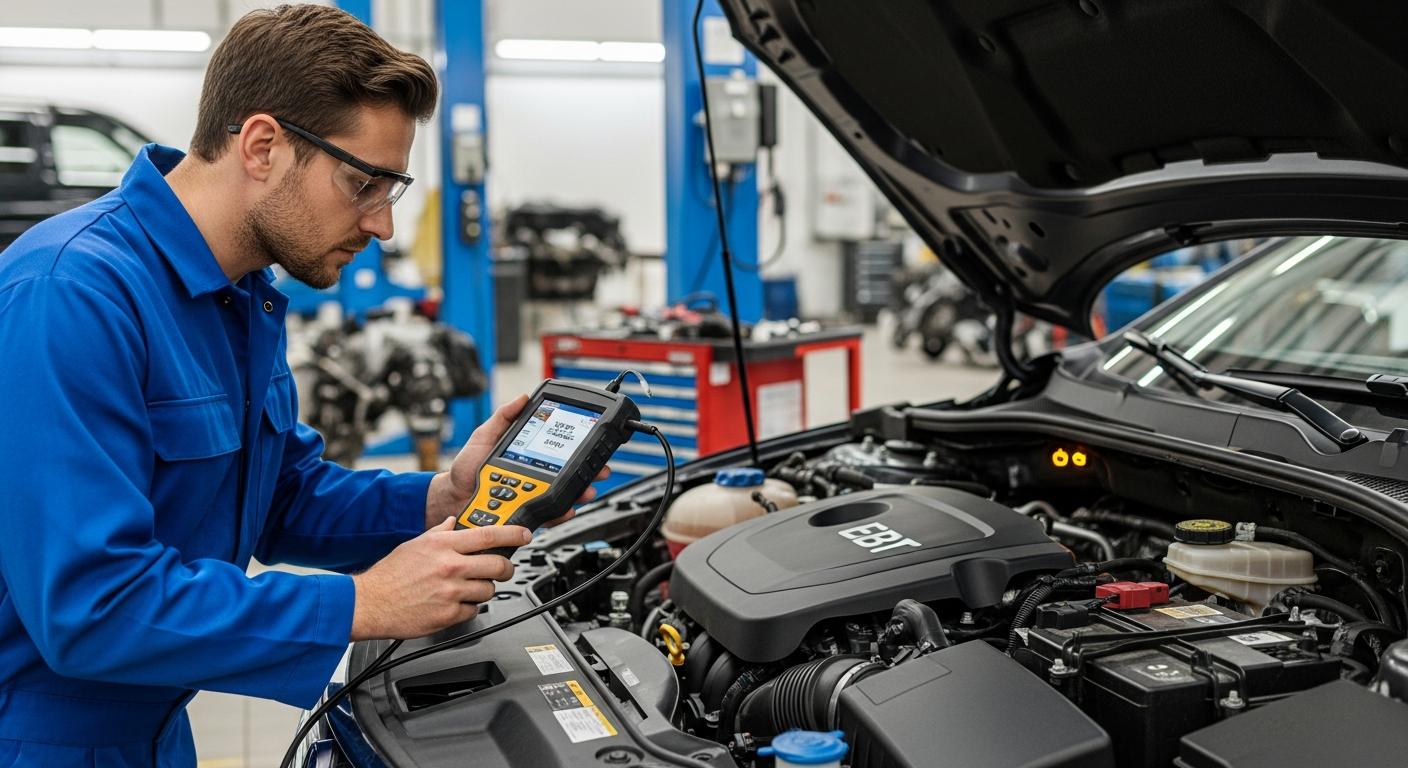
A diagnostic trouble code is a clue that helps guide testing; it is not automatically a verdict that one specific part must be replaced. Correct diagnosis may require live data, electrical checks, physical inspection or a road test where safe.
Ask whether the quoted diagnostic fee covers only an initial scan or includes further testing. If the light is flashing, the engine is running roughly, or the handbook describes the warning as urgent, avoid unnecessary driving and get advice promptly.
11. Spark plugs and ignition coils
Misfires, rough idle, hesitation or reduced performance may involve spark plugs or ignition coils, but fuel, air, compression and wiring issues can produce similar symptoms. Replacing parts without diagnosis can waste money.
Cost depends on engine layout, plug specification, access and whether testing identifies one failed component or a wider issue. Follow the manufacturer's maintenance schedule for spark plug replacement.
12. Oxygen sensor and emissions-related faults
An oxygen sensor fault can affect engine management and emissions, but the warning may be caused by wiring, exhaust leaks or another underlying problem. A fault code should be interpreted alongside appropriate testing.
Vehicle-specific access, sensor location and whether the issue is the sensor or its circuit can affect the estimate. Ask for the diagnostic reasoning and confirm the scope before authorising parts.
13. Exhaust repairs and catalytic converter concerns
Exhaust leaks, rattles, unusual noise or an emissions warning can have different causes. A loose heat shield is not the same repair as a damaged pipe or catalytic converter. A converter-related code also needs diagnosis to determine the underlying cause.
Cost depends on the affected component, material, vehicle design and access. Ask whether the quote includes inspection, parts, fitting and any follow-up testing. Avoid continuing to drive if exhaust fumes may be entering the cabin.
14. Suspension, steering and engine mounts
Clunks over bumps, vibration, uneven tyre wear, pulling or changes in steering feel can involve suspension bushes, links, mounts, shocks, tyres or other components. A symptom alone cannot identify the failed part.
Quotes depend on the exact component, whether parts are replaced in pairs, alignment requirements and access. Steering or suspension symptoms that affect control should be assessed promptly.
15. Wiper, mirror, light and cabin-filter repairs
Small maintenance and visibility items can include wiper blades, headlight globes, mirror glass or assemblies and cabin filters. These jobs vary in complexity: a simple bulb or filter may be quick, while integrated lighting, electrical faults or mirror assemblies can require more diagnosis and trim removal.
Confirm the exact part and whether the quote includes fitting. For relevant services, see globe bulb replacement, mirror replacement and air and cabin filter replacement.
What makes repair prices vary in Melbourne?
- Vehicle specification: model, engine, year, trim and parts availability.
- Access and labour: some components require substantial dismantling.
- Diagnosis: intermittent faults may need more testing than a confirmed simple repair.
- Parts choice: genuine, aftermarket and remanufactured options differ in availability, warranty and price.
- Related work: additional work should be explained and approved, not assumed.
- Location and logistics: call-out, travel, parking or access arrangements may affect a mobile service quote.
Repair-cost factors at a glance
| Repair category | Common cost drivers | Useful question to ask |
|---|---|---|
| Battery or starting | Battery specification, access, testing and reset procedures | Has the battery and charging system been tested? |
| Brakes | Axle scope, pad and rotor condition, sensors and callipers | What inspection finding supports each recommended part? |
| Cooling system | Leak location, component access, coolant and related parts | How was the leak confirmed, and is pressure testing needed? |
| Warning-light diagnosis | Fault complexity, live-data checks, wiring tests and follow-up testing | Does the diagnostic fee cover only a scan or further investigation? |
| Suspension or steering | Exact component, labour access, related hardware and alignment | Which part is worn, and does the vehicle remain safe to drive? |
How to compare quotes without getting caught out
- Give each provider the same vehicle details and symptoms.
- Ask what diagnosis has confirmed the fault.
- Compare the same repair scope, parts specification and warranty terms.
- Check whether diagnostics, labour, fluids, consumables and call-out fees are included.
- Ask how extra work will be approved before it is carried out.
- Keep the invoice and any diagnostic or inspection notes.
Do not choose a repair solely by the lowest headline figure if it excludes essential work or uses a different scope. At the same time, a higher price should come with a clear explanation of what is included.
Before approving the repair
| Step | Action | What to keep |
|---|---|---|
| 1. Describe | Share the vehicle make, model, year, symptoms and warning lights. | Vehicle details and symptom notes |
| 2. Diagnose | Ask what testing supports the recommended repair. | Inspection findings or diagnostic notes |
| 3. Compare | Match parts, labour, fees, exclusions and GST across quotes. | Written estimates with dates |
| 4. Approve | Agree how the mechanic will seek approval if scope changes. | Approved scope and total/estimate status |
| 5. Retain | Keep the invoice and any parts or workmanship warranty details. | Invoice and service records |
Book a repair with a clear scope
Mechanic Near You provides information about its available services and booking process online. Start with the services page, check Melbourne service-area information, or send a booking request. Include your make, model, year, engine if known, odometer reading, symptoms and any warning lights. The right next step may be diagnosis first rather than an immediate parts replacement.
Repair costs and procedures depend on the exact vehicle and confirmed fault. This article deliberately avoids one-size-fits-all prices; obtain a written, vehicle-specific estimate before approving work.
Choose the right next step
For scheduled maintenance, compare the scope of a general car service or a manufacturer-scheduled logbook service. If the cause is not clear, describe the symptoms when you request a service booking rather than authorising parts based only on a warning light.