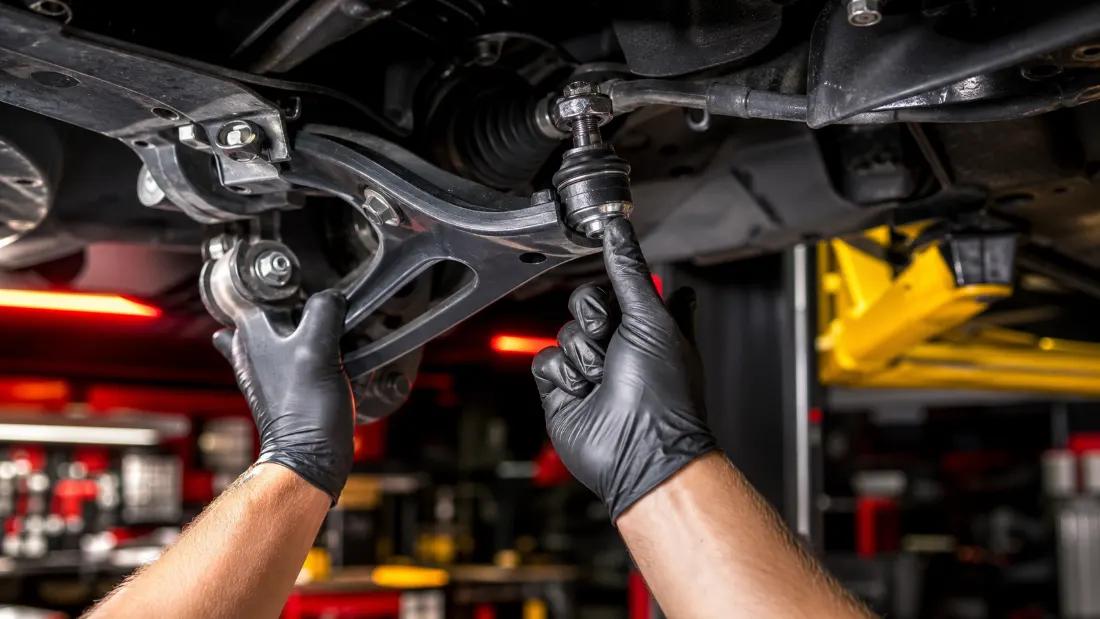
A clunk, knock or thud when driving over a speed hump or uneven road can be worrying. The sound may come from suspension components, steering parts, engine or transmission mounts, loose underbody items—or something less serious such as unsecured cargo. The noise alone cannot confirm which component has failed.
Because suspension and steering affect vehicle control, a new or worsening clunk deserves attention, especially if it comes with pulling, vibration, uneven tyre wear or a change in handling.
When does the clunk happen?
Before booking an inspection, note the conditions in which the sound occurs. Does it happen over small bumps, larger potholes, while turning into a driveway, during braking, when accelerating, or when changing from drive to reverse? Does it seem to come from the front, rear or one side? These details help guide diagnosis, although sounds can travel through the body and be difficult to locate from the driver's seat.
Do not deliberately drive over potholes or repeatedly recreate a loud noise to test it. If the vehicle feels unstable, stop in a safe place and arrange professional advice.
Symptom notes that can help diagnosis
| When the noise occurs | Possible areas to inspect | Useful detail to report |
|---|---|---|
| Over bumps or uneven roads | Suspension bushes, links, joints, strut mounts or loose fittings | Whether it happens over small bumps, larger bumps or driveway entries |
| While turning | Steering and suspension joints, mounts or CV-related components | Direction of turn and whether steering feel changes |
| During acceleration or gear changes | Engine/transmission mounts or driveline components | Whether there is also vibration or a thud when selecting drive/reverse |
| When braking | Suspension movement, brake components or loose fittings | Any change in braking performance or pedal feel |
| From underneath the vehicle | Exhaust hangers, heat shields, undertrays or suspension parts | Whether the sound is new, worsening or accompanied by a warning sign |
1. Suspension bushes
Bushes are rubber or other compliant components fitted at suspension and mounting points. They allow controlled movement while helping isolate vibration. Wear, splitting or deterioration can sometimes cause knocking, vague handling or changes in alignment, but similar symptoms can arise from other parts.
A technician may inspect the bushes for damage and excessive movement using the appropriate procedure. Some wear is difficult to assess visually, and not every surface crack means immediate replacement. The recommendation should explain the observed condition and how it affects the vehicle.
2. Ball joints, links and other suspension joints
Worn joints or links can create knocks over bumps, especially when the suspension changes load. The exact components vary by vehicle. A sway-bar link, ball joint, control arm or mounting point can produce similar sounds, so replacing a part based only on a noise description is guesswork.
Ask the mechanic to identify the affected component and explain whether the movement exceeds the vehicle's acceptable limits. A joint that affects steering or wheel location may be safety-critical and should be assessed promptly.
3. Shock absorbers and strut mounts
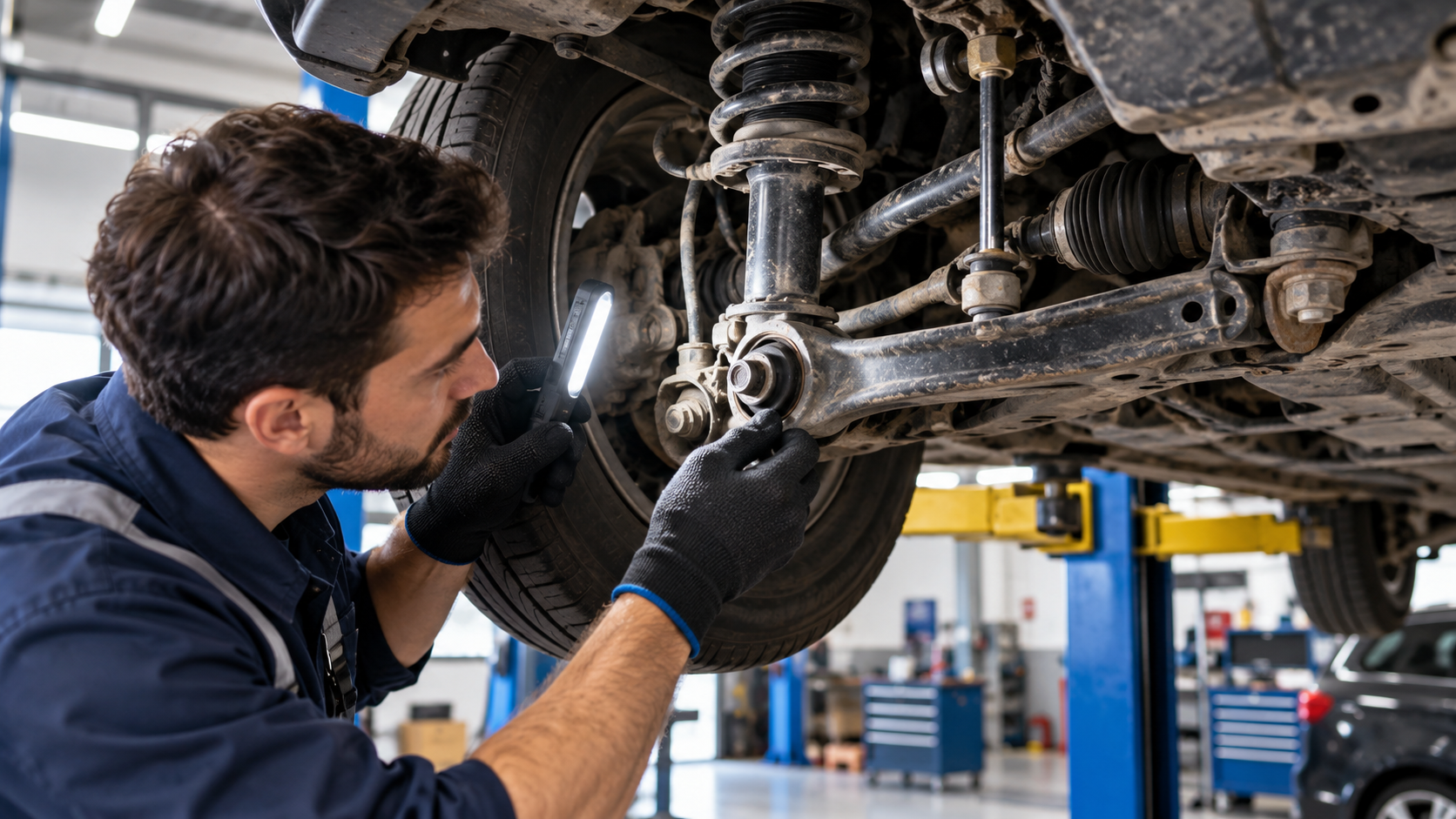
Worn shock absorbers may be associated with excessive bouncing, reduced control, fluid leakage or uneven tyre wear. A damaged or worn strut mount can contribute to knocking or noise while steering or travelling over bumps. However, none of these symptoms proves that a shock or mount is the cause.
Inspection may involve checking for leakage, condition, mounting movement and related components. If replacement is recommended, ask whether the quote covers only the identified part or includes associated hardware and any alignment check that may be required.
4. Engine and transmission mounts
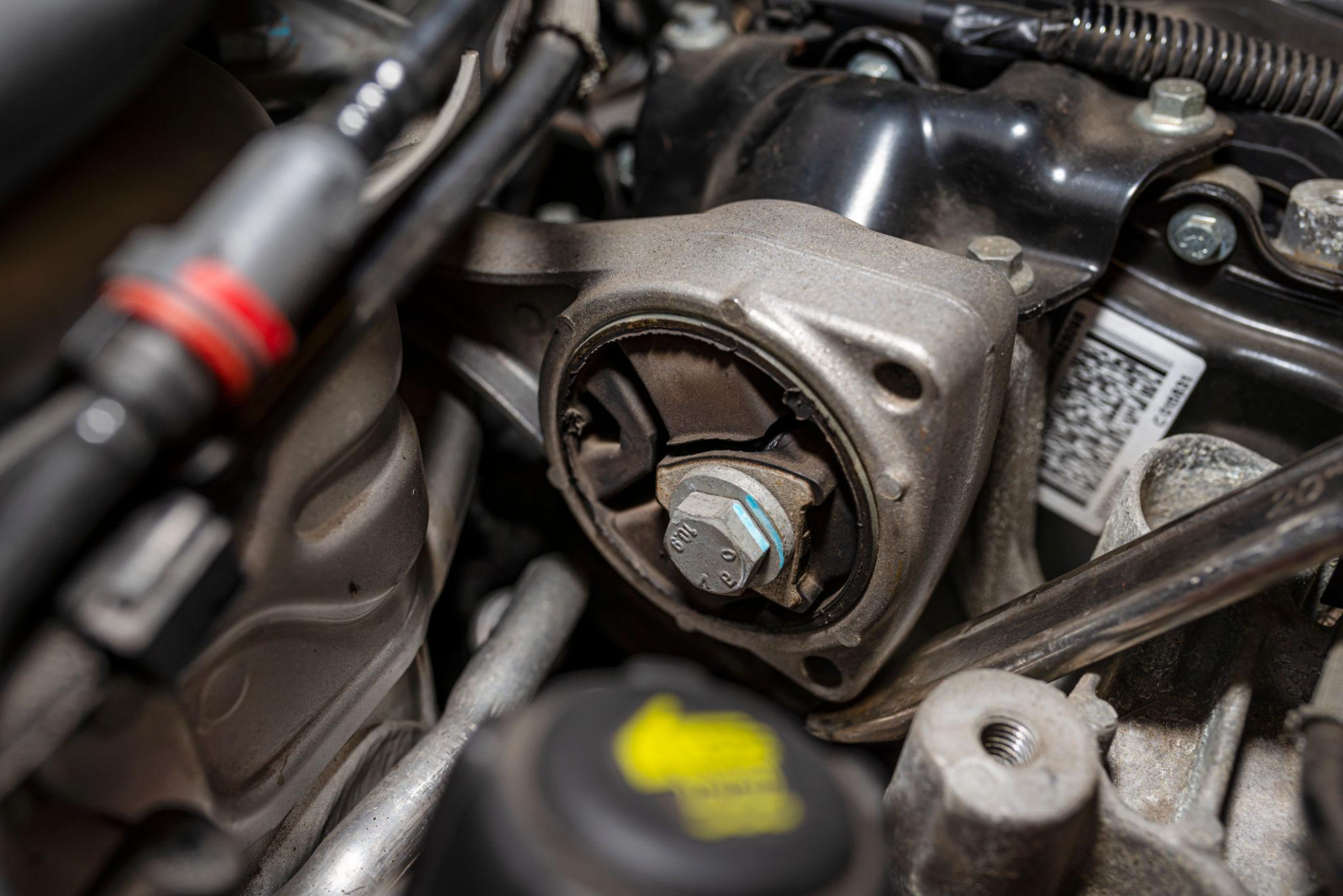
Mounts support the engine or transmission and help control movement while reducing vibration. A damaged mount may cause a thud during acceleration, braking, gear engagement or a change between drive and reverse. It can also cause vibration at idle. A suspension clunk, exhaust contact or driveline issue can sometimes feel similar.
A mechanic may observe engine movement under controlled conditions and inspect mount condition. Do not put hands near moving components or attempt to test a mount by revving the engine yourself. Mount design and replacement procedures vary, and some jobs require safe support of the powertrain.
5. Loose exhaust, undertray or other fittings
Not every clunk is caused by suspension. A loose undertray, exhaust hanger, heat shield, spare wheel, jack or item in the boot can knock as the car moves. Check that luggage and removable equipment are secured, but do not crawl beneath a vehicle supported only by a jack.
If the sound comes from underneath the vehicle, a workshop inspection can help distinguish a loose fitting from a worn suspension or drivetrain component.
What other symptoms matter?
- Steering feels loose or the car wanders: arrange prompt inspection of steering, suspension and tyres.
- Uneven tyre wear: could relate to alignment, tyre pressure, suspension wear or other factors.
- Vibration during acceleration: may involve mounts, wheels, tyres or drivetrain components.
- Clunk when braking: can involve suspension movement, brake components or loose fittings and needs inspection.
- Noise when turning: may point toward steering, suspension or CV-joint concerns depending on the conditions.
- Visible fluid leak or broken component: avoid guessing at its significance; seek professional assessment.
Clunking noise: urgency guide
| Symptom alongside the noise | Recommended response |
|---|---|
| Sudden steering change, unstable handling or wheel visibly out of position | Stop in a safe place and arrange professional assistance; do not continue driving. |
| Braking performance changes or severe vibration | Stop safely and seek prompt assistance. |
| New persistent clunk with otherwise normal handling | Arrange an inspection soon and avoid rough roads, high speeds and heavy loads until assessed. |
| Noise seems linked to loose luggage or removable equipment | Secure accessible items; do not crawl under a vehicle supported only by a jack. |
Safety note: This guide cannot determine whether a particular vehicle is roadworthy. When control, steering or braking may be affected, prioritise safety over driving to an appointment.
Can I keep driving with a suspension clunk?
It depends on the cause and severity. A minor loose trim item is different from a damaged joint that affects wheel control. If the clunk is accompanied by sudden steering changes, severe vibration, a wheel that appears out of position, braking changes or unstable handling, stop driving as soon as it is safe and arrange assistance.
If the sound is mild but new, book an inspection soon and avoid rough roads, high speeds or heavy loads until the cause is understood. A noise that becomes louder or more frequent should not be ignored.
What happens during a suspension inspection?
A mechanic may discuss the symptoms, check tyres and ride height, inspect visible suspension and steering parts, assess joints and bushes using appropriate methods, and road-test the vehicle if safe. The scope depends on access, the reported issue and the provider's equipment. Some faults require further testing or inspection on a workshop hoist.
Ask for the findings in plain language. A good explanation should identify the component, describe the evidence of wear or damage, outline the safety urgency and separate essential work from monitoring or optional work.
What affects suspension or mount replacement cost?
Cost depends on the exact vehicle and failed component, parts quality, access, labour time, whether related hardware is required and whether wheel alignment or additional checks are needed. Replacing a small link is a different job from removing a suspension arm or supporting a powertrain to replace a mount.
Request a written quote that identifies the part and side of the vehicle, parts and labour, alignment requirements, warranty and any diagnostic charge. If multiple components are recommended, ask which findings support each replacement.
What a suspension repair estimate should show
| Estimate item | Why it matters | Question to ask |
|---|---|---|
| Exact component and position | Left/right, front/rear and component type change the scope. | Which part has wear or damage, and what evidence supports replacement? |
| Parts and associated hardware | Some components are supplied as assemblies or need additional fasteners. | Are bushes supplied separately or as part of a larger assembly? |
| Labour and access | Removal and refitting effort varies by vehicle design. | What work is included in the labour estimate? |
| Alignment or follow-up checks | Some repairs may affect wheel geometry or require further checks. | Is alignment required, and is it included? |
| Warranty and urgency | Helps clarify coverage and whether the vehicle should be driven. | What warranty applies, and is the vehicle safe to use meanwhile? |
How to prepare for a mechanic
- Note when the noise occurs and whether it changes with speed, steering, braking or acceleration.
- Record whether it seems to come from the front or rear, left or right, without assuming this identifies the fault.
- Tell the mechanic about recent tyre, brake, suspension or exhaust work.
- Mention any steering changes, warning lights, vibration or uneven tyre wear.
- Ask whether the inspection can be performed safely at your location or requires a workshop.
For available repair options, browse our service list, check Melbourne service-area information, or send a booking request. Describe the noise and vehicle details so the provider can confirm the appropriate next step.
This guide covers possible causes, not a remote diagnosis. A physical inspection is needed to confirm the fault and determine whether the vehicle is safe to drive.
Arrange an inspection if the noise is new
When requesting an inspection, explain when the clunk occurs and mention any changes in steering, braking, vibration or tyre wear. You can review the available services, confirm the Melbourne service area, and send a booking request with your vehicle details. Confirm the provider can perform the required inspection at your location; some faults need workshop equipment.