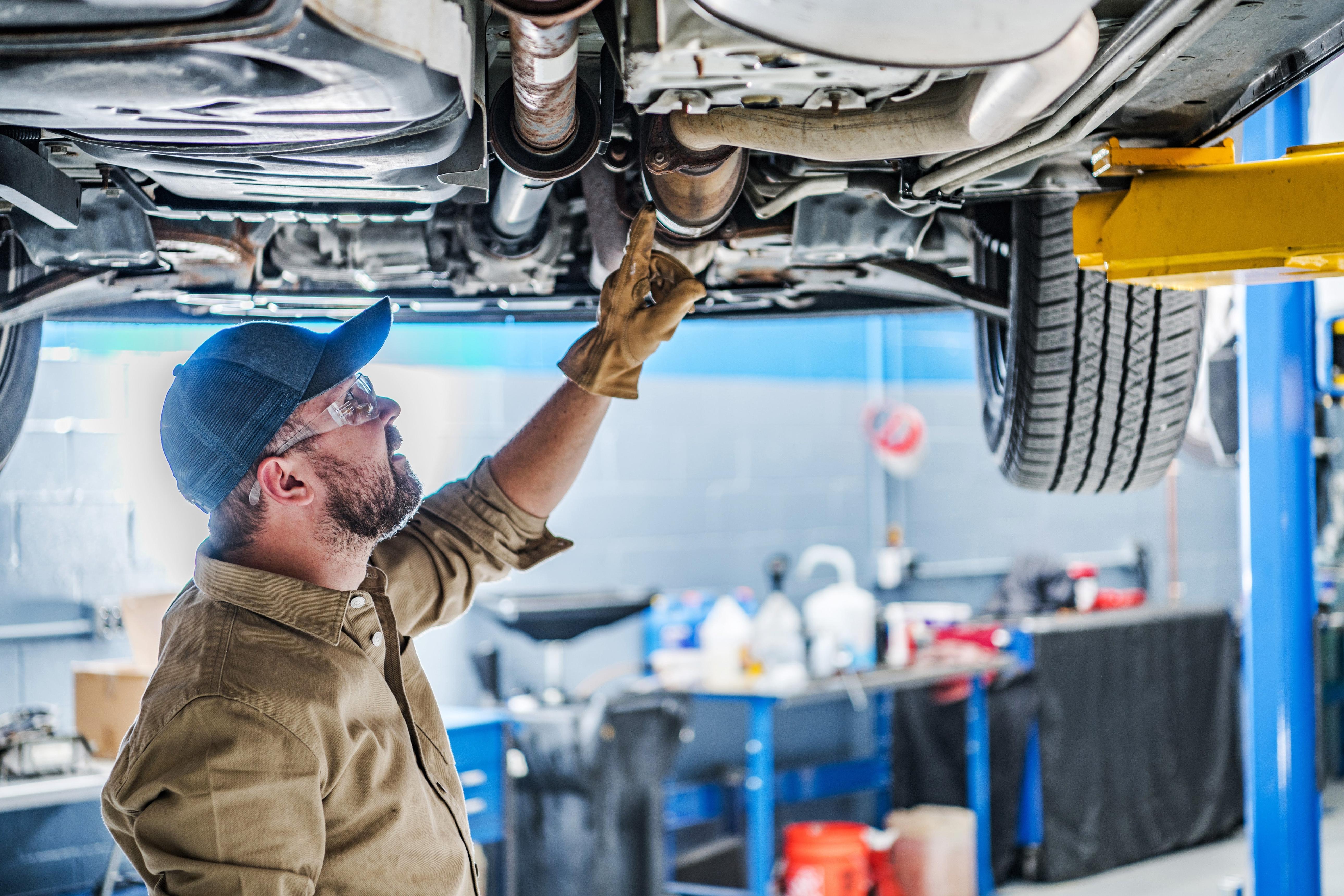
A catalytic converter is part of the exhaust and emissions-control system. It helps convert harmful exhaust pollutants into less harmful gases before they leave the tailpipe. If it is damaged, blocked, stolen or no longer working efficiently, your vehicle may become noisy, run poorly or trigger an engine warning light.
Replacement cost in Melbourne varies with the vehicle, engine, converter design, parts availability, labour access and any related exhaust damage. An engine warning light alone does not prove the converter has failed, so diagnosis matters before approving an expensive part.
For vehicle-specific advice, review the catalytic converter replacement service or enquire through the online booking page.
What does a catalytic converter do?
The converter sits in the exhaust system and uses catalyst materials to reduce certain pollutants. It operates at high temperatures and is designed to work with the engine's fuelling and emissions controls. The location and number of converters vary by vehicle.
Converters can be damaged by impact, internal deterioration, contamination or an underlying engine fault that sends excess unburnt fuel into the exhaust. Theft is also a concern because some converters contain valuable metals and can be accessible from beneath a vehicle.
Common symptoms of a failing catalytic converter
- Check-engine light: An emissions code may relate to catalyst efficiency, but oxygen sensors, wiring, exhaust leaks and engine faults can create similar warnings.
- Reduced power or sluggish acceleration: A restricted exhaust can limit performance, though other faults can feel similar.
- Rattling underneath: Internal material may be loose, but heat shields and other exhaust parts can also rattle.
- Unusual exhaust smell: A change may indicate an emissions or engine issue and needs diagnosis.
- Suddenly loud exhaust: If the converter has been stolen or the pipe cut, the vehicle may sound much louder than normal.
- Persistent emissions codes: A proper diagnosis should establish the cause before parts are replaced.
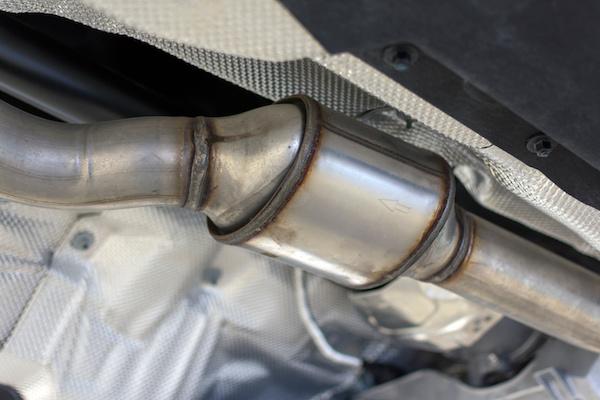
Do not assume a catalyst-efficiency code means the converter itself must be replaced. A technician should consider sensor readings, exhaust leaks, fuel-trim data and other possible causes.
How to tell if a catalytic converter has been stolen
The most obvious sign is a sudden, harsh exhaust roar when starting the engine. You may also notice a strong exhaust smell, visible cuts in the exhaust piping or a section missing beneath the vehicle. Do not crawl under a car supported only by its own jack.
- Park safely and switch the engine off if the vehicle is unusually loud or fumes may enter the cabin.
- Never run the engine in a garage or enclosed space; exhaust gases can be dangerous.
- Record the damage from a safe position if appropriate.
- Contact police or the relevant local reporting service and your insurer, following their instructions.
- Arrange an inspection to check for damaged pipes, oxygen-sensor wiring, flanges and heat shields.
What affects catalytic converter replacement cost in Melbourne?
There is no reliable universal price for every vehicle. A quote should be based on the exact car and diagnosis. Key factors include:
- Vehicle and engine: Some vehicles have multiple converters or difficult access.
- Part specification: The replacement must suit the engine and emissions system; approved parts and original-equipment options can vary in price and availability.
- Additional damage: Theft may leave cut pipes, damaged flanges, wiring or sensors that also need repair.
- Labour and access: Rusted fasteners, heat shields and converter location affect time.
- Diagnosis: Testing may be needed to distinguish converter failure from sensor faults, leaks or engine problems.
- Underlying cause: Misfires, oil consumption or fuelling issues may damage a replacement converter if left unresolved.
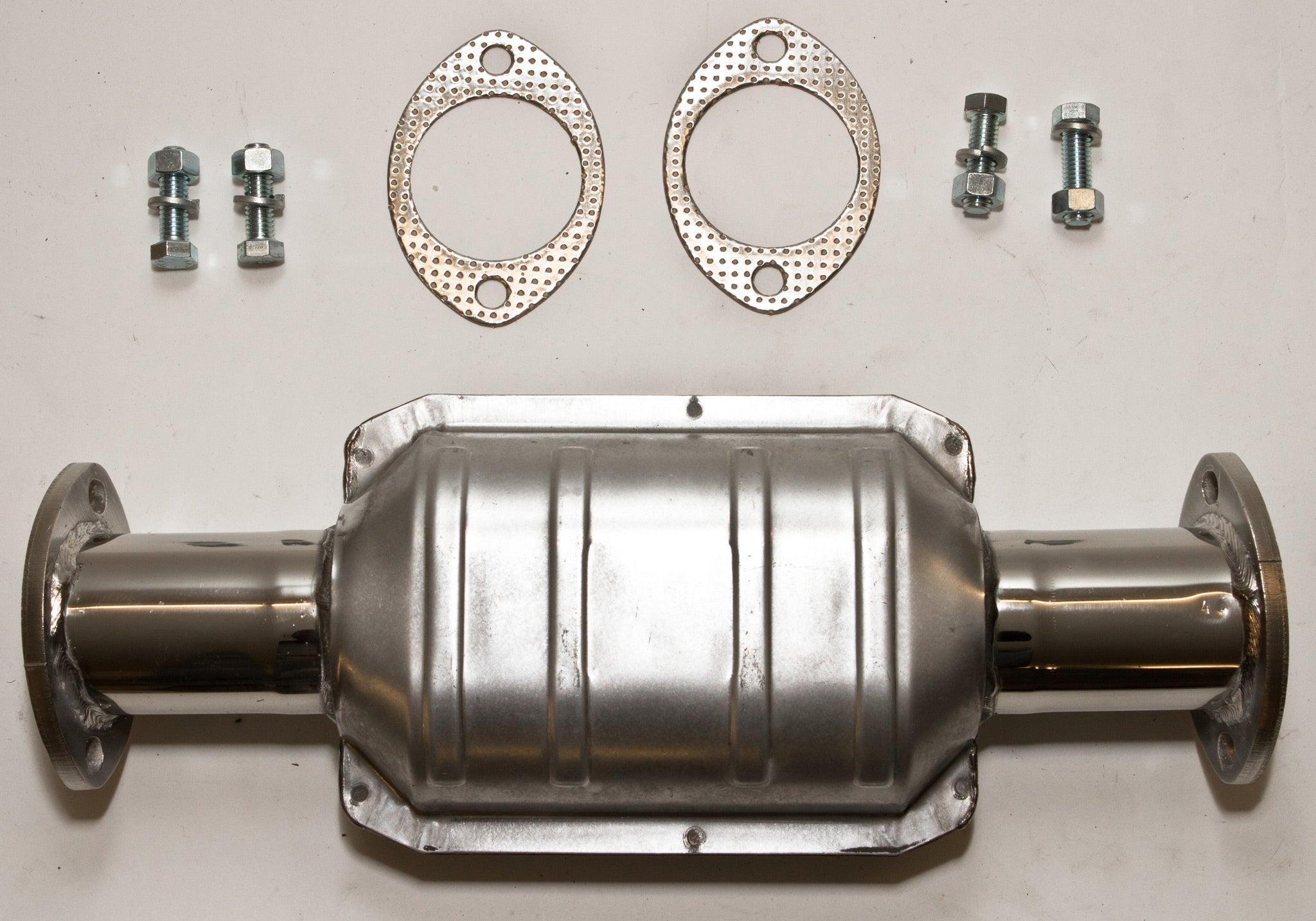
Ask for an itemised quote identifying the part, labour, diagnostic work, sensor or pipe repairs, warranty and any applicable fees. Be cautious of a recommendation that does not explain the diagnostic evidence.
Can you drive with a damaged or missing converter?
If the converter has been stolen, hot exhaust gases may escape from an unsafe location and the vehicle may be extremely loud. Avoid unnecessary driving and arrange professional advice or recovery if fumes, loose parts or unsafe noise are present. Never run the engine in an enclosed space.
If a converter is suspected to be blocked, continued driving may worsen performance or overheating. Stop safely if the engine loses power severely, overheats or you smell fumes inside the cabin. A warning light alone does not always require immediate roadside stopping, but it should not be ignored—especially if it flashes or appears with rough running.
How can you reduce catalytic converter theft risk?
- Choose secure parking: A locked garage or monitored, well-lit location can reduce opportunity.
- Consider vehicle-specific protection: Reputable installers may offer shields, cages or marking solutions. Ask about fitment, corrosion, clearance and warranty.
- Park thoughtfully: Where practical, limit easy access beneath the vehicle while parking legally and safely.
- Keep records: Store vehicle identification details and photos securely for insurance purposes.
- Report suspicious activity safely: Do not confront suspected offenders.
No measure guarantees prevention. Any protective device must not interfere with exhaust heat management, ground clearance or servicing.
Why the correct replacement part matters
Use a converter that meets the manufacturer's requirements and applicable Australian emissions and roadworthiness rules. Do not remove, bypass or hollow out emissions equipment as a shortcut. Such modifications may be unlawful, create inspection or insurance issues and increase emissions.
After installation, a technician may check for exhaust leaks, review fault codes and confirm the underlying cause has been addressed. The exact procedure depends on the vehicle and fault.
What to prepare before requesting a quote
- Make, model, year, engine and registration details.
- Whether the car became loud, lost power, rattles or has a warning light.
- Any diagnostic codes or previous repair history.
- Whether theft is suspected and if exhaust piping or sensor wiring appears damaged.
- Your location and whether the vehicle can be moved safely.
Explore the catalytic converter replacement service, browse other automotive services, or use the booking page.
Exhaust and emissions symptoms can overlap, so the diagnosis should identify the failed component before parts are ordered. If the inspection finds a pipe, hanger or exhaust leak issue, see our exhaust repair service. Where sensor readings need investigation, review the oxygen sensor replacement service. For broader maintenance checks, explore car servicing.
Frequently asked questions
How much does catalytic converter replacement cost in Melbourne?
Cost depends on the vehicle, converter specification, parts availability, access, labour and any damage to exhaust pipes or sensors. Request a vehicle-specific itemised quote after diagnosis.
Can I drive if my catalytic converter has been stolen?
A stolen converter can leave hot exhaust gases escaping and make the vehicle extremely loud. Avoid unnecessary driving, never run the engine in an enclosed area and arrange an inspection or recovery if it may be unsafe.
Will a bad oxygen sensor always mean the converter is faulty?
No. Sensor faults, wiring issues, exhaust leaks and engine-running problems can create similar codes. Diagnosis should identify the cause before parts are replaced.
Can a catalytic converter be cleaned instead of replaced?
Cleaning is not a universal repair and cannot restore every damaged, melted, contaminated or stolen converter. A technician should determine whether an approved repair is appropriate.
Why do catalytic converters get stolen?
Some converters contain valuable catalyst metals and can be accessible beneath a vehicle. Risk varies with vehicle design, parking conditions and local theft patterns.
How can I protect my car from catalytic converter theft?
Secure parking, suitable vehicle-specific protection and identification measures may reduce risk, but none guarantees prevention. Devices should be professionally fitted without interfering with exhaust operation.
Can I install a universal catalytic converter?
Not every universal part is suitable or compliant for every vehicle. The replacement must match the vehicle requirements and applicable Australian emissions and roadworthiness rules.
Can a mobile mechanic replace a catalytic converter?
Suitability depends on the vehicle, converter location, exhaust damage, tools and safe working conditions. Some jobs require workshop equipment or additional exhaust fabrication, so confirm the scope before booking.
Final takeaway
A loud exhaust, loss of power, rattling or emissions warning deserves proper diagnosis, but none alone proves the converter has failed. If theft is suspected, prioritise safety and avoid running the engine in enclosed spaces. A vehicle-specific assessment and compliant replacement quote help establish the repair actually needed.