
Owning a car for five years means paying for much more than five routine service visits. The real maintenance cost is a combination of scheduled servicing, higher-kilometre services, fluids and filters, wear items and repairs that appear as the vehicle ages.
For a mainstream Australian vehicle, a useful planning range is roughly $1,000–$3,500+ over five years for servicing and maintenance. This is a budgeting range, not a universal price: the actual number depends on the make, model, kilometres driven and what is included.
What Is the True 5-Year Cost of Servicing a Car?
| Cost areaHow to budgetWhy it changes | ||
| Routine servicing | Add each scheduled service | Vehicle and interval |
| Major scheduled service | Allow extra when due | Additional maintenance items |
| Brakes and wear items | Keep a separate allowance | Driving and vehicle weight |
| Tyres | Track separately | Tyre type and kilometres |
| Unexpected repairs | Keep an emergency reserve | Age and condition |
Five-year car servicing cost planning with a calculator, maintenance paperwork and a modern family car
A Practical 5-Year Cost Model
Year 1: Establish the baseline
Start with the manufacturer service schedule and list the time and kilometre requirement. If the vehicle is new, use the owner's manual and warranty documentation.
Year 2: Routine maintenance
Continue scheduled servicing while watching wear items such as brakes, battery, wipers and tyres. These should not be assumed to be included in every service price.
Year 3: Watch the larger intervals
Higher annual kilometres can bring a more substantial scheduled service forward. This is why a simple five-year average can hide the expensive years.
Year 4: Use your service history
A complete history shows what has already been replaced and what is approaching its next interval. It also makes quote comparison easier.
Year 5: Look ahead
At five years, check the next major scheduled interval rather than budgeting only for the immediate visit.
What Changes the Five-Year Cost?
Kilometres driven
A car doing 10,000 km a year will normally have a different maintenance pattern from one doing 25,000–30,000 km.
Vehicle and engine type
Parts, oil specifications, engine design and access to components can change labour and parts costs.
Major service intervals
Some intervals include additional filters, fluids or inspections. Price these separately so your model stays realistic.
Driving conditions
Stop-start traffic, short trips, towing and heavy loads can increase maintenance demands.
Unexpected repairs
A service can identify a fault without the repair being included in the service price. Brakes, batteries, cooling components and suspension are separate budget items.
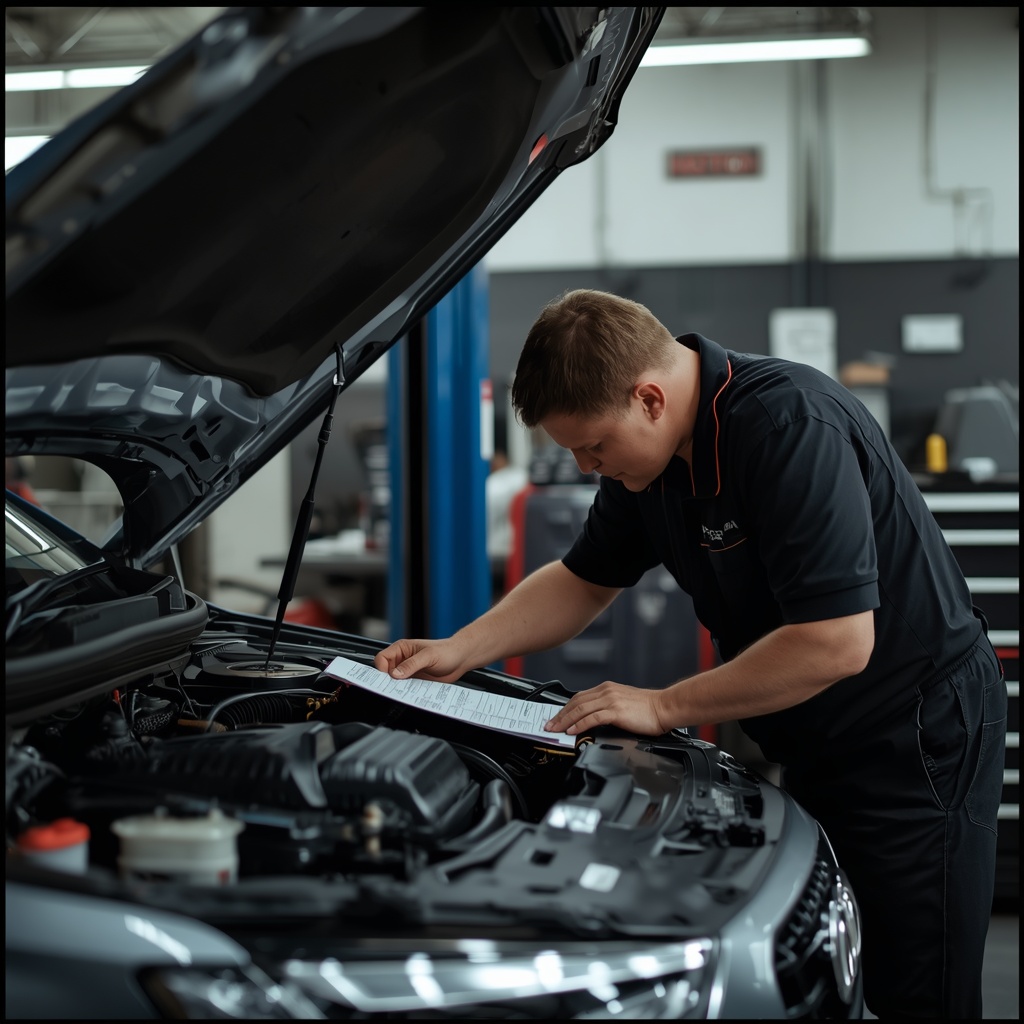
Professional mechanic inspecting a modern vehicle during routine servicing with a maintenance checklist and engine bay visible
Servicing vs Repairs: Track Them Separately
Routine servicing usually covers scheduled maintenance such as oil, filters and inspections. A failed battery, worn brake rotor or cooling-system repair is a separate job. Tracking the categories separately prevents one unexpected repair from distorting your view of normal servicing costs.
How to Build Your Own Five-Year Budget
- Find the exact manufacturer schedule for your car.
- List every service likely to fall due over five years.
- Get itemised prices for those services.
- Create a separate allowance for tyres and wear items.
- Keep a repair reserve.
- Record every completed service.
For current Melbourne pricing, see the Melbourne car service price guide. For vehicle-specific pricing, see the average car service cost by brand guide. For service-type differences, read the basic vs minor vs general service guide.
Where Mobile Servicing Fits
A mobile mechanic can complete many routine services at home or work, reducing workshop travel and downtime. Compare inclusions, parts, inspection scope and service records before choosing the lowest advertised price.
See car servicing or use the booking page for a quote.
If your car is due for logbook servicing, compare the Melbourne logbook service cost guide before booking.
FAQ
How much does it cost to service a car over five years in Australia?
A practical five-year budget for a mainstream vehicle can be around $1,000–$3,500+ for servicing and maintenance, depending on the car, kilometres, scheduled major services, wear items and repairs.
How often should I service my car in Australia?
Most vehicles use both time and distance intervals, commonly around 10,000–15,000 km or 6–12 months, but the manufacturer schedule for your exact vehicle should be followed.
Are tyres included in five-year servicing costs?
Usually not. Tyres are wear items and are better tracked as a separate ownership expense.
Should I budget for unexpected repairs?
Yes. Keep a separate repair reserve for batteries, brakes, cooling-system faults, suspension and other work that is not part of routine servicing.
Why can one year of servicing cost much more than another?
Service intervals are not always identical. Higher-kilometre services can include additional filters, fluids, inspections or replacement items.
Can a mobile mechanic reduce servicing costs?
A mobile mechanic may have lower overheads than a dealership and can also save the customer workshop travel time. Compare the actual inclusions, parts and documentation rather than the headline price alone.
What makes car servicing more expensive?
Vehicle type, engine design, parts prices, service interval, labour requirements and additional repairs can all increase the final bill.
How can I reduce long-term car servicing costs?
Follow the manufacturer schedule, deal with small faults early, compare itemised quotes and keep a complete service history.

Car owner planning long-term vehicle maintenance costs with a calculator, service history and maintenance schedule
Final Takeaway
The true five-year cost is best understood as a model, not one average number. Start with the manufacturer's schedule, add major intervals, then budget separately for wear items and unexpected repairs. That gives you a much more realistic ownership figure.
For service timing guidance, read how often you should service your car in Australia.