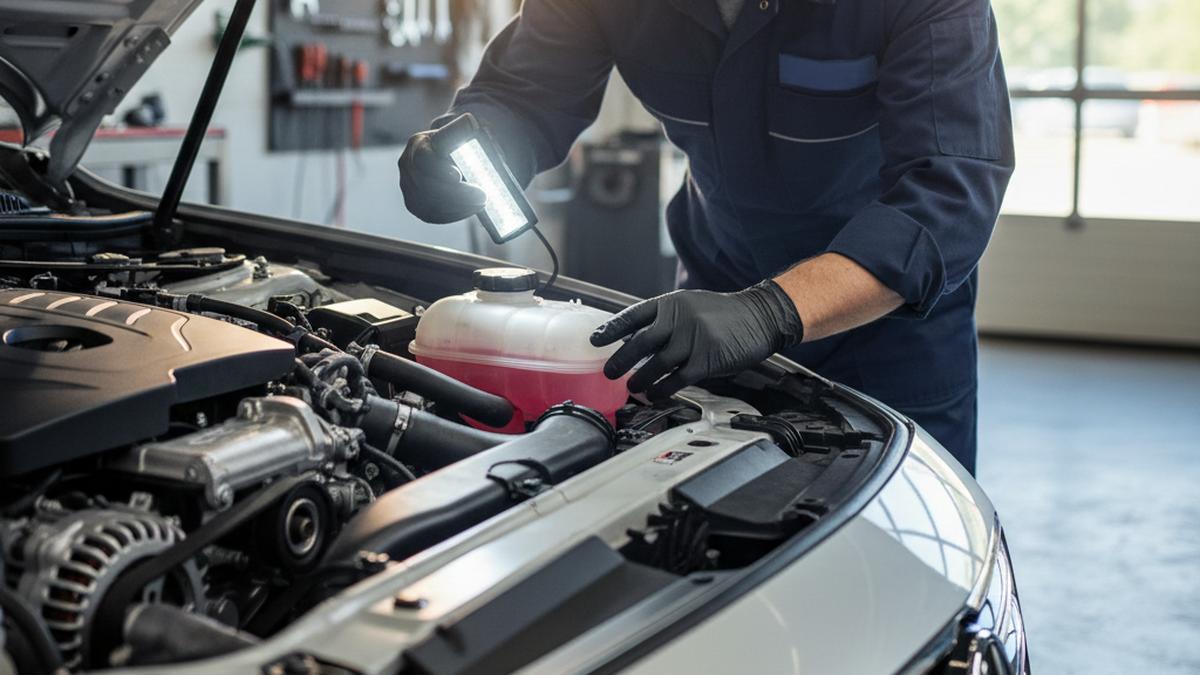
If your car's temperature gauge rises above normal or a coolant warning appears, it is important to take the problem seriously. Engine overheating can be caused by a low coolant level, a radiator fault, a failing water pump, a thermostat problem, a cooling fan issue or another fault in the cooling system.
The challenge is that several different faults can create similar symptoms. Replacing a radiator, pump or thermostat without confirming the cause can waste money and leave the original problem unresolved. This guide explains the common possibilities, what to do when the engine overheats and how a technician can investigate the cause.
What should you do if your car overheats?
If the temperature gauge enters the danger zone, a temperature warning appears or steam is visible, pull over somewhere safe as soon as you can. Follow the vehicle manufacturer's instructions, switch off the engine when appropriate and arrange roadside assistance if the vehicle may be unsafe to drive. Continuing to drive an overheating engine can cause serious damage.
Never remove the radiator cap or coolant reservoir cap while the system is hot. Pressurised coolant can escape and cause severe burns. Allow the vehicle to cool fully and do not put yourself at risk while checking the situation. If the vehicle is leaking coolant heavily, producing steam or repeatedly overheating, professional assistance is the safer option.
How a car cooling system works
The cooling system circulates coolant through passages in the engine and transfers heat through the radiator. A water pump helps move coolant around the system, while a thermostat regulates coolant flow according to engine temperature. The radiator releases heat to the surrounding air, and cooling fans help airflow when vehicle speed alone does not provide enough cooling.
Hoses, seals, the coolant reservoir, pressure cap and other components also contribute to the system's operation. A fault in one area can affect the others. This is why the correct diagnosis considers the cooling system as a whole rather than assuming the first visible symptom identifies the failed part.
Could a faulty radiator be causing the overheating?
The radiator transfers heat from the coolant to the outside air. If it leaks, becomes restricted or cannot dissipate heat effectively, engine temperature may rise. External damage, corrosion, blocked airflow or internal restrictions can contribute to cooling performance problems, depending on the vehicle and its condition.
Possible signs include coolant loss, visible leaks around the radiator, overheating under particular driving conditions or evidence of damage. These signs are not conclusive on their own. A technician may inspect the radiator and airflow path, check coolant condition and perform appropriate pressure or temperature tests before recommending repair or replacement.
When might radiator replacement be necessary?
Replacement may be appropriate if the radiator is leaking from a damaged area that cannot be repaired reliably, has significant structural deterioration or cannot provide adequate cooling. The decision depends on the type and location of the fault, the radiator design and the condition of the wider cooling system.
Before approving a replacement, ask what was found and whether the diagnosis accounts for related causes such as a faulty fan, thermostat or water pump. Fixing the radiator alone will not resolve overheating if another fault remains.
Could the water pump be failing?
The water pump circulates coolant through the engine and cooling system. If it cannot move coolant as required, engine temperature may rise. Depending on the design, pump failure may also involve coolant leakage, bearing problems or other symptoms, but no single symptom proves that the pump is faulty.
Water pump designs vary across vehicles. Some are mechanically driven, while others are electrically controlled, and access requirements differ by engine. A technician may inspect the pump and surrounding area, check for leakage, evaluate circulation and use other vehicle-specific tests to determine whether replacement is justified.
Why a water pump diagnosis matters
Overheating can also result from a low coolant level, a thermostat that is not operating correctly, a radiator restriction, a cooling fan fault or a combustion-related problem. A pump should not be replaced solely because the engine is hot. The workshop should explain the evidence that links the pump to the symptom.
For more information about this type of repair, visit our water pump replacement service page.
Could the thermostat be stuck?
The thermostat helps regulate coolant flow as the engine warms up. If it fails in a position that restricts the required coolant flow, the engine may overheat. Thermostat faults can produce symptoms that overlap with other cooling-system problems, so inspection and testing are needed before deciding to replace it.
A thermostat problem should be assessed alongside coolant level, temperature behaviour, radiator performance and the condition of related components. Replacing a thermostat without investigating a persistent coolant leak or another circulation problem may not solve the issue.
Other common causes of engine overheating
Low coolant or a coolant leak
Low coolant can reduce the system's ability to transfer heat and may allow the engine to overheat. Leaks can occur at hoses, connections, the radiator, water pump, reservoir or other components. A repeated need to top up coolant is a reason to investigate the source rather than simply adding more fluid indefinitely.
Cooling fan problems
Cooling fans help move air through the radiator, particularly at low road speeds or when the vehicle is stationary. A fan motor, control circuit, sensor or related electrical fault can reduce airflow and contribute to overheating. The symptom pattern may provide clues, but proper testing is required to identify the actual failure.
Blocked airflow or restricted coolant circulation
Debris blocking airflow through the radiator or condenser can reduce heat transfer. Internal restrictions, incorrect coolant or other system problems can also affect circulation. A technician should assess the relevant components and follow the manufacturer's recommendations before deciding on the appropriate repair.
Combustion-related or internal engine problems
In some cases, overheating may be associated with an internal engine fault, including a problem that allows combustion gases to enter the cooling system. Symptoms can overlap with ordinary coolant leaks or circulation problems. Additional diagnostic tests may be necessary if the initial checks do not explain the overheating.
How mechanics diagnose overheating
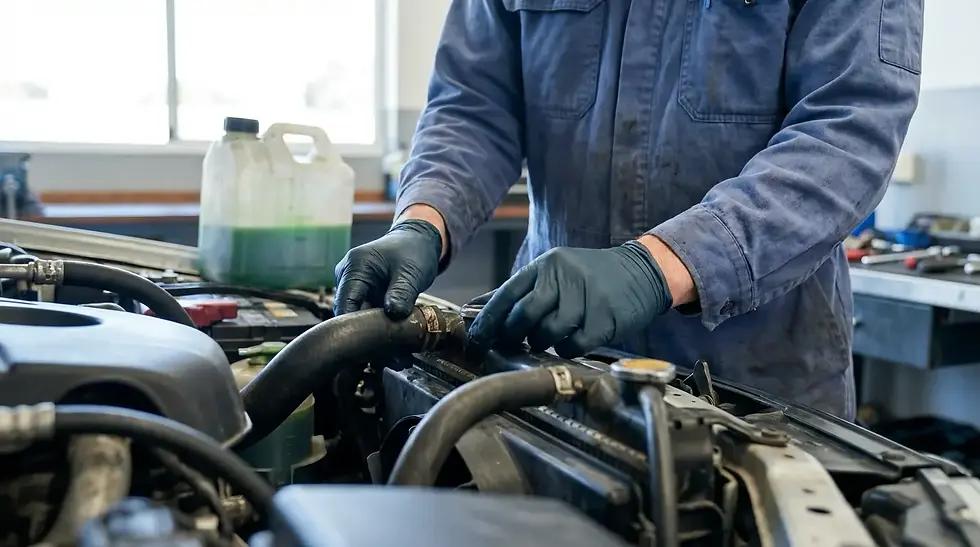
A professional assessment typically begins with the driver's description of when the temperature rises, whether coolant is disappearing and whether warning lights or other symptoms have appeared. The technician may inspect the coolant level when safe, look for leaks, check hoses and radiator condition, evaluate fan operation and perform a cooling-system pressure test where appropriate.
Further checks may include temperature measurements, thermostat assessment, pump inspection, diagnostic scans or tests for internal engine problems. The exact sequence depends on the vehicle and initial findings. The goal is to identify the underlying fault before recommending parts, not to replace components based on guesswork.
Can you drive a car that is overheating?
Driving while the engine is overheating can cause damage to the cylinder head, gasket and other engine components. The risk depends on the severity of the temperature rise and how long the engine remains hot, but there is no safe universal distance to drive with an overheating warning.
If the gauge rises into the danger zone, a warning appears or steam is visible, stop safely and arrange assistance. Do not continue a journey in the hope that the temperature will return to normal. Never open a hot pressurised cooling system.
How to reduce the risk of future cooling-system problems
Follow the maintenance schedule for your vehicle and use coolant that meets the manufacturer's required specification. Check for unexplained coolant loss, visible leaks and warning messages. Routine inspections can identify deteriorating hoses or other issues before they become more serious, although they cannot prevent every unexpected failure.
Do not mix coolants based only on colour, as colour alone does not establish compatibility. If the wrong fluid has been used or the coolant history is uncertain, ask a qualified technician to determine the correct specification and whether the system needs servicing.
Overheating repairs in Melbourne's west
Whether the cause is a radiator, water pump, thermostat, fan or coolant leak, the repair should be based on the diagnostic findings for your particular vehicle. Ask for an explanation of the fault, the proposed work and any additional checks required after the repair.
Read our water pump replacement service information, explore the full services page or arrange an assessment through the online booking page.
Frequently asked questions
What is the most common cause of a car overheating?
Possible causes include low coolant, coolant leaks, radiator problems, thermostat faults, water pump problems and cooling fan issues. The most likely cause depends on the vehicle and symptoms, so diagnosis is needed.
Can a bad thermostat cause engine overheating?
Yes. A thermostat that does not regulate coolant flow correctly can contribute to overheating. Other cooling-system faults can produce similar symptoms, so the system should be checked before replacing parts.
Can I drive if my car is overheating?
If the engine is overheating, stop somewhere safe and follow the vehicle manufacturer's guidance. Continued driving can cause serious damage. Arrange professional assistance if the warning persists or the vehicle is unsafe.
Does low coolant always mean there is a leak?
A falling coolant level should be investigated. A leak is one possible explanation, but the system needs inspection to identify the cause and determine the correct repair.
Should the radiator, water pump and thermostat be replaced together?
Not automatically. Each component should be assessed and replaced when the diagnosis and vehicle-specific requirements justify the work. Ask the workshop to explain the evidence for each recommendation.
Where can I book a cooling-system inspection?
Visit our water pump replacement service page or use the booking page to arrange an assessment.